 By Juraj · Last updated August 15, 2026
This guide shows how to check diesel fuel injectors on VAG cars and how to interpret results.
I earn from qualifying purchases and sometimes get tools for free (full disclosure). It never affects my scoring.
Used tool in this guide

Video: How to check fuel injectors on Volkswagen (works for all vag cars)
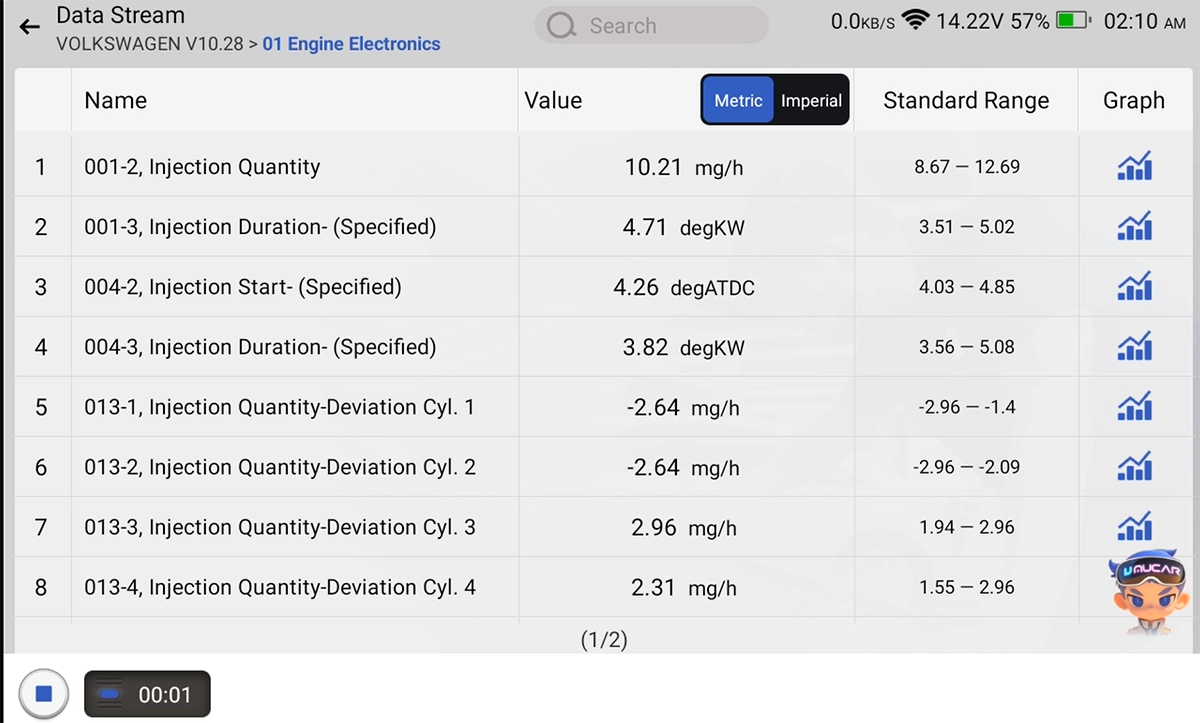
This video shows how to check fuel injector correction values.
Supported vehicles
| Vehicle |
|---|
| most vag models |
Technical overview
| Vehicle | VW / Audi / Skoda / Seat (diesel engines) |
|---|---|
| System | Engine (01) |
| Procedure type | Diagnostics (Live Data) |
| Difficulty | Easy |
| Time required | ~5–10 minutes |
| Prerequisites | Engine must be fully warmed up (80–90°C) |
Step-by-step procedure
Connect to Engine ECU
01 Engine → Live Data / Measuring Blocks
Select injector-related parameters
👉 Depending on your scanner:
✔ Modern scanners
- Injection Quantity Deviation Cyl. 1–4
✔ Older / cheaper scanners
👉 You must enter channel numbers manually
VAG Measuring Blocks (IMPORTANT)
| Function | Channel |
|---|---|
| Injection Quantity | 001-2 |
| Injection Duration | 001-3 |
| Injection Start | 004-2 |
| Injection Duration (alt) | 004-3 |
| Injector Deviation Cyl 1 | 013-1 |
| Injector Deviation Cyl 2 | 013-2 |
| Injector Deviation Cyl 3 | 013-3 |
| Injector Deviation Cyl 4 | 013-4 |
Observe values at idle
👉 Focus on:
- Injector deviation values (013 group)
Increase RPM (~2000 rpm)
👉 Compare behavior:
- Do values stabilize?
- Do they go close to 0.00?
Live Data Interpretation
| Parameter | Normal Range | What It Means | Diagnostic Insight |
|---|---|---|---|
| Injection Quantity | ~5–10 mg/str (idle) | Base fuel amount | High → air leak / fueling issue |
| Injection Duration | Stable | ECU control of injection | Fluctuating → unstable combustion |
| Injector Deviation | -2.0 to +2.0 mg/str | Cylinder balance | Normal operation |
| Injector Deviation | ±2.5 to ±3.0 | ECU compensation | Possible issue |
| Injector Deviation | > ±3.0 | Limit reached | Fault (injector or engine) |
| All cylinders ~0 (under load) | Ideal | Balanced engine | Good condition |
Diagnostic Logic (MOST IMPORTANT PART)
Case 1
High deviation at idle + normal under load
👉 Interpretation:
- ECU compensating imbalance
- Injectors NOT necessarily faulty
Case 2
High deviation at idle AND under load
👉 Interpretation:
- Likely faulty injector
- Mechanical issue
Case 3
One cylinder extreme value (+3 / -3)
👉 Interpretation:
- Bad injector
- Compression issue on that cylinder
Real-World Example (Common Scenario)
👉 Symptoms:
- Rough idle
- No power loss
- Injector deviations high at idle
- All values = 0.00 under load
✔ Conclusion
Not typical injector failure
👉 More likely:
- compression imbalance
- EGR influence
- air/fueling correction
Recommended Next Steps
Relative Compression Test
👉 Confirms mechanical condition
Check EGR system
- stuck open
- excessive recirculation
Check intake / MAF
- incorrect air measurement
Common Mistakes
❌ Replacing injectors based only on idle data
❌ Ignoring load behavior
❌ Testing cold engine
❌ Not comparing all cylinders
Pro Tip
If injectors are bad → problem appears at ALL loads
If problem only at idle → ECU is compensating something else
Summary
This procedure allows you to quickly:
- evaluate injector performance
- detect imbalance between cylinders
- avoid unnecessary injector replacement
Alternative tools
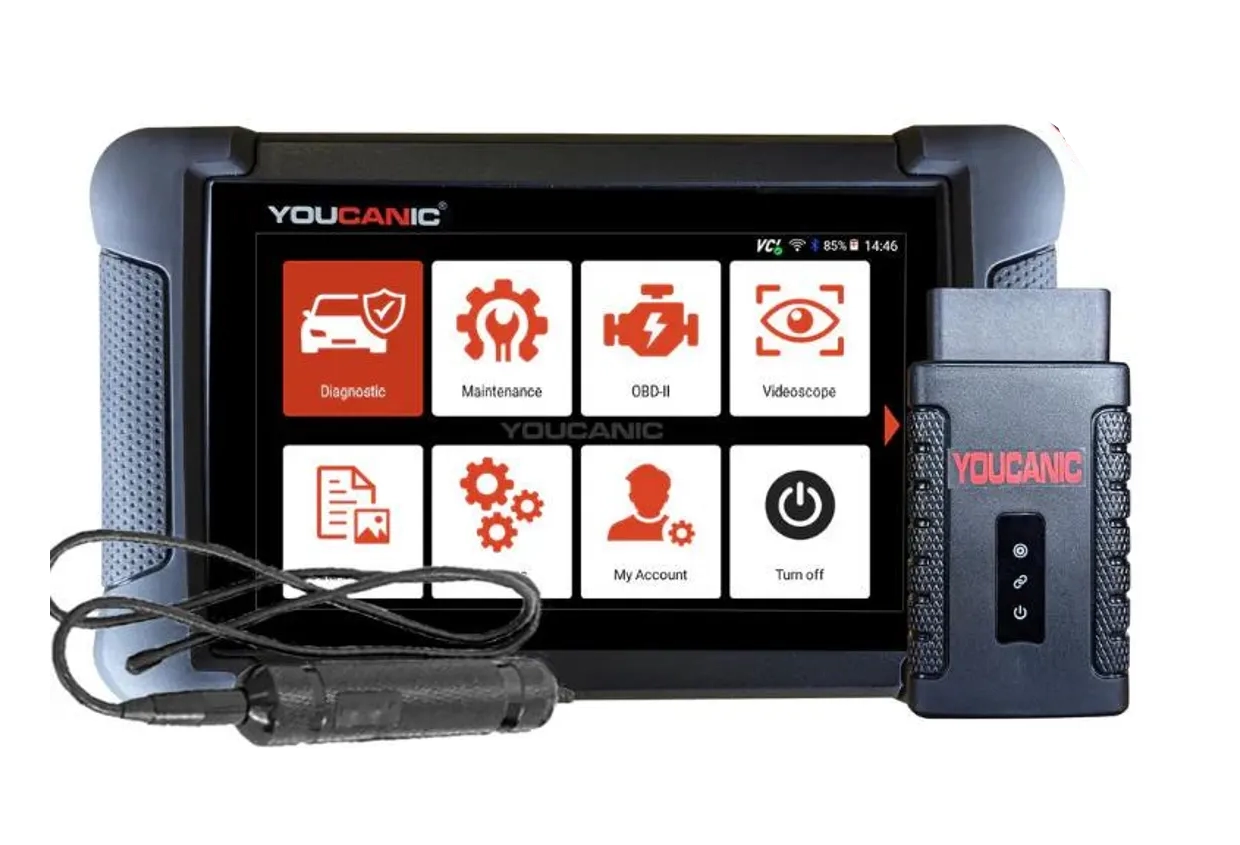 ToolYoucanic UCAN-II full-systemYoucanicOfficial website ›Read review
 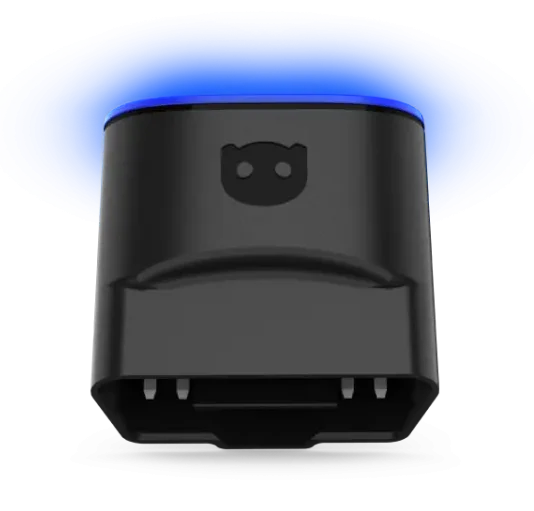 ToolOBDeleven 3OBDelevenOfficial website ›Check on Amazon ›Read review
 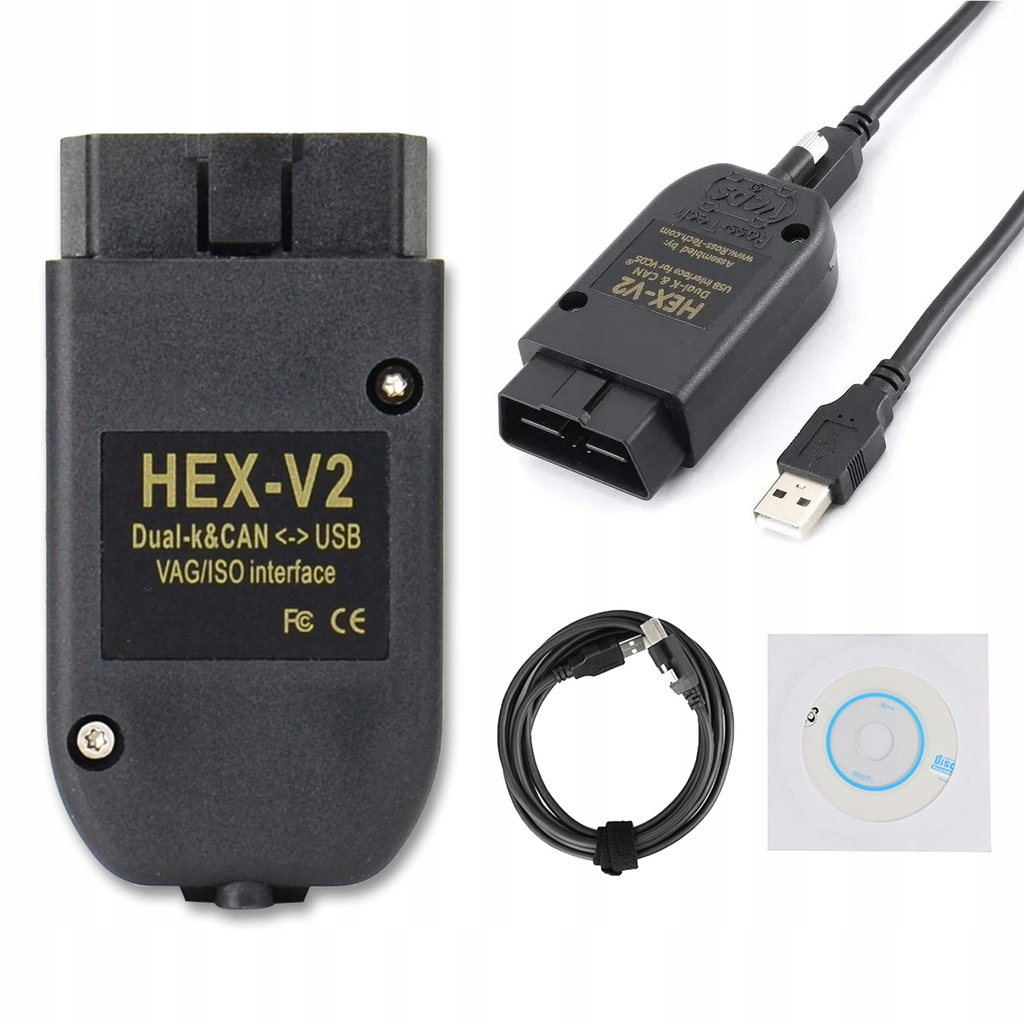 ToolVCDS cloneRoss TechAliExpress ›Read review
  Roundup5 Best OBD2 Scanners for VW/Audi/Skoda/Seat (Tested on Real VAG Cars)Read the guide
 Legal & safety notice
More procedures like this
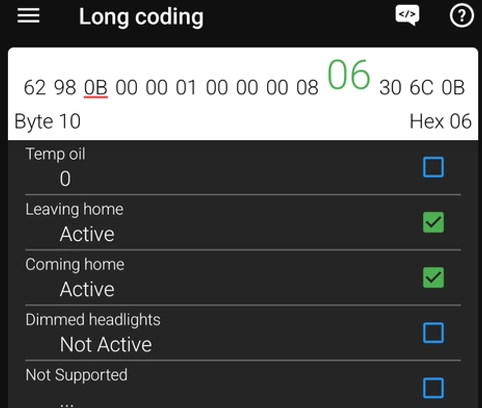
How to Enable Coming Home & Leaving Home Lights (VAG Coding Guide)
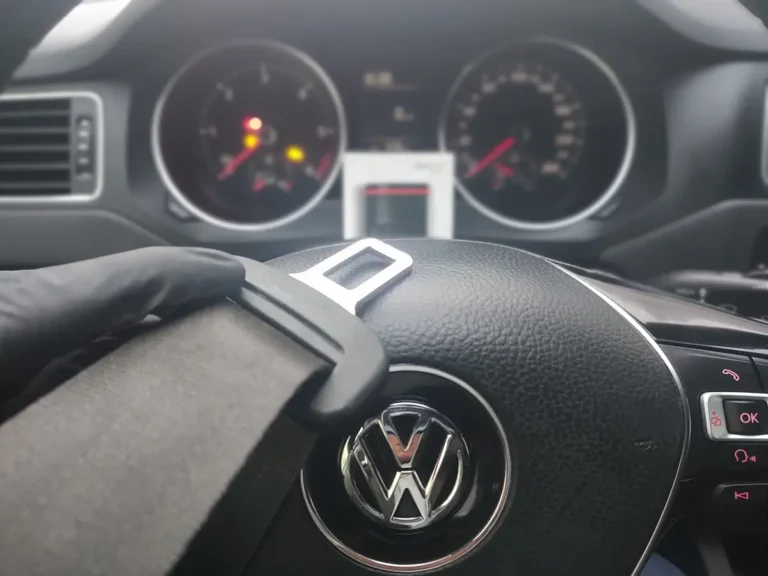
How to disable seatbelt warning in VW/Audi/Skoda/Seat
How to adapt remote key fob on VW / Audi / Skoda / Seat (VAG)
How to adapt a new battery in VW / Audi / Skoda / Seat (VAG battery coding guide)
How to activate US-style turn signals for VAG / Volkswagen / Skoda / Seat / Audi
How to Check Fuel Injectors on BMW 5 Series E61 530d (2008) with OBD2 Scanner
Most popular OBD2 guides




I'm Juraj Lukacko and I work as an auto electrician. On this site I share what I learn from real work on real cars, to help you pick the right tools for diagnostics, programming and tuning and get the job done.
More about me →