 By Juraj · Last updated May 4, 2026
This guide shows how to increase idle RPM on BMW 5 Series E61 530d (2008) through the DDE Idle Control menu. Slightly raising idle speed can reduce vibrations at standstill on aging diesel engines where the factory idle feels rough or unstable.
I earn from qualifying purchases and sometimes get tools for free (full disclosure). It never affects my scoring.
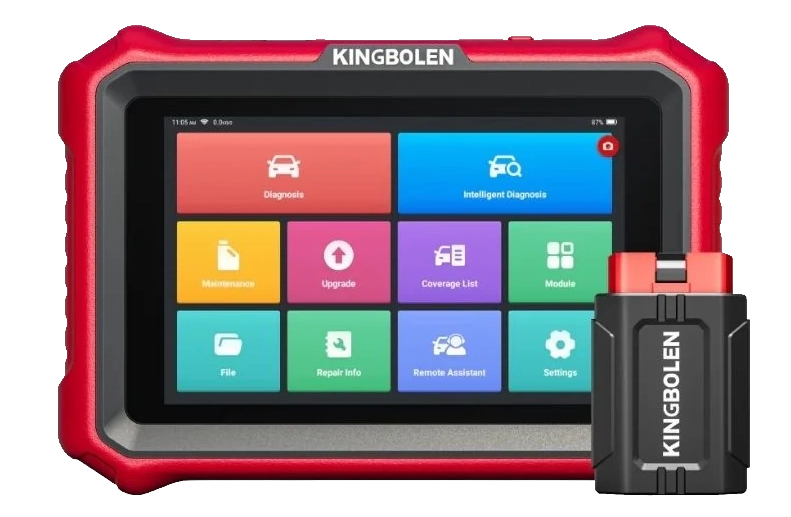
Used tool in this guide
Video: How to change idle RPM on BMW 5 Series E61 530d (2008)
This video shows how to access the DDE Idle Control menu, increase the idle setpoint in small steps, evaluate the result by feel and sound, and save the new value to the control unit.
Supported vehicles
| Vehicle |
|---|
| 5-series-e6x |
Technical overview
| Vehicle | BMW 5 Series E61 530d |
|---|---|
| Year | 2008 |
| System | Digital Diesel Electronic (DDE) |
| Procedure type | Programming / Coding |
| Difficulty | Easy |
| Time required | ~5 minutes |
| Prerequisites | Engine warm and at idle, battery voltage stable, no active DDE fault codes |
Step-by-step procedure
Connect the scanner
Connect the scanner to the OBD2 port located under the steering column on the driver side.
Read VIN and load vehicle data
Open Idle Control in the DDE module
Open Special Functions and navigate to the Idle Control menu under the DDE module.
Read the current idle RPM
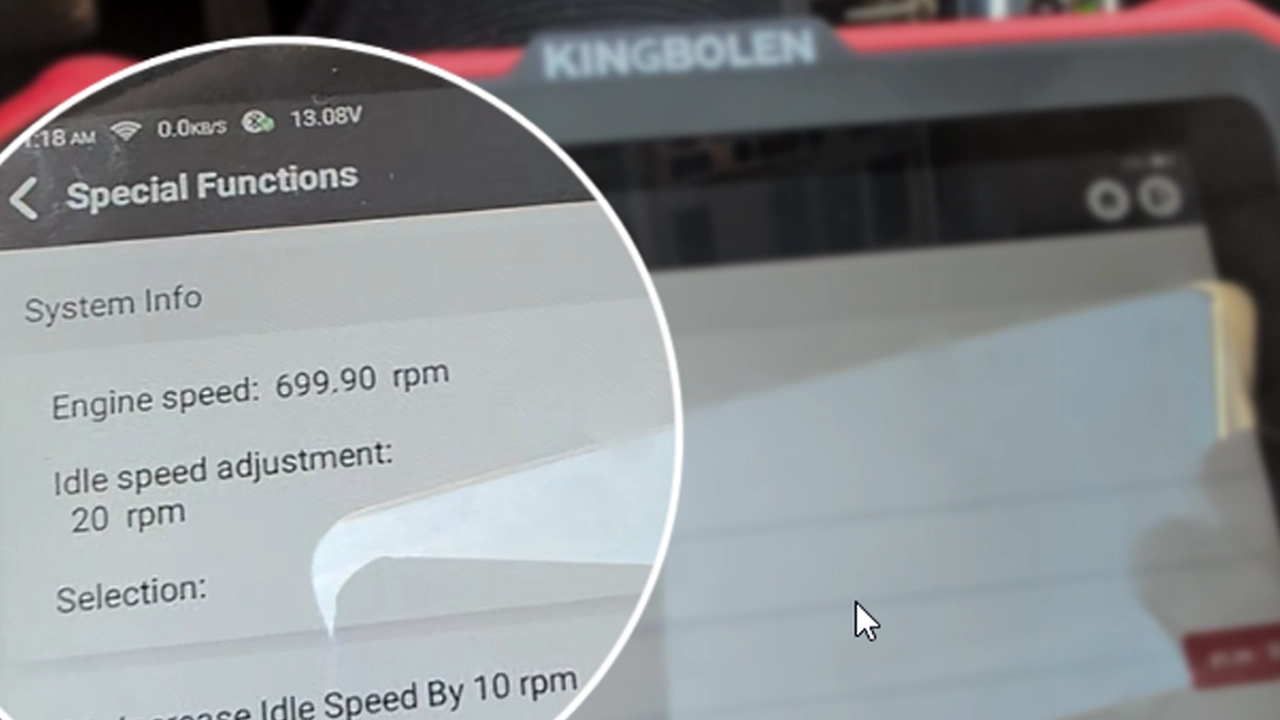
Read the current idle RPM (factory value on this car was around 679 RPM).
Raise the value in small steps
Increase the value in small increments (10 RPM steps work well).
Check the engine after each step
After each step, listen and feel the engine to evaluate the change.
Find the stable idle
Repeat until idle feels stable. On this car the sweet spot was around 699 RPM.
Save the new value
Save the new value by selecting Programming (F4 on this scanner).
Switch off the ignition when prompted
When prompted "switch off terminal 15," turn off the ignition.
Confirm the value is saved
Continue and confirm the value has been saved.
Additional information & compatibility notes
Notes on choosing the right value
Stock idle on the M57 around 670-680 RPM can feel unstable on higher-mileage cars. Raising idle by 20-30 RPM is usually enough to smooth out vibrations without affecting fuel consumption or driveability. Going significantly higher (above ~750 RPM) is not recommended - the ECU expects idle within a defined range and excessive deviation can affect emissions, regen behaviour and overall engine management.
If raising idle does not solve roughness, the underlying cause is likely elsewhere - worn engine mounts, injector issues (see fuel injector check procedure), swirl flap problems or vacuum leaks. Idle RPM change masks symptoms, it does not fix root causes.
Additional Information & Compatibility Notes
Idle Control programming is available on most BMW diesel engines using DDE control units (M57, M57N, M57N2 and similar). Menu structure and parameter naming may differ between scanner brands and software versions.
Alternative tools
Legal & safety notice
More procedures like this
BMW E61 530d 2009 ZF Automatic: Reset Transmission Adaptations to Fix the 2-to-3 Shift Kick
How to Check Fuel Injectors on BMW 5 Series E61 530d (2008) with OBD2 Scanner
BMW E61 530d Oil Service Reset with OBD2 scanner
BMW E46 318d (2005, 85kW) DTC Delete: Removing P0401 EGR and Lambda Code 4298 From the ECU Firmware
BMW E91 2008 Sunroof Not Responding: Sunroof Initialization Fix
How to Add a Key / Perform AKL on BMW E46
Most popular OBD2 guides



I'm Juraj Lukacko and I work as an auto electrician. On this site I share what I learn from real work on real cars, to help you pick the right tools for diagnostics, programming and tuning and get the job done.
More about me →