Published: March 27, 2026 · Last updated: May 9, 2026
DPF light on, limp mode, or a customer asking why their diesel keeps doing it every two weeks? Here’s what I do in my workshop, written for people who want answers fast.
The Quick Answer
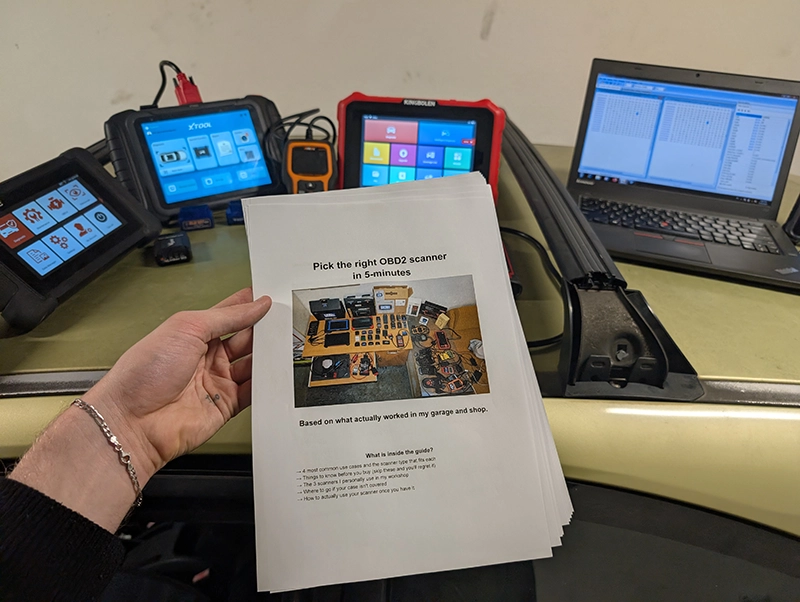
Yes, you can do a DPF regeneration with an OBD2 scanner, but only with the right kind. Most cheap scanners under $100 only read DPF fault codes, they can’t actually start a regen. You need a bidirectional scanner with manufacturer-specific service functions.
Quick decision tree based on your fault code:
- P2463 → DPF probably cooked, forced regen will likely fail. Skip to “When Forced Regen Won’t Work.”
- P244A → Cracked substrate, replace it.
- P2452, P2453, P2454, P2455 → Sensor problem. Fix the sensor first, then regen.
- P2002, P244B, P2459, P2461 → Forced regen is your move, assuming the underlying cause is fixed.
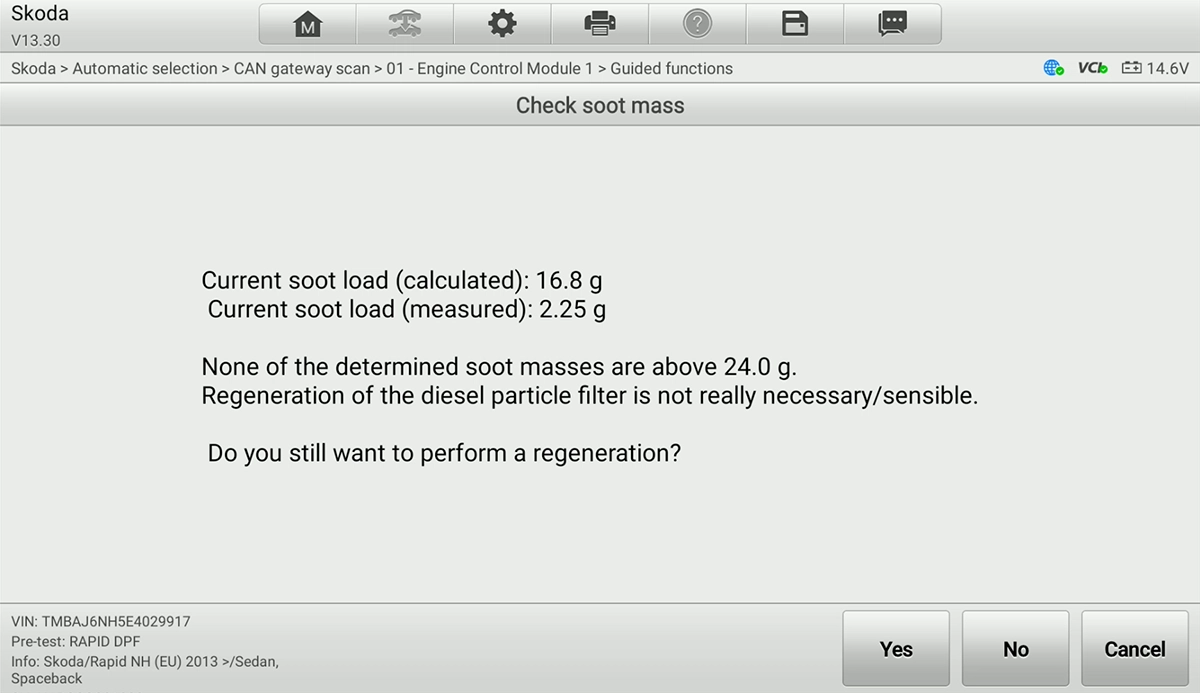
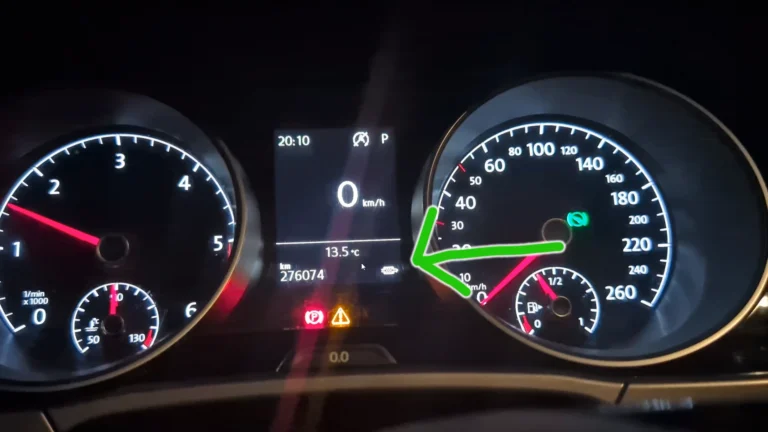
- No code, just dashboard warning → Read soot mass first, then decide.
If you just want my recommended scanners, I covered that separately: Best OBD2 Scanners for DPF Regeneration →
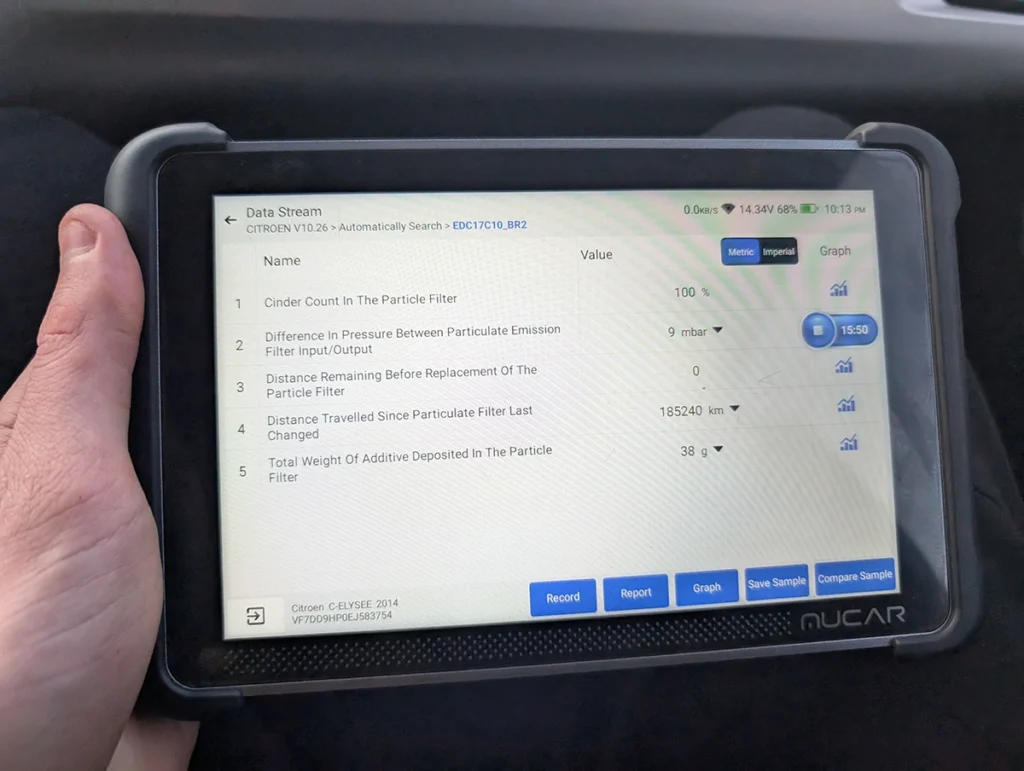
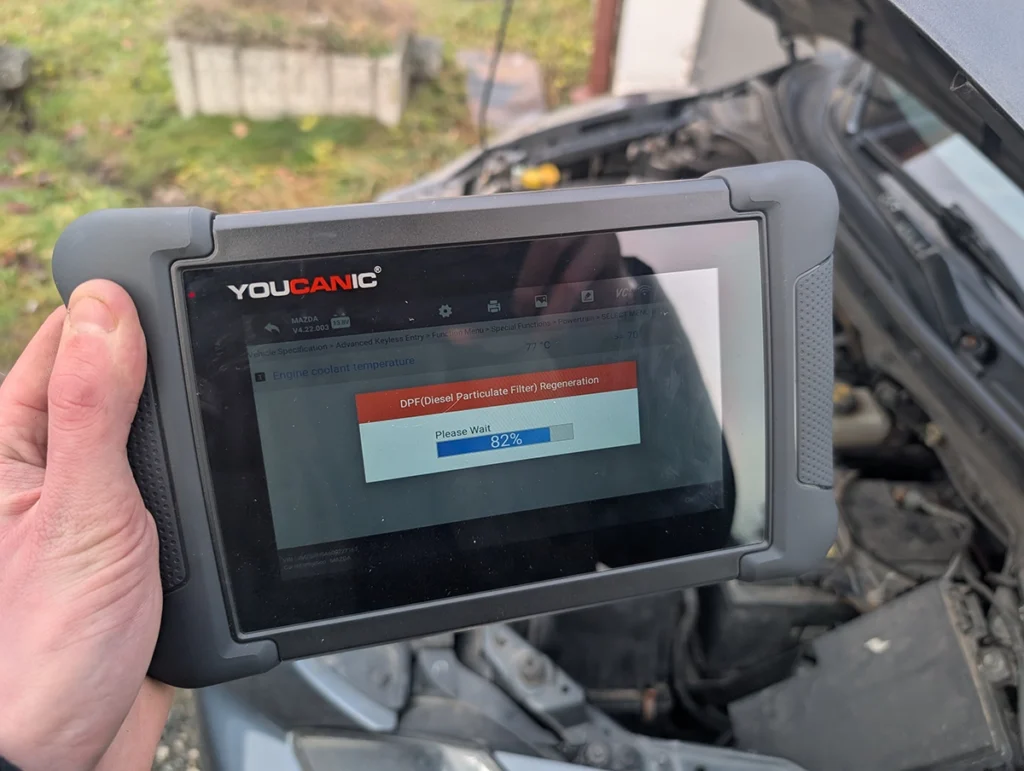
My Real-World DPF Procedures
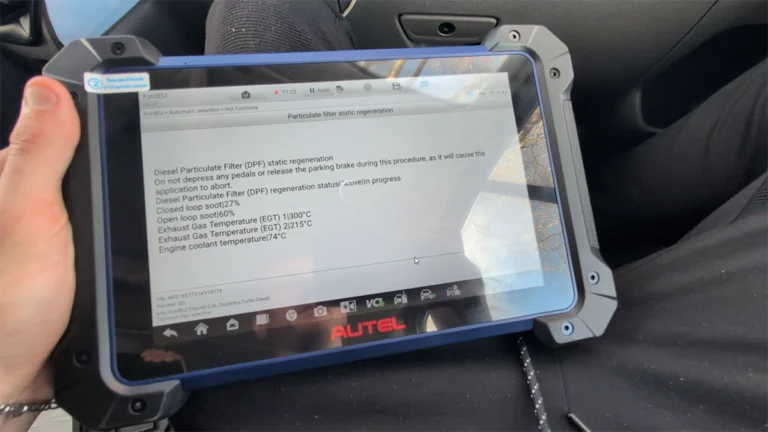
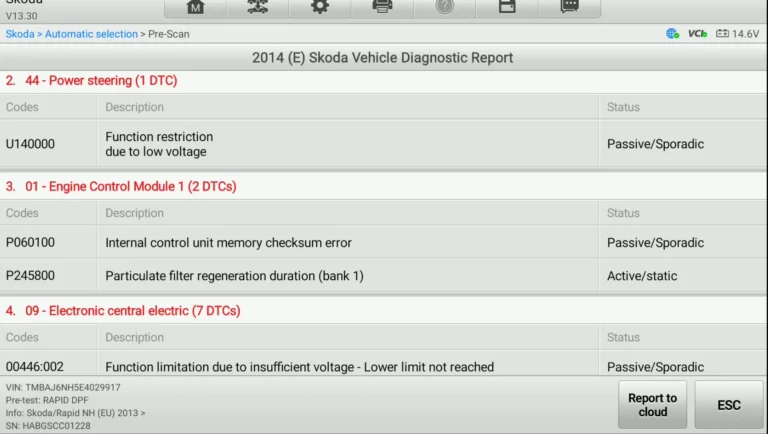
If your car matches one of these, jump there directly. Saves you reading the rest.
Soot vs Ash: The Difference That Decides Everything
Most diesel owners think soot and ash are the same. They’re not, and the difference is what determines whether your filter can be saved.
Soot is unburned carbon from incomplete combustion. Soot is what regeneration burns off. Get the DPF hot enough (550–700 °C) and soot turns into CO₂ that exits through the tailpipe. Soot is reversible.
Ash is non-combustible mineral residue from engine oil additives (calcium, zinc, magnesium, phosphorus from oil detergents). Oil burned in the cylinder leaves these metal particles behind. They get caught in the DPF and stay there forever. Ash is permanent. No regeneration removes it.
Why this matters:
- Soot triggers regeneration. When soot is the problem, regen fixes it.
- Ash eventually kills the filter. A typical 2.0 TDI 4-cyl DPF holds about 80 g of ash before it’s full.
- P2463 usually means both. Soot above limit, plus ash underneath restricting things further.
- Wrong oil multiplies ash buildup 3–5x. Use ACEA C-grade oils on DPF diesels, not generic 5W-30.
Off-car aqueous cleaning is the only thing that removes ash without replacing the filter. That’s the actual point of cleaning, not just removing soot, but flushing 60–80% of accumulated ash to give the filter another 100,000+ km of life.
The Three Types of Regeneration (Quick)
Passive runs continuously when exhaust hits 350–500 °C sustained. That means highway driving 80 km/h+ for 20–30 minutes. Short-trip city diesels never see this.
Active is what your ECU triggers automatically every 300–800 km on a healthy car. Post-injection fuel ignites in the upstream catalyst, pushes pre-DPF temp to 550–650 °C, burns soot for 10–30 minutes. You might notice the fan running hard or fuel consumption ticking up.
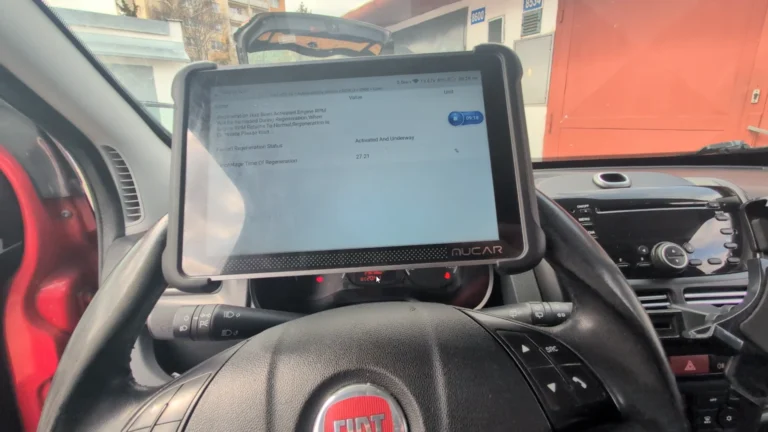
Forced is what we do with a scanner. Same process as active, but manually triggered with the car parked. Idle goes up to 1,500–2,500 rpm depending on manufacturer, EGT pre-DPF hits 600–700 °C, runs 20–45 minutes.
The thing most people miss: forced regen is a diagnostic endpoint, not routine service. If a customer is back every 2 weeks, you’re treating a symptom while slowly destroying the engine.
Pre-Conditions That Actually Block You
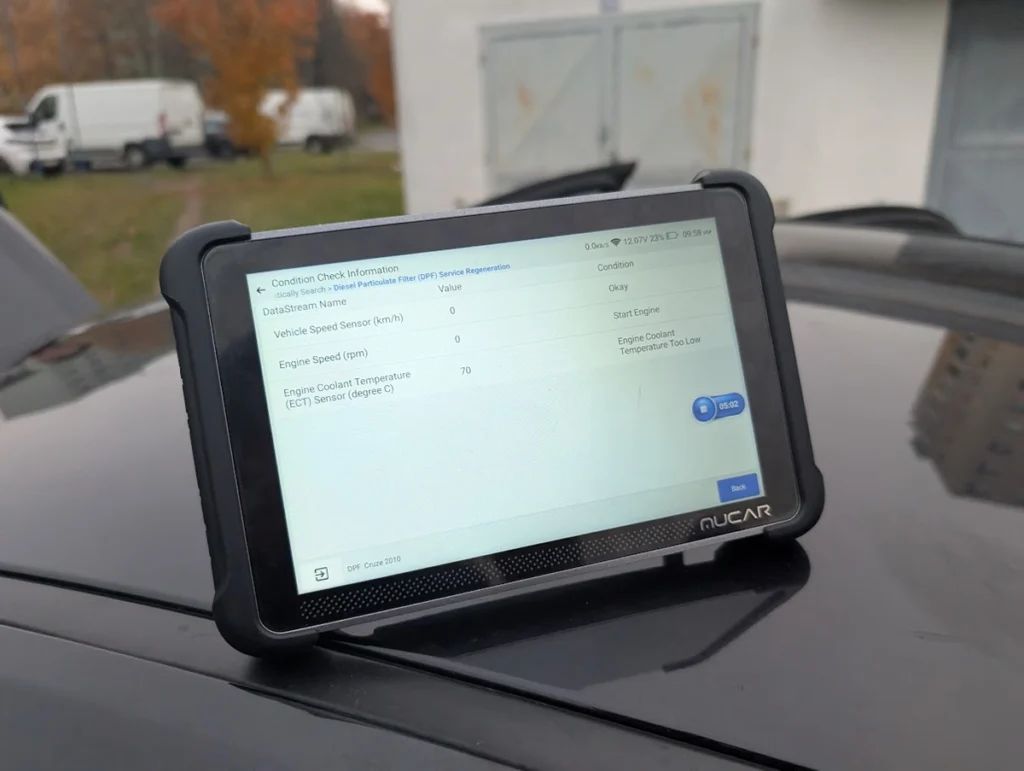
Modern ECUs check a stack of conditions before letting you start. Skip any and the filter ends up melted. Here’s the short list:
- Coolant >75 °C (drove 15+ min beforehand)
- Fuel ¼ tank minimum, ½ recommended
- Battery >12.5 V key on, >13.5 V running
- No active fault codes affecting fueling, MAF, EGR, glow plugs, NOx, DPF sensors, turbo, thermostat
- Soot mass within limits (see next section)
- Δp at idle <30 mbar, higher means check sensor lines first
- Oil level normal, not over-full and not smelling of diesel
- Park or Neutral, parking brake on, AC off
Scanner refuses regen if any are missing. Don’t fight it. Read the message, fix the condition, retry.
Soot Mass Thresholds You Actually Need
This is the table I check before every forced regen attempt. The number tells you whether the filter is regen-capable or already past the point where forcing it causes damage.
| Platform | Active trigger | Warning | Forced regen lockout |
|---|---|---|---|
| VAG 2.0 TDI | ~24 g | ~30 g (P2463) | >40 g standing, >45 g all |
| BMW N47/N57 | 15–24 g | 36–45 g | ~55–60 g |
| Mercedes OM642/651 | 50–80% fill | 100% fill (P2463) | >200% fill |
| Ford 2.0 TDCi | 80% | 100% “filter full” | repeat fail → dealer only |
| PSA FAP | ~40–45% | 65–75% “Urgent” | 85–100% |
| Fiat MultiJet | 45–60% | 80% | >100% blocks |
| Hyundai/Kia CRDi | ~24–30 g | ~80% | repeated fail → GDS only |
Industry rule of thumb: active around 75% “full,” warning at 100%, ECU lockout 150–200%. That’s roughly 30–40 g of soot in a typical 2-litre 4-cyl DPF.
The Workflow When Soot Is Stuck Too High
This is the procedure that’s saved a lot of filters in my workshop. Customer comes in with calculated soot at 60 g (past the lockout) but the actual filter is mechanically fine. Common cause: corrupted soot model from a stuck thermostat, failed glow plug, dirty MAF, boost leak, or recent injector swap.
Step 1: Verify the filter is actually OK. Read Δp at 2,000–3,000 rpm and check ash mass is below limit. Normal Δp at speed + ash below threshold = the calculated soot number is wrong, not the filter.
Step 2: DPF reset. Tell the ECU it’s a brand-new filter. Zeros soot calc/measured, ash mass, distance counter.
- VAG: Security Access (e.g. 27971) → Adaptation IDE00275 “Particle filter initialization” save 1
- BMW: ISTA → DDE → “Replacement of particulate filter”
Step 3: Forced regen. ECU now thinks filter has 0 g soot but reality is 25 g. Regen runs cleanly because we’re inside the active-regen window from the ECU’s perspective.
Step 4: Adaptation. Re-teach the Δp-vs-flow curve. Separate Basic Settings step on VAG, “teach-in” on BMW.
Critical warning: This only works if the filter is actually fine. Reset on a genuinely clogged filter and force regen, you’re pushing 60 g of soot through ignition. That’s where temperatures hit 1,000 °C and substrates melt. The verification in Step 1 is non-negotiable.
Live Data to Watch During Regen
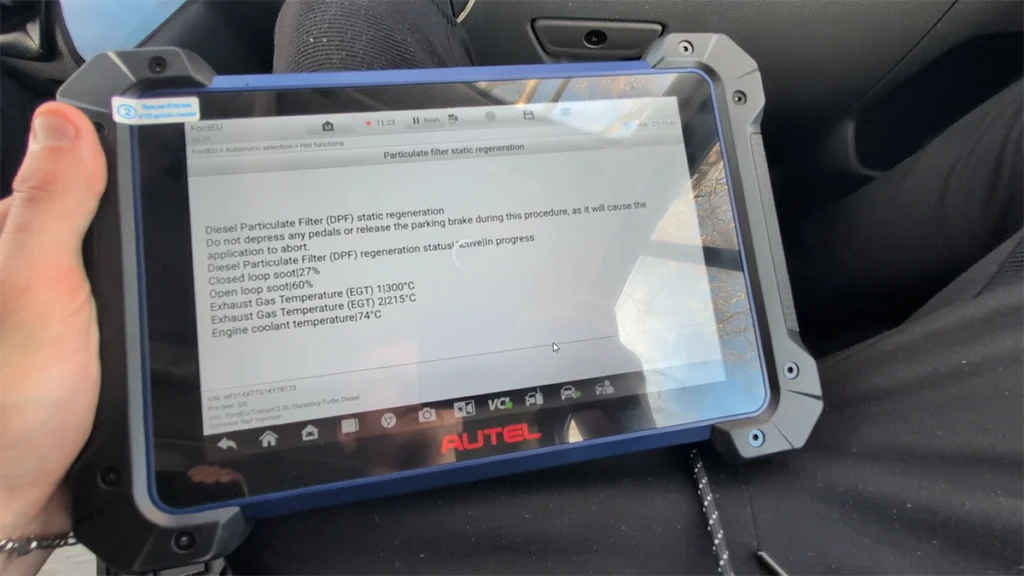
Don’t press Start and walk away. Here’s what should be on your screen:
| Parameter | Idle warm | During regen | Problem indicator |
|---|---|---|---|
| DPF Δp | 0–15 mbar | 30–80 mbar climbing then falling | >300 mbar at idle |
| EGT pre-DPF (T3) | 150–300 °C | 550–700 °C target | <450 °C → regen aborts |
| EGT post-DPF (T4) | 100–250 °C | 50–150 °C below T3, rising | Equal to T3 = no burning OR cracked |
| Soot calculated | grows linearly | drops to <2 g | not dropping = regen failing |
| Ash mass | grows slowly | unchanged | 80–150 g = DPF replacement |
Most useful single indicator: gap between T3 and T4. When soot is burning, T3 is higher because heat is being absorbed inside the filter. As soot disappears, T4 rises to match T3. If they’re equal at the start, either no soot to burn or the substrate is cracked.
Step-by-Step: How I Run a Forced Regen
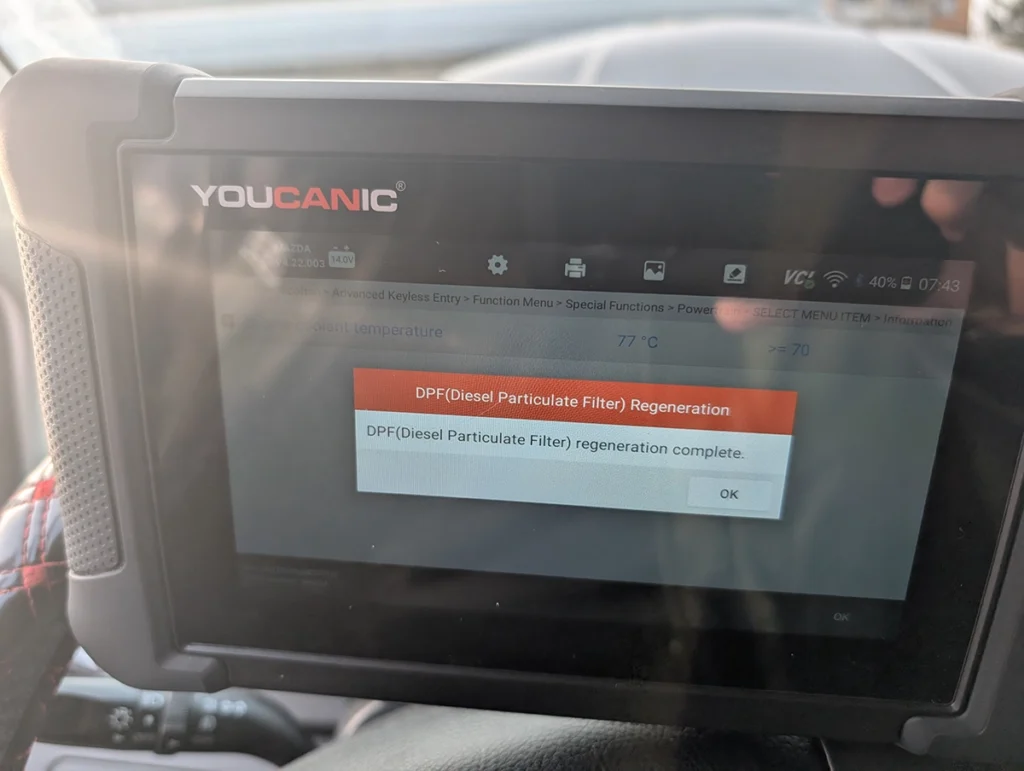
- Connect scanner, key on engine off, auto-ID VIN
- Full vehicle scan, resolve all blocking DTCs first (sensor codes, MAF, glow plugs, EGR, thermostat)
- Check DPF live data, confirm soot/ash/Δp/oil dilution all in window
- Drive the car to fully warm, return to safe outdoor location 5+ m clear of anything flammable
- Scanner menu: Engine ECU → Service Functions / Bidirectional → DPF Regeneration
- During regen: idle elevates, fans flat-out, T3 climbs to 550–700 °C, soot drops in steps. Don’t shut engine off mid-cycle — that cracks substrates from thermal shock.
- After completion: idle 3–5 minutes before key-off, let DPF drop below 300 °C
- Verify: soot calculated <5 g, measured ≈0, Δp idle <10 mbar, regen counter +1
- Drive cycle 20–30 min at >60 km/h to confirm no return codes
If anything looks wrong, stop and diagnose. Don’t retry blindly.
Manufacturer Quick Reference
VAG (VCDS): Security Access 27971 → Basic Settings → “Regeneration while Standing.” Common login codes: 12233, 21295, 27971.
BMW (ISTA+): Service Functions → Powertrain → DDE → Regeneration of Particulate Filter. M57/N57 needs glow + DPF codes (480A/481A) cleared first.
Mercedes (XENTRY): Adaptations → “Service regeneration of diesel particulate filter.”
Ford (FDRS): Powertrain → “Diesel Particulate Filter Service Regeneration.” 2011–2015 6.7 SuperDuty needs “Manual Regen with Active Regen Inhibit” enabled in Programmable Parameters first (TSB 13-11-14).
PSA (DiagBox): “Forced regeneration of additive particulate filter.” Hood open, insulation removed.
Fiat (MultiECUscan): Adjustments → “Service regeneration.” Some Doblo/Ducato support pedal-initiated procedure: ignition on engine off, neutral, brake + accelerator 10 seconds, DPF light flashes, start engine.
Hyundai/Kia (GDS/KDS): Inspection/Test → “DPF Service Regeneration (Stationary).”
Fault Codes Reference
The matrix I run through when a customer sends a photo of the scanner screen:
P2002 DPF efficiency below threshold. Soot/ash saturation, cracked substrate, failed Δp sensor, or exhaust leak. Regen helps only if substrate sound and sensors verified.
P2452/2454/2455 Δp sensor circuit codes. Sensor swap typically $40–$150. Forced regen blocked until repaired.
P2453 Δp sensor range/performance. Most common cause: clogged silicone sense hoses. Disconnect, blow through with shop air <30 psi, replace if oil-soaked. Cheapest fix in DPF diagnostics.
P242F Ash accumulation. Forced regen will NOT help. Ash is non-combustible. Off-car cleaning mandatory.
P244A Δp too low. Cracked substrate, missing or gutted DPF, or disconnected sensor hose. Don’t regen, replace.
P244B Δp too high. Heavy soot, end-of-life ash, or melted substrate. Forced regen only if soot below 100% threshold AND ECU permits.
P244C Regen EGT too low. Failed EGT sensor, failed post-injection (Ford 2.0 TDCi, Mazda CX-5 well-known for this), EGR or thermostat stuck open. Fix root cause first.
P244D Regen EGT too high. Substrate likely already heat-damaged. Inspect, usually replace. Don’t retry.
P2459 Regen frequency too high. Faulty injectors, EGR stuck open, intake leak, false-high Δp sensor. Replacing the DPF without fixing this is throwing money away.
P2461 Regen incomplete. Trip too short, engine shut off mid-cycle, or fuel below 25%. Resolve concurrent codes, retry.
P2463 DPF soot accumulation. Usually a death-knell code. Soot over 100% of limit, ECU refuses auto-regen, may force engine derate. Filter is irreversibly oversaturated, often ash-clogged underneath. Toyota service literature is explicit: “PM forced regeneration is prohibited.” Forcing regen at this stage usually fails AND risks destroying the substrate. Soot ignition causes thermal runaway over 1,000 °C, which melts cordierite. Path forward: off-car cleaning or replacement.
P0421 Warm-up cat efficiency. On diesels = DOC failure. Test: temperature rise across DOC during regen. Healthy >100 °C across the brick, dead DOC <30 °C. Critical because the DOC is what lights the DPF.
When Forced Regen Won’t Work
Stop pressing buttons if any of these are true:
| Indicator | What to do |
|---|---|
| Soot >100% AND P2463 set | Off-car cleaning or replacement |
| Δp >300 mbar at idle, no improvement after sensor checks | Off-car cleaning |
| Oil level rising, oil smells of diesel | STOP, runaway diesel risk. Drain oil first |
| P244D appears during regen | Substrate likely heat-damaged, inspect |
| 2 failed regens despite verified sensors | Off-car, further attempts risk thermal damage |
| Visible substrate damage on endoscope | Replace |
The runaway diesel risk is the one that scares me most. Frequent failed regens leave fuel accumulating in the sump from incomplete post-injection burn. When the dipstick reads above max and the oil smells like diesel, the engine can ingest its own oil via the PCV. Once it does, the engine runs uncontrolled with no fuel cutoff effective. Documented destructions on Volvo, Range Rover Evoque, VAG, Mazda Skyactiv-D. Always check oil level and smell before another regen.
Off-Car Cleaning vs Replacement
When the filter is past forced-regen but the substrate isn’t damaged, off-car cleaning saves you 70–85% vs OEM replacement.
Cleaning prices (2026):
- USA: $250–$700 light-duty, $400–$900 HGV
- UK: $190–$510 light-duty
- EU: $270–$650 light-duty
Reputable networks: Ceramex (UK), DPF Centre/Quantum, DPF Doctor mobile (UK), any FSX-equipped dealer (US).
Cleaning won’t work on: cracked substrates, melted/sintered cells, coolant or oil-contaminated filters, ash beyond replaceable threshold (>100 g passenger), depleted catalyst washcoat.
Replacement cost reality:
| Engine | OEM new | Aftermarket | Labor |
|---|---|---|---|
| VW/Audi/Skoda 2.0 TDI | $1,200–$2,000 | $230–$900 | $190–$450 |
| Audi 3.0 TDI | $2,300–$4,000 | $510–$1,000 | $320–$640 |
| BMW N47/B47/N57 | $1,800–$3,500 | $340–$760 | $250–$640 |
| Mercedes OM651 | $1,500–$3,000 | $510–$890 | $250–$760 |
| Mercedes OM642 V6 | $2,800–$4,500 | $760–$1,400 | $450–$890 |
| Ford 2.0 TDCi | $760–$1,500 | $230–$450 | $190–$380 |
| PSA 1.6 HDi | ~$760 (+$240 surcharge) | $230–$360 | $130–$250 |
| Renault 1.5 dCi | $700–$1,150 | $230–$360 | $190–$320 |
| Fiat MultiJet | $570–$1,800 | $230–$510 | $190–$380 |
| Hyundai/Kia CRDi | $890–$1,800 | $320–$640 | $190–$380 |
Aftermarket warranty is 12–24 months but voided if you didn’t fix the root cause first. Putting a $500 filter on a car with a leaking injector buys you a $500 problem in 6 months.
Why Frequent Regens Damage the Whole Engine
Customers come every 2 weeks for forced regens. I tell them every time: you’re not maintaining the car, you’re slowly destroying it. Here’s what gets damaged.
Engine oil dilution is the most damaging path. Late post-injection means ~40% of the post fuel ends up in the oil instead of burning in the cylinder (SAE 2019-01-2354). Real measurements: Blackstone Labs sees 5.2% fuel dilution average on Ford 6.7 PowerStroke at 5,000-mi changes in city duty. BMW N47 case: 800 mL of fuel in a 4–4.5 L sump (15–18% dilution). At >2% dilution oil viscosity drops below safe film thickness; at 5%+ flashpoint drops below 180 °F.
Ford added 2 quarts of oil capacity to the 2023 6.7 PowerStroke specifically to dilute fuel-in-oil concentration. When regens are frequent, cut oil change intervals from 7,500–10,000 mi to 3,500–5,000 mi.
Turbocharger. Soot packs the VNT vanes, oil cokes in the bearings from EGT excursions. Turbos that should reach 200,000+ km routinely fail at 100,000–150,000 under 2-week regen cadence. PSA 1.6 HDi famously has carbon micro-particles blocking the turbo oil-feed banjo bolt filter, causing oil starvation.
EGR cooler. Cycles from 150 °C to 600 °C+ repeatedly, cracks brazed joints. BMW X5 35d had a recall for this. Coolant ingestion poisons the DOC and DPF with silica, accelerating clogging in a feedback loop.
Sensors. EGT sensors thermal-shock crack their ceramic thermistors, premature failure at 60–120k mi ($100–250 each). NOx sensors fail from wet soot exposure during failed regens. BMW B47/N57: ~$500 part / $1,300 dealer-installed, with multi-failure pattern.
Δp sensor. Silicone tubes embrittle from thermal cycling. Faulty sensor reads falsely high, triggers unnecessary regens, that’s the second feedback loop killing the engine.
Injectors. Post-injection adds 1–2 firing events per cycle. Cummins 6.7 nominal injector life 500,000 mi observed at 250,000 mi in active-regen-heavy duty. Mazda Skyactiv-D owners commonly find injector replacement restores normal regen interval, confirming injector wear as a primary driver of excessive regen frequency.
Healthy vs Concerning Regen Frequency
| Vehicle type | Healthy | Concerning | Critical |
|---|---|---|---|
| Light-duty passenger diesel | 300–600 mi / 500–1,000 km | <200 mi | <100 mi |
| Heavy-duty truck (PSD, Cummins, Duramax) | 200–400 mi | <150 mi (P2459) | <100 mi |
A car needing forced regen every 2 weeks produces more soot than the system was designed to handle. That’s a symptom, not a maintenance pattern. Real fix is figuring out why interval collapsed, not manually regenerating until something melts.
Root Cause Checklist Before Regen
In rough order of frequency:
- Short-trip duty cycle, no passive regen achievable
- Faulty Δp sensor or clogged take-off lines (most common cheap fix)
- Clogged EGR cooler or valve
- Failed/weak glow plugs causing soot dump on cold start
- Worn or leaking injectors (Mazda Skyactiv-D, Cummins 6.7 textbook)
- Failed turbo
- Wrong oil spec (high-SAPS clogs ash 3–5x faster)
- Failed thermostat keeping coolant cold (BMW E70 X5d, Cruze diesel famous for this)
- Outdated PCM flash (VW post-Dieselgate doubled regen frequency)
When a customer keeps coming back: structured diagnosis beats more regens. Live-data scan + Blackstone oil sample + EGR pressure test + injector quantity correction + turbo VNT free-play + thermostat opening temp. Reset adaptations after repair, road-test 200+ mi to verify normal interval returns.
Safety: Don’t Burn Down Your Garage
Exhaust temps are no joke. DPF core internal hits 600–650 °C. Tailpipe surface 400–600 °C for 15–25 minutes. Pipe glows visibly in low light.
Outdoors only, never in a closed garage even with door open. CO + heated unburned hydrocarbons are far higher than normal idle.
Distance:
- 3 m / 10 ft minimum behind tailpipe
- 5–10 m from buildings, vehicles, fuel
- 10+ m from dry vegetation
- Never on grass. Toyota LandCruiser 70-series Australia recall covered 22,791 vehicles for grass-fire risk. Ford Ranger PXII: 24 fires linked to grass accumulation around DPF.
Fire extinguisher mandatory: ABC dry chemical, 2A:10B:C minimum, 2 kg / 4.4 lb minimum, within 5 m and accessible (not behind the truck).
No exhaust contact for 30 minutes post-regen. Closed shoes, long pants, safety glasses.
Pre-Regen Checklist
Print this. Stick it on your toolbox.
- [ ] Vehicle outdoors, 5+ m from anything flammable
- [ ] Fire extinguisher within reach
- [ ] Fuel ¼ tank minimum
- [ ] Engine fully warm, drove ≥15 min
- [ ] Coolant >75 °C
- [ ] Park or Neutral, parking brake on, AC off
- [ ] No active codes other than DPF soot codes
- [ ] AdBlue tank above ¼ if applicable
- [ ] Oil level normal, not over-full or fuel-smelling
- [ ] Hood per OEM (closed VAG, open PSA)
- [ ] Scanner connected with soot mass + EGT live data on screen
Common Abort Reasons
Most common, in order:
- Coolant <75 °C
- Active blocking fault codes
- Low fuel <¼
- Brake/clutch/accelerator pressed
- Gear engaged or parking brake off
- Soot above lockout threshold
- AdBlue/DEF fault
- Failed thermostat (BMW E70 X5d, Cruze diesel)
If regen aborts: read the codes, fix the reason, wait 10 minutes, retry once. Stop after 3 consecutive aborts. There’s an underlying fault and continuing risks DPF meltdown ($1,500–4,000 replacement), engine fire, or oil dilution.
FAQ
Can any OBD2 scanner do DPF regeneration? No. Generic scanners read codes only. You need a bidirectional scanner with manufacturer-specific service functions. Most scanners under $100 won’t do it.
How often should DPF regen happen on a healthy car? Every 300–600 mi (500–1,000 km) on light-duty diesels, 200–400 mi on heavy-duty pickups. More frequent than that means something else is wrong.
How long does forced regen take? Total 20–45 minutes. Warm-up 5–10 min, active burn 15–25 min, cooldown 5–10 min idle before key-off.
Can I damage my DPF by forcing regen? Yes. Forcing regen with soot above 100% (P2463) can cause thermal runaway over 1,000 °C, melting the cordierite. Once melted, only replacement.
My DPF light keeps coming back after regen, what’s wrong? Forced regen cleared the symptom but didn’t fix the cause. Common: faulty Δp sensor (cheap), short-trip driving (behavioral), worn injectors (expensive), failed glow plugs, EGR stuck, thermostat stuck. Get a proper diagnostic.
Is OBDeleven or Carly enough? OBDeleven Pro on VAG can do forced regen but needs Pro/Ultimate plan + security access codes. Carly works on BMW (confirmed) but reportedly doesn’t trigger actual regen on VW T6/Transporter. For VAG, VCDS or a Foxwell-class scanner is more reliable.
The Bottom Line
Forced regeneration is not maintenance. It’s a diagnostic endpoint. The thing you do after establishing the soot-source problem is fixed.
Every forced regen on an unfixed engine is a fuel-dilution event, a thermal-stress event, a carbon event for the turbo, and a step closer to ECU lockout. Customers I see every 2 weeks aren’t getting cars maintained, they’re getting engines slowly cooked.
The right answer is always the boring answer: scan, diagnose, fix, then regen. Skipping the diagnose step turns a $40 sensor problem into a $4,000 turbo + DPF + injector replacement six months down the road.
If you’ve got a question I didn’t cover, hit the contact page or drop a comment. I read everything.
→ Best OBD2 Scanners for DPF Regeneration in 2026 (separate article)
Most popular OBD2 guides



Hi, I am Juraj Lukacko. I got frustrated by unhelpful and scammy mechanics, so I decided to learn everything about car diagnostics myself. I test dozens of new car diagnostic tools every month along with learning new strategies to fix and customize cars.