Published: February 19, 2026 · Last updated: June 1, 2026
A beginner’s guide to car key programming from someone who started at zero. The three things every key needs, how to order the right replacement, and what actually trips you up.
Can you actually program a car key yourself?
Short answer: yes, for a meaningful chunk of cars on the road, with a $400–$700 tool. The OBD procedure itself is often two clicks. What trips beginners up is everything around it — picking the right replacement key, knowing which chip you need, and which remote frequency matches your car.
A few months ago I knew zero about key programming. Today I’ve done jobs on Honda, Renault, VW, Nissan, Citroën, BMW, and Toyota. Some went smooth in 15 minutes. Some cost me three reorders and a bricked module. This is the guide I wish someone had handed me at the start — the basics, the gotchas, and the path from zero to your first working DIY key.
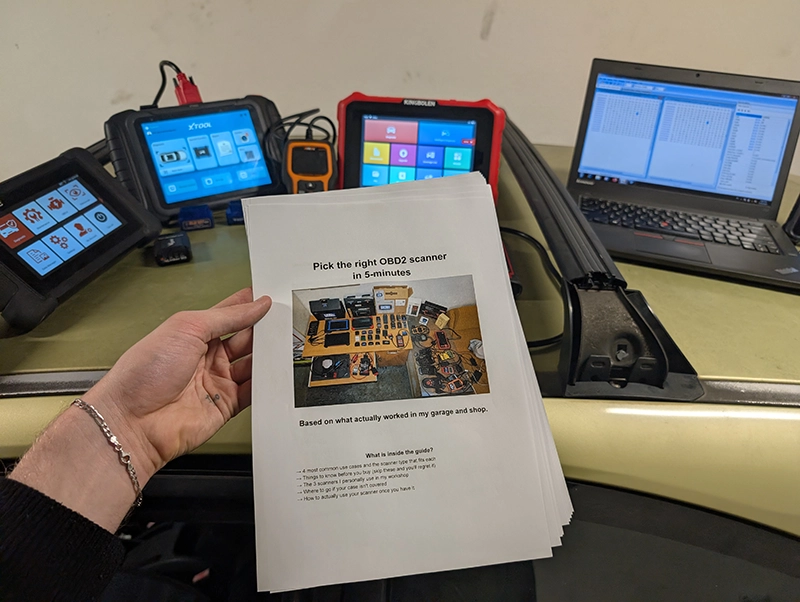
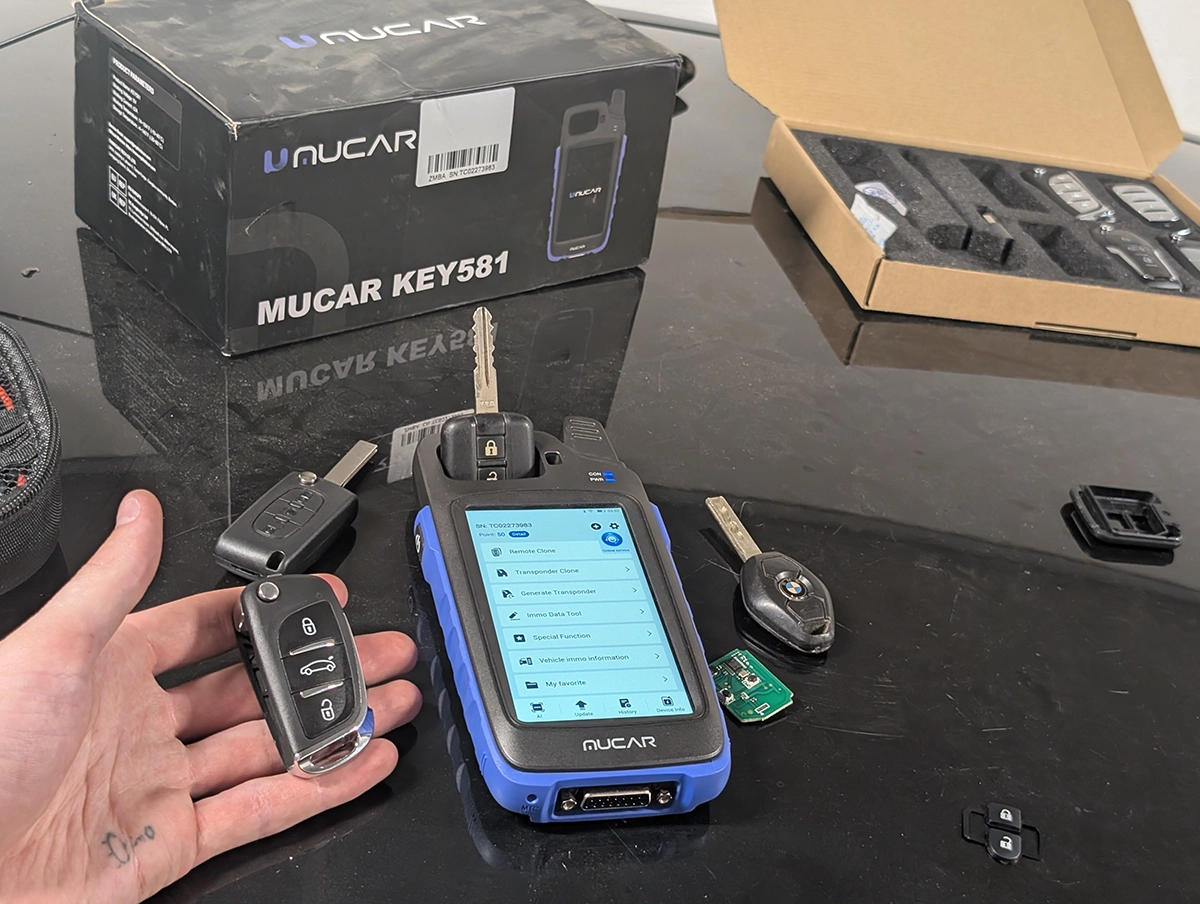
I’ll stick to the tools I actually own and use: Mucar 581, Autel IM608, Xtool D8S + KC100. There are plenty of others — Xhorse VVDI, Lonsdor K518, Yanhua ACDP — and they’re great, but I haven’t used them so I won’t pretend to review them.
🔗 My current key programming kit: Best OBD2 Scanners for Key Programming
This is the manual I wish someone had handed me before I started.
Rule #1: every car has a different procedure
There is no universal “program a car key” procedure. Every make, every model, sometimes every model year has its own steps, its own menu path, its own PIN system, its own quirks.
This is why locksmiths charge what they charge. It’s not that any one job is hard — it’s that knowing 200 different procedures and which tool does which one is hard. You’re paying for the knowledge, not the time.
For us as DIYers, that means before you order anything, you need to find the procedure for your specific car. Two places to look:
- iamcarhacker.com/procedures — I document every key job I do
- mhhauto.com — the biggest auto-locksmith forum on the internet, $35/year VIP membership pays itself back on your second job
If you can find three threads describing the same procedure with the same tool, you’re in business. If you find five different procedures and a bricked car at the end of every thread, you probably need a more expensive tool — or a locksmith.
The three things every key needs
A working key is three separate things in one plastic shell. Beginners confuse them constantly. If you understand these three from the start, you’re already ahead of most.
1. The blade
The metal part that fits the ignition. On older cars (pre-2015 ish) you physically insert the key into the ignition cylinder during the programming procedure, so the blade has to be cut correctly. On newer smart keys you can sometimes program without cutting at all — the proximity antenna picks up the chip without contact.
How I cut blades:
- Take it to a locksmith. Mine charges €19 per blade. Sounds expensive until you realise the cutting machine starts at €2000.
- AliExpress pre-cut from photo. Some key-shop sellers will cut the blade from a high-resolution photo of your original. Around $3–8 extra on top of the key price. Works well on common wave-cut profiles. I haven’t tested this myself yet, but the locksmith forums seem split on quality — worth trying for a low-stakes spare key.
2. The transponder chip
The chip inside the key head. When you turn the ignition, an antenna ring sends a 125 kHz signal that wakes the chip up. The chip sends back its encrypted ID. If your car’s immobiliser recognises it → engine runs. If not → engine cranks for 5 seconds and dies, immo light flashing.
The chip is what stops your car from being hot-wired. Without the right chip in the key, doors might unlock from the remote, but the engine won’t turn over.
3. The remote
The buttons — lock, unlock, trunk. Completely separate radio from the chip. The remote and chip are usually on the same little PCB inside the key, but they’re two independent transmitters and they pair to the car independently.
This is the #1 thing that surprises beginners: the engine can start perfectly and the remote buttons still do nothing. I’ll come back to why in a minute.
The key insight Programming a key isn’t one job. It’s potentially three jobs: cut the blade, program the chip to the immobiliser, and pair the remote to the car. On some cars they all happen automatically in one procedure. On others (often the ones where things fail) they’re three separate operations.
Why ordering the right replacement key is 80% of the job
When I started, I thought the hard part would be the OBD procedure. It’s not. The hard part is buying the right key.
You can have the right tool, the right procedure, the right working key in your hand to teach the new one — and still fail because the new key has the wrong chip, the wrong remote frequency, or the wrong modulation. I’ve reordered keys three times for one Citroën before I figured out what I was doing.
There are three things on the replacement key that have to match your car. Check all three before you click Buy.
Check #1 — The chip type
Every car’s immobiliser expects a specific chip family. Common ones I’ve run into:
- ID46 — extremely common on 2000s–2010s European and Asian cars
- ID48 — VAG signature chip from the same era
- ID47 — Hyundai/Kia from 2015 onwards
- DST80 / 8A — modern Toyota
You find out which chip your car uses two ways:
Option A — look it up. transpondery.com is free, no signup, and tells you the chip type and OEM part number for almost any car.
Option B — read your existing key. With a chip detector like the Mucar 581, you drop the original key on the coil and it reads back the chip type and IC number directly.
There’s also an unlocked vs locked status. A brand-new blank chip reads “unlocked.” A chip that’s already been programmed to a car reads “locked.” If your AliExpress key arrives reading “locked” out of the box, the seller shipped you a used key — return it.
Check #2 — The remote frequency
The buttons transmit at UHF:
- 433.92 MHz — Europe and most of the world
- 315 MHz — US, Japan, China, Korea
- 868 MHz — some European BMWs
Order the wrong frequency and your remote buttons will be physically incapable of talking to the car. Doesn’t matter how perfectly the chip is programmed.
Check #3 — The modulation (this is the trap that got me)
Even within 433.92 MHz, there are two different ways of encoding the data on top of the carrier: ASK (Amplitude Shift Keying) and FSK (Frequency Shift Keying).
This catches everyone who works on PSA cars (Citroën, Peugeot, DS). PSA used ASK on most cars 2003–2010, then switched to FSK from 2010+. Not consistently — same model, same year can ship with either.
If you order ASK for an FSK car, the chip programs fine, the engine starts, the remote does absolutely nothing. I’ve done this. Twice. On the same car.
Citroën C4 Picasso PIN read fine with the Autel IM608. Chip programmed first time. Engine started. Remote did nothing. I’d ordered an ASK key — the car was FSK. I figured it out by measuring the original remote with the Mucar 581, but only after the fact. Cost me a one-week reorder. If I’d measured before ordering, I’d have saved myself the hassle.
Aftermarket vs OEM keys
You don’t have to buy keys from the dealer. There’s a whole ecosystem of aftermarket replacement keys, mostly via AliExpress and specialised key-shop sellers.
The pros:
- Way cheaper. I bought a Citroën replacement key for $6 that would have been €40+ at a locksmith and probably €150+ from the dealer.
- Some sellers will cut the blade from a photo of your original
- For common chips (ID46, ID48) the quality is generally fine
The risks:
- Some sellers advertise “with chip” and ship empty shells (yes, this happens — opened a “with ID44” key and there was no chip inside)
- Quality varies wildly by seller
- For modern smart proximity keys, aftermarket can be hit-and-miss — sometimes worth paying for OEM
What I look for on AliExpress:
- Seller with 4.7+ stars and 5+ years on the platform
- Listing-specific sales of 100+ (not just seller-wide)
- Reviews mentioning your exact car and year
- Frequency choice clearly visible (315 / 433 / 434 / 868)
- ASK/FSK choice if it’s a PSA car
- Photos that show the actual PCB, not just the plastic case
For modern proximity smart keys on cars from 2018+, I’d lean OEM. The cost of buying three failed aftermarket keys quickly catches up to one dealer key.
My honest field cases
A few jobs I’ve actually done, in shorthand, so you can see what easy and hard look like.
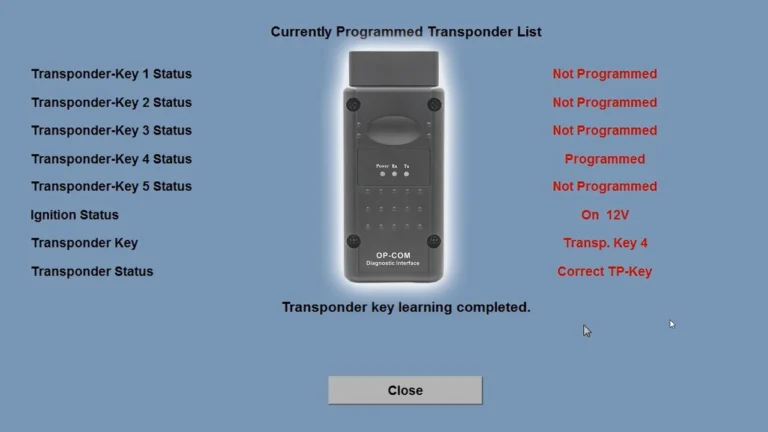
Opel Corsa C 2006 Key Programming steps with Opcom
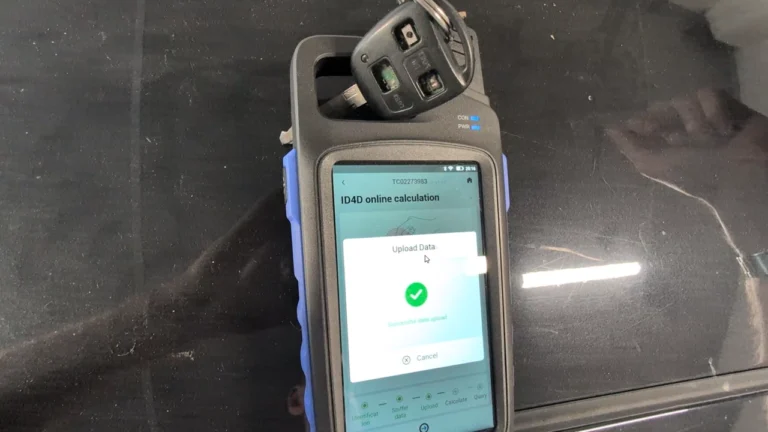
Toyota Avensis 2006 Add new key/Key Cloning: Car Starts, Remote Doesn’t (Full Job)
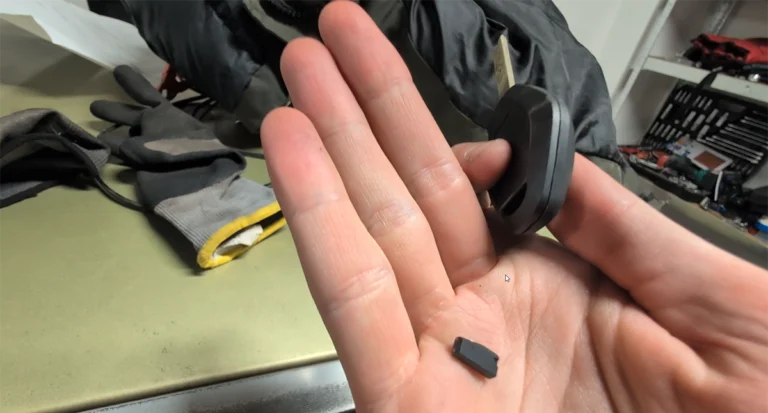
How to Add a Key / Perform AKL on BMW E46
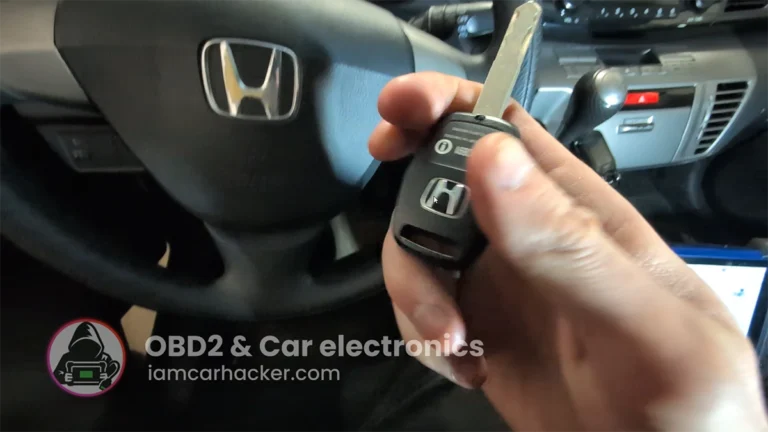
Honda FRV 2006 Key programming / Add new key
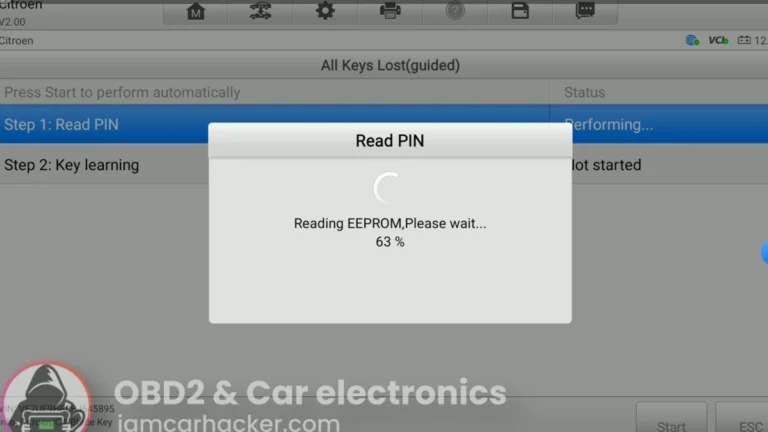
Add / All Keys Lost – Citroën C4 Picasso 2012
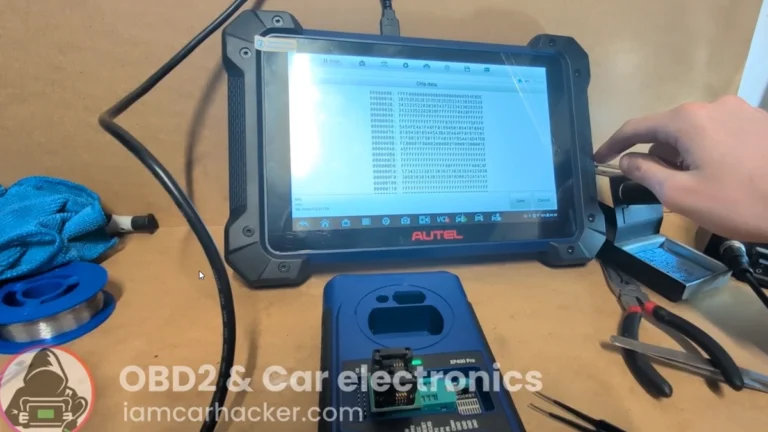
Key programming (add new key / all keys lost) – Passat B6 2.0 TDI (2008)
✓ Honda FRV 2006 — Autel IM608, OBD path, 15 minutes. Easy day.
✓ Renault Mégane II key card — IM608 OBD, 20 minutes.
✓ VW Golf 5 — my first ever key job. Xtool D8S + KC100, all OBD. $15 AliExpress key, chip was actually in there, worked first try. This is the win that convinced me key programming was a thing I could actually do.
✓ Nissan Micra K12 — same car, two scanners. Xtool IP900BT asked me for the 4-digit PIN derived from the glovebox sticker. IM608 read the BCM directly and bypassed the sticker entirely. Both correct, both worked. The “easier” tool depends on whether you have the sticker.
✗ Toyota Avensis (a friend’s car) — cloning fail. Tried to clone the original chip onto an aftermarket replacement with Mucar 581 superchip. Tool said “OK” but the new key didn’t work in the car. Tried the Autel as well, same result. Ended up physically transplanting the chip out of the original key into the new key body — engine started, but the remote buttons were dead because on this PCB design the chip and remote share circuitry. Lesson: order the complete right key, don’t try to mix and match.
✗ Citroën C4 Picasso — the ASK/FSK lesson (covered above).
✗ Passat B6 — bricked then unbricked. Couldn’t read immo data over OBD. Had to pull the comfort control module, desolder the 95320 EEPROM, read it externally, decode the PIN, re-solder. First solder attempt was a cold joint — dead CAN bus, dark dashboard. Re-flowed with fresh flux and the car came back to life. Lesson: you will brick a module on your first solder job. Recovery is usually re-soldering, not replacing.
Cloning vs adding — the distinction that costs people money
There are two ways to “make a new key” and beginners often don’t realise these are different operations:
Adding a key — you teach the car about a new key. The car now knows about two (or more) authorised keys. Each key is a distinct entry in the immobiliser memory.
Cloning a key — you copy the data from an existing key onto a blank. The car can’t tell the difference between original and copy — it thinks they’re the same key.
Cloning sounds great but it has a hard limit: it only works on older fixed-code chips (4C, ID33, some ID46 variants). On modern crypto chips like Megamos AES, DST80, Hitag-Pro, and Renault crypto cards, cloning either fails outright or produces a dead key that the car silently rejects.
The Mucar 581 will sometimes report “OK” on a cloning operation that has actually produced a useless key — because the tool successfully wrote the chip’s static ID, but the car was expecting a cryptographic rolling-code handshake that a clone can’t satisfy. This isn’t a tool bug. It’s a fundamental limit of cloning.
When in doubt, add a new key. Cloning is the shortcut that fails on anything modern.
Tools I actually use
Mucar 581 — $400–$600
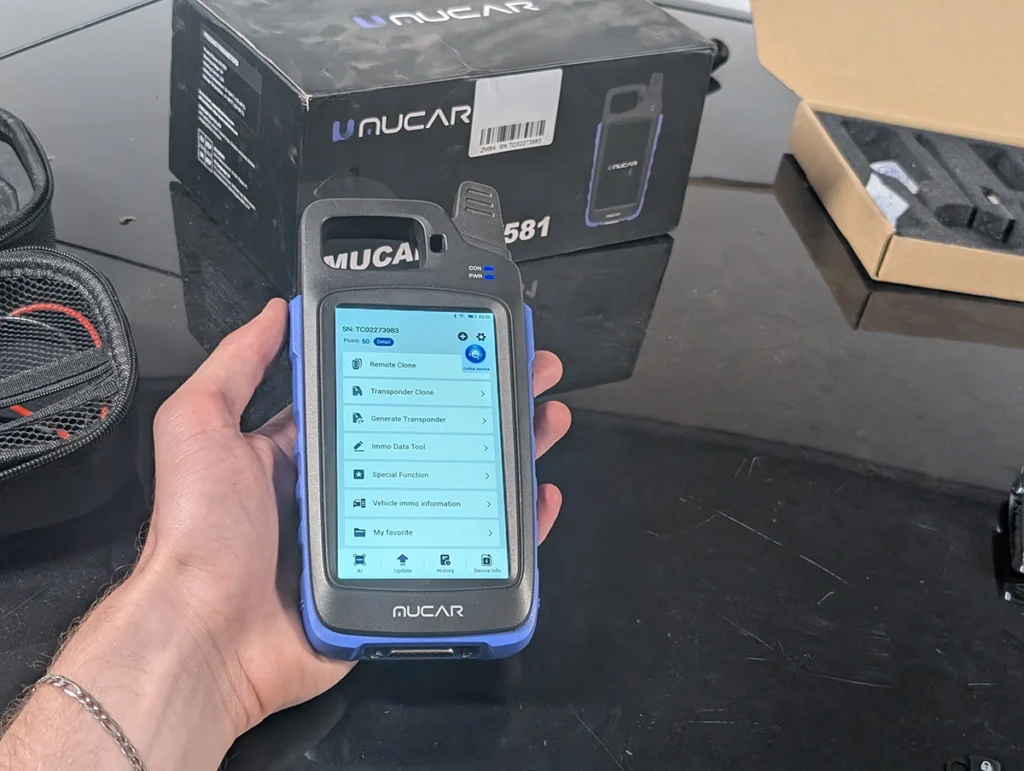
My entry-level tool. Where it shines: chip detection (reads chip type + IC number off the key), frequency detection (reads carrier + modulation off the original remote), and cloning of fixed-code chips. The chip and frequency detection alone justify the price even if you never program a key — they tell you exactly what to order on AliExpress before you spend a cent.
Where it falls short: cloning crypto chips (Megamos AES, DST80, Hitag-Pro). Doesn’t replace a real OBD programmer for harder jobs.
Xtool D8S + KC100 — $700–$800
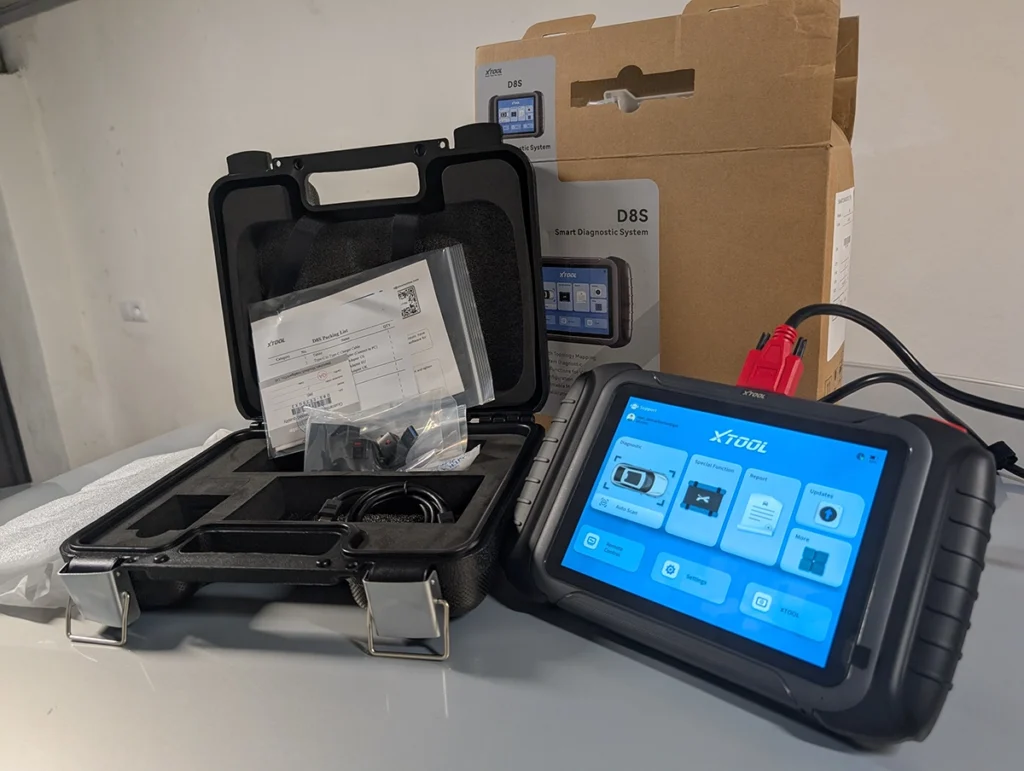
Mid-tier OBD-only key learning across most older European and Asian cars. My VW Golf 5 was done with this. Solid general workshop tool — D8S handles general diagnostics, KC100 is the immo addon for keys. Limited bench/EEPROM functionality, so for harder jobs you eventually outgrow it.
→ XTool D8S review (don’t forget, you need KC100 programmer as well for these jobs)
Autel IM608 II — $2800–$3500
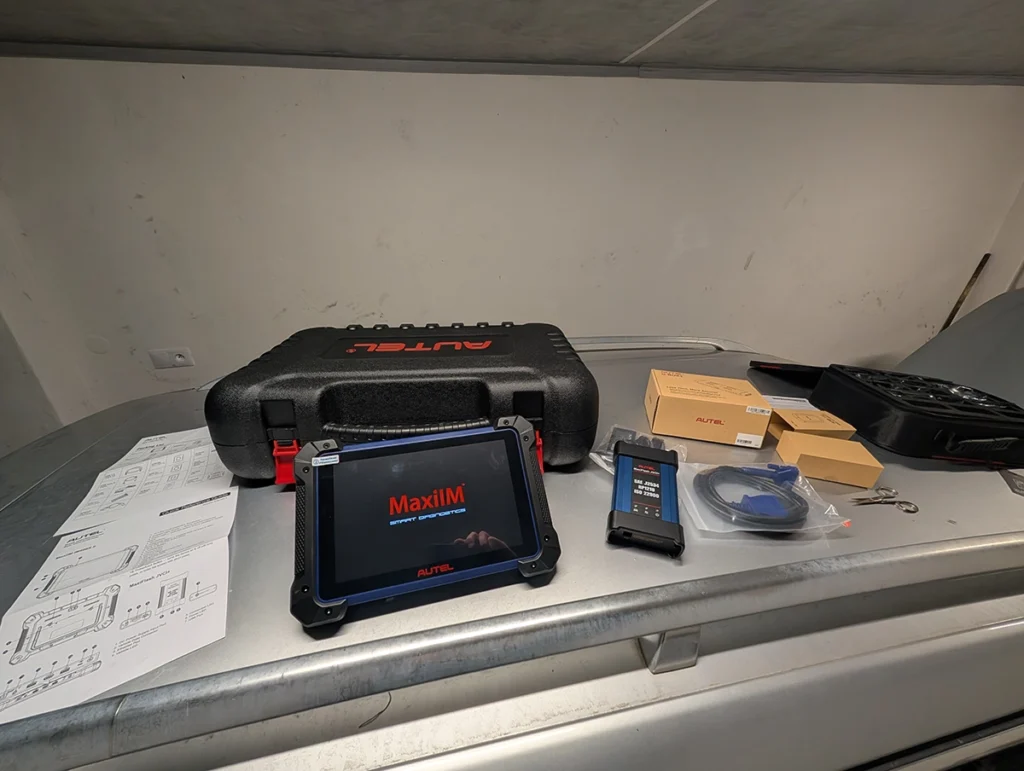
My main tool. Most comprehensive aftermarket OBD + bench combination I’ve used. Excellent VAG, Hyundai/Kia, Nissan. Handles modern BMW (CAS3+ and later) with the G-Box. Not infallible — failed on my BMW E46 EWS write (a known forum-documented issue), where a $30 BMW-specific AK90+ clone got the job done in five minutes. SFD2-locked 2024+ VAG largely beyond it.
When to stop and call someone
The hardest skill is knowing when you’re beat. Honest red flags:
- Two failed write attempts on the same key — stop, diagnose, don’t “just try again” and risk locking the module
- Module bricked and you don’t have an original EEPROM dump — take what you have to MHH Auto, don’t power-cycle 20 times hoping
- All Keys Lost on anything modern (2018+ VAG, 2017+ BMW, 2016+ Mercedes) — replacement cluster/EZS is €1500–€3500 if you brick it
- Customer car (paid job) and you’ve spent 4+ hours — your hourly rate is now negative
A competent local auto-locksmith in Europe charges €120–250 for an add-key, €250–500 for all-keys-lost. Build that referral relationship before you need it.
FAQ
Can I program a car key myself without going to the dealer? Yes, on a meaningful chunk of cars (mostly pre-2015 European and Asian, and many pre-2018) with a $400–$700 OBD2 scanner that supports key programming. You’ll need at least one working key for most “add key” procedures, and you’ll need to identify your immobiliser system first.
How much does it cost to do it yourself? About €500 for the first job all-in — replacement key on AliExpress (€10–30), blade cutting at a locksmith (€15–25), and one-time tool investment ($400–600). Every job after that is just the cost of the key.
Do I need a working key to program a new one? For ~90% of procedures, yes. “Add Key” requires at least one existing working key during the procedure. If you’ve lost all your keys you need an “All Keys Lost” procedure, which is significantly harder and often needs bench work on the immobiliser module.
Why does my new remote not work even though the engine starts? Three possibilities: (a) the remote needs a separate pairing step the chip procedure didn’t cover, (b) the remote frequency doesn’t match your region, or (c) you’ve hit the ASK vs FSK modulation trap on a PSA car. Always measure the original before ordering.
Can I clone my existing key instead of adding a new one? Cloning works on older fixed-code chips. On modern crypto chips (Megamos AES, DST80, Hitag-Pro, Renault crypto cards) cloning either fails or silently produces a key that the car rejects. When in doubt, add a new key instead of cloning.
Are AliExpress keys safe to use? For common chips (ID46, ID48) on cars 2002–2015, generally yes — pick sellers with high listing-specific sales and reviews mentioning your exact model. For modern proximity smart keys (2018+), aftermarket can be hit-and-miss and OEM is often worth the price difference.
What to do next
- 🔗 Best OBD2 Scanners for Key Programming — which tool to start with
- 🔗 Mucar 581 Full Review — deep dive on my budget pick
- 🔗 All my key programming procedures — browse by car make and model
Most popular OBD2 guides


Hi, I am Juraj Lukacko. I got frustrated by unhelpful and scammy mechanics, so I decided to learn everything about car diagnostics myself. I test dozens of new car diagnostic tools every month along with learning new strategies to fix and customize cars.