
Published: March 18, 2026 · Last updated: July 7, 2026
A scanner won’t flash up “injector 3 is dead.” What it gives you is live data that points you toward or away from the injectors. Read it right and you save yourself from throwing a set of €200 injectors at a problem that was never the injectors.
Quick answer
You check injectors with an OBD2 scanner by reading live data. On diesels that means per-cylinder injector correction values. On petrol it means fuel trims, misfire counters and oxygen sensor behaviour.
The catch is that bad numbers rarely prove a bad injector on their own, because the ECU is constantly compensating for other faults. So you read the pattern at idle and under load, never a single screenshot.
The scanner shows how the ECU reacts to what the engine is doing. It does not condemn an injector by itself. Confirm before you replace anything.
What the scanner actually shows (petrol vs diesel)
You get two different pictures depending on fuel type.
On diesel you usually get direct per-cylinder data: injector correction or deviation values in mg/stroke, one number per cylinder. That is the closest thing to reading the injectors themselves.
On petrol there is no direct injector reading. You work it out from short and long term fuel trims, misfire counters, O2 sensor behaviour and fuel system status. A clogged petrol injector shows up as a lean cylinder and a misfire, not as a tidy “injector” number.
| Data | Petrol | Diesel |
|---|---|---|
| Per-cylinder injector value | rarely | yes (mg/stroke) |
| Fuel trims (STFT / LTFT) | yes, central | secondary |
| Misfire counters | yes | yes |
| O2 sensor behaviour | yes | not applicable |
Where to find the values
On most cars the injector data sits right in normal live data or measuring blocks. Open the engine ECU, scroll to injector deviation or correction, done.
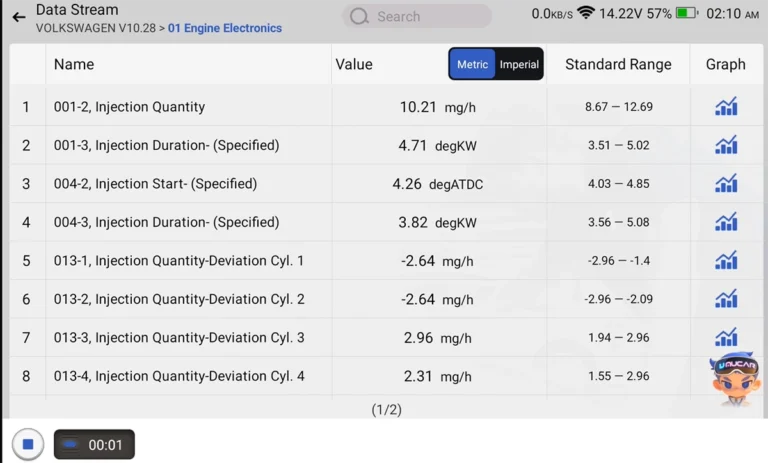
On VAG diesels (VW, Audi, Škoda, Seat) it often lives in measuring block group 013 for per-cylinder deviation. Cheaper scanners make you type the channel numbers in by hand instead of naming them.
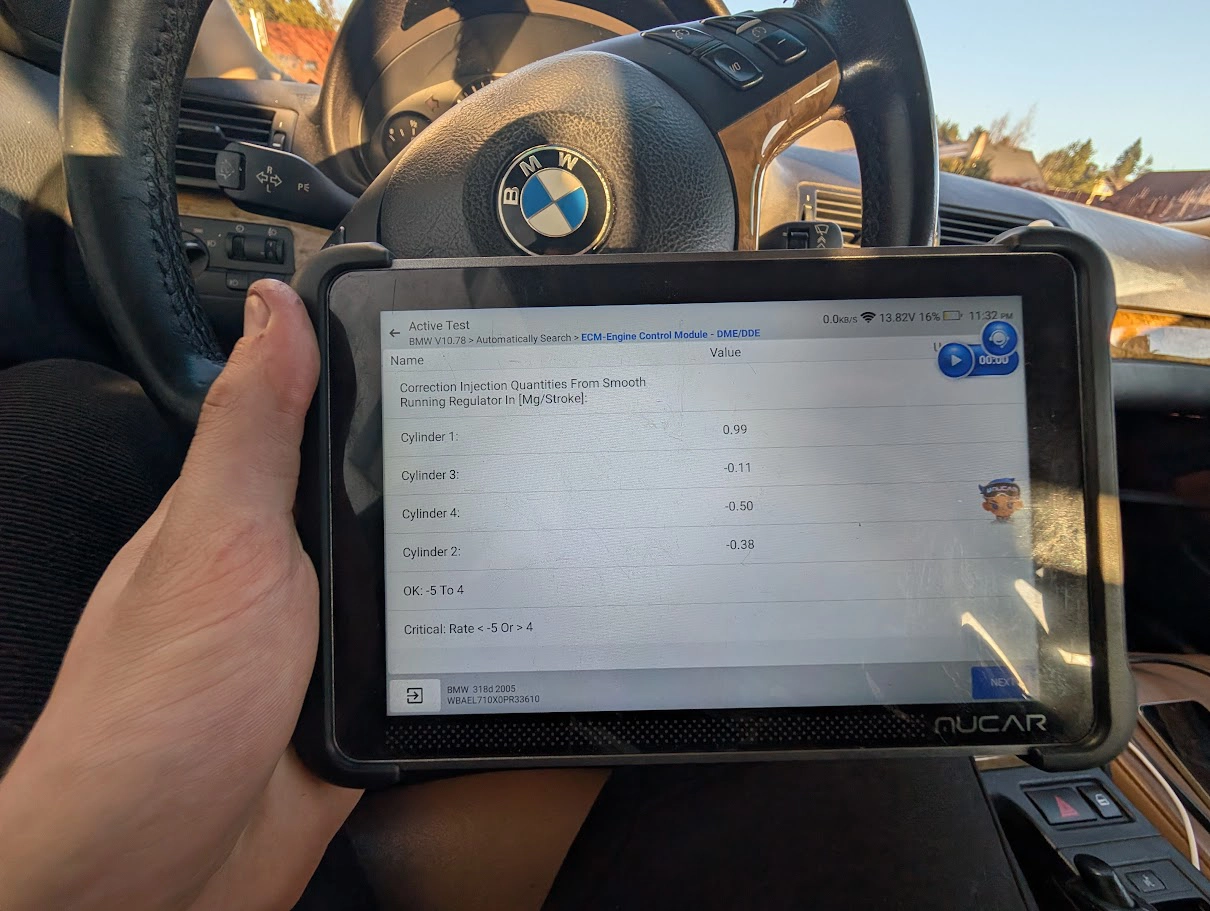
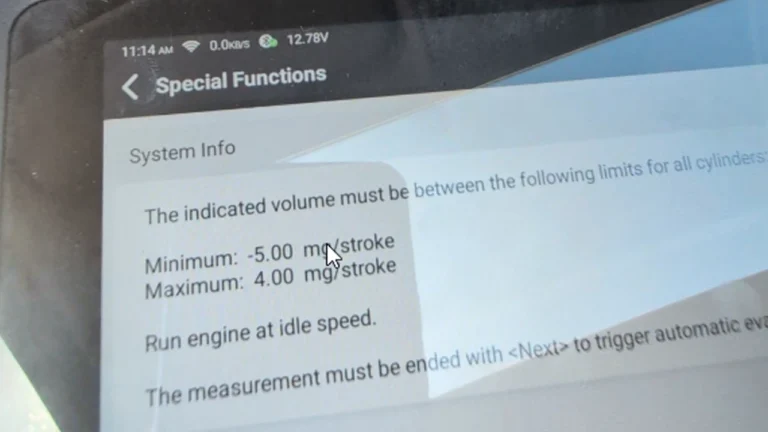
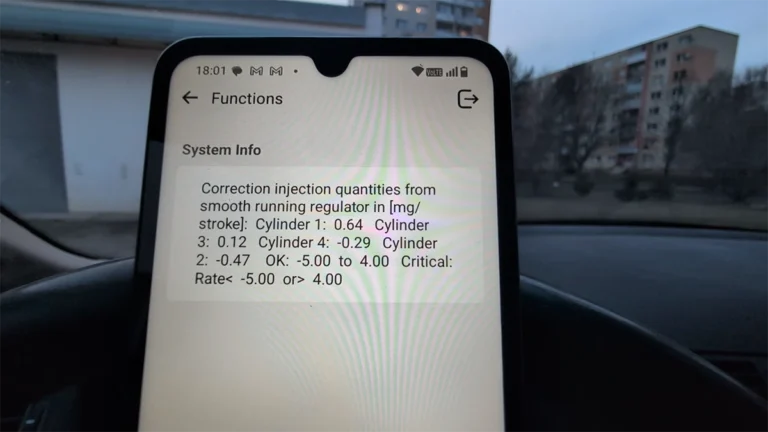
Some BMW diesels are the exception. On my E46 and my E61 530d the correction values are not in standard live data at all. They are tucked inside Special Functions under Smooth Running Control. If you only look in live data you will swear the car doesn’t support it.
Not every scanner exposes injector correction values, even when the car supports them. On the same BMW diesel I have had one tool show nothing and another show all six cylinders. If your live data looks empty, check special functions before you blame the car.
Check how to read injector values for example cars
Reading the numbers
Diesel corrections are in mg/stroke and you want them near zero. Around ±1 is excellent, ±2 acceptable, ±3 to ±4 a warning zone worth chasing. Some scanners show a wide factory window like -5 to +4, but that is the limit the car tolerates, not a healthy reading. Look for the one cylinder that stands out from the rest.
Petrol gives you no injector number, so you read fuel trims instead. Roughly -10% to +10% is fine, past ±20% something is wrong. Positive means the ECU is adding fuel for a lean mix, negative means it is pulling fuel for a rich one. A clogged injector usually pushes the trims positive on its bank.
The rule that saves money: idle vs load
Never judge from one reading at idle. Compare idle against a slightly raised, loaded RPM. High at idle, normal under load: the ECU is compensating for something else, injectors probably fine.
High at idle and under load: an injector fault is genuinely likely. One cylinder at an extreme while the rest sit near zero: bad injector, or compression trouble on that cylinder.
Don’t swap injectors off a single idle screenshot. Corrections that spike at idle but clean up under load are almost always the ECU covering for a vacuum leak, EGR, compression or fuel pressure fault.
Related injector and fueling procedures
Final note
An OBD2 scanner can tell you a lot about injector behavior, but it does not diagnose injectors in isolation. The numbers only show how the ECU reacts to what is happening in the engine.
That is why the best approach is simple: use injector data, fuel trims, and other live data together, then confirm your conclusion with follow-up tests when needed.
Can you check petrol injectors with an OBD2 scanner?
Only indirectly. Petrol engines rarely give a per-cylinder injector value, so you read short and long term fuel trims, misfire counters and O2 behaviour. Trims between -10% and +10% are fine, anything past ±20% points to a fueling problem. A clogged petrol injector usually shows as a lean cylinder with a misfire rather than a dedicated reading.
What are normal injector correction values on a diesel?
Within about ±1 mg/stroke is excellent, ±2 acceptable, and ±3 to ±4 a warning zone worth investigating. Some scanners display a much wider factory tolerance like -5 to +4, but that is the limit the car accepts, not a sign of health. Aim close to zero and watch for one cylinder standing apart.
Do bad injector correction values always mean a bad injector?
No, and this is the mistake that costs people money. High corrections often mean the injector is compensating for low compression, a vacuum or intake leak, a MAF fault, EGR or fuel pressure issues. The way to tell them apart is idle versus load. Corrections that are high at idle but settle under load usually point away from the injectors.
Can you test fuel injectors with an OBD2 scanner?
Yes, indirectly. On diesels you read per-cylinder correction values in mg/stroke that show how hard the ECU works each cylinder. On petrol you infer injector health from fuel trims, misfire counters and O2 data. Either way the scanner shows how the ECU is compensating, so treat the reading as a strong pointer, not a final verdict.
Most popular OBD2 guides


Hi, I am Juraj Lukacko. I got frustrated by unhelpful and scammy mechanics, so I decided to learn everything about car diagnostics myself. I test dozens of new car diagnostic tools every month along with learning new strategies to fix and customize cars.