Published: August 11, 2024 · Last updated: June 4, 2026
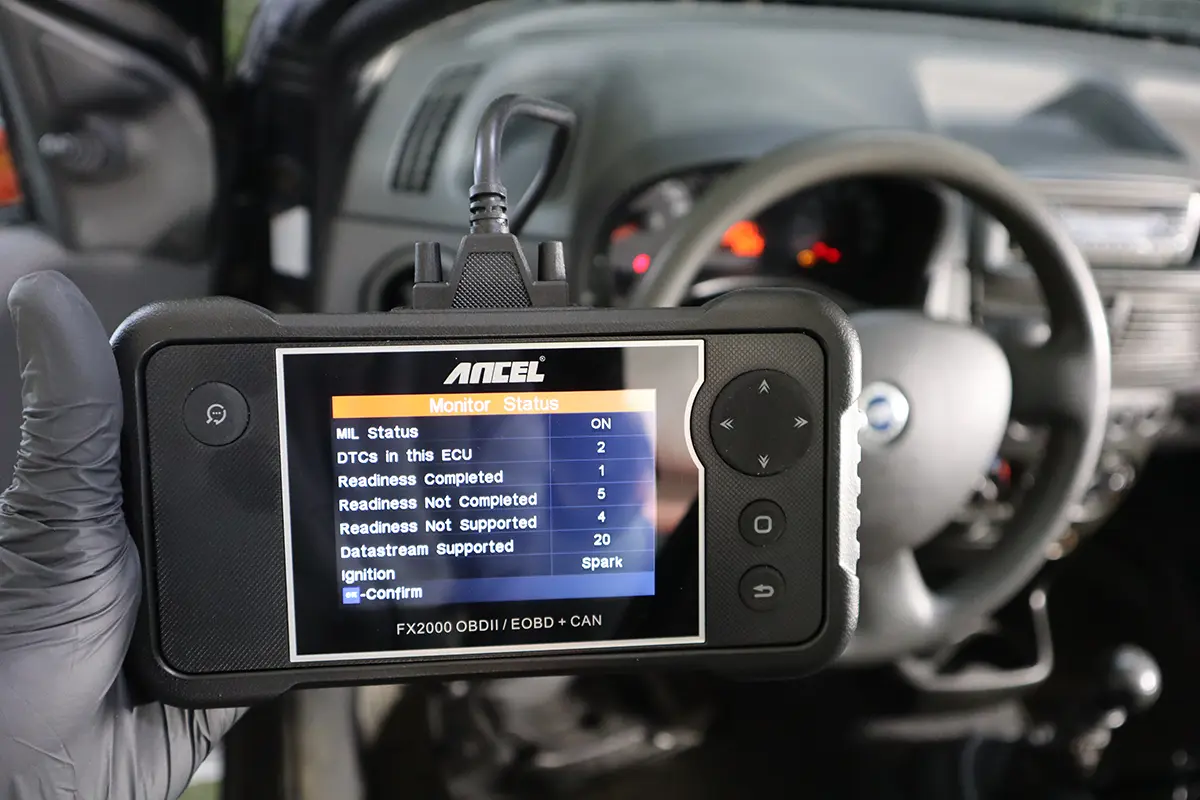
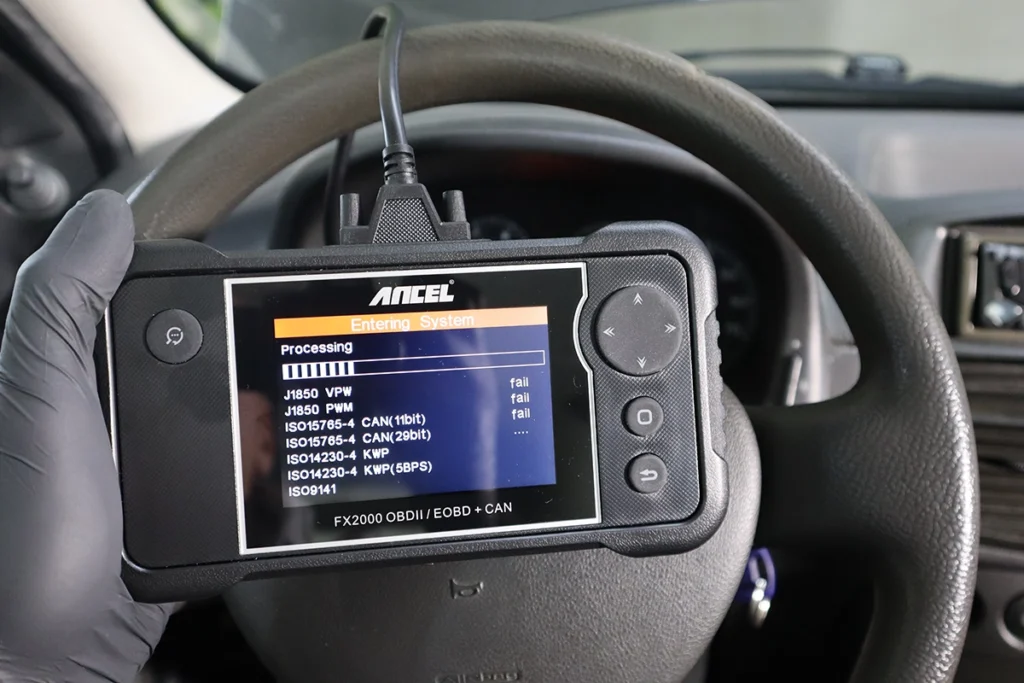
The Ancel FX2000 is an entry-level 4-system handheld scanner with a genuinely good built-in information library, which makes it beginner-friendly. I tested it on a Fiat Punto. But it has no bidirectional tests, no service resets and no coding, and for the same money you can buy tools that do far more, so I don’t really recommend it. Its one real strength is teaching you diagnostics, not performing repairs. Read on for who it’s actually for.
I earn from qualifying purchases and sometimes get tools for free (full disclosure). It never affects my scoring.
Ancel FX2000 Overview
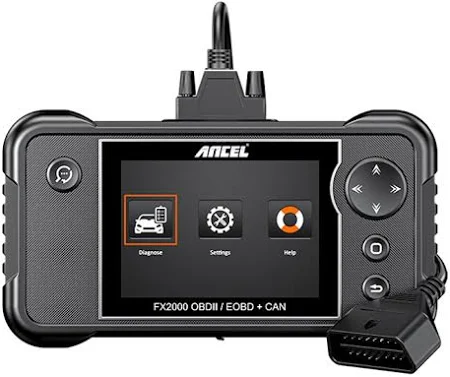
Ancel FX2000
The Ancel FX2000 is step up from basic code readers with 4-system access at a low price but far behind modern full-system tablets.

- 4-system access at a low price
- Simple handheld interface with graphs
- No subscriptions or apps needed
- No bidirectional tests
- No coding
- No advanced service resets
- Limited depth of data compared to modern tablet tools
Scores
Specs
| Tool type | Standalone device |
| User level | Beginner friendly |
| Vehicle focus | All makes |
| System focus | 4-system |
| Free updates | Lifetime |
| Subscription | Not required |
What it’s actually good at
The built-in information library is the one part that genuinely shines, and it’s brilliant for a beginner. Under the Help menu you get a DTC library (type in P0300 or P0420 and get a full explanation), a live-data glossary that explains terms like short-term fuel trim, MAP, IAT or timing advance, and OBD basics for people learning diagnostics. For many beginners, that built-in teaching library is more valuable than the scanner itself.
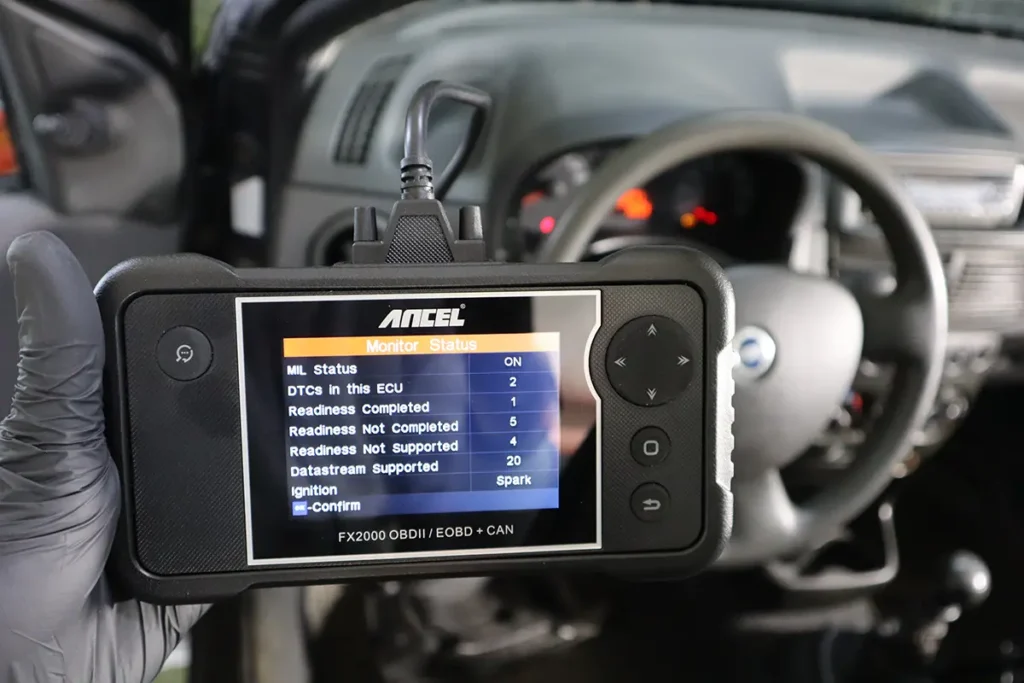
It reads more than an engine-only code reader, which is the point of a 4-system tool. On the Fiat Punto it detected the Magneti Marelli engine ECU, ABS and airbag modules, and inside each you can read codes, clear them and view module-specific live data. Even in the engine module it showed 51 live-data parameters where a basic code reader shows 15 to 20. The bigger screen also makes data and 1 to 4 graphs easier to read than a tiny handheld. As a step up from a $20 reader for someone who wants ABS or airbag codes, it works.
Where it falls short
It’s missing everything modern, and that’s why it’s showing its age. No bidirectional tests (you can’t run a fuel pump or activate an ABS pump), no service resets (no oil, EPB, SAS or DPF), no coding, and no access beyond the main four modules. It’s diagnostics-only, read and clear, nothing active.
It’s also slow, and the value just isn’t there. Scanning is slower than newer tools, coverage is limited, and for the same budget you get vastly more elsewhere. This is the core of my low verdict: it’s usable, but it’s not a smart buy when better tools cost the same.
Who should buy this
Honestly, very few people, and here’s the straight version:
Maybe consider it if:
- You’re a complete beginner who mainly wants the teaching library and to read ABS/airbag codes, and nothing more
- You’re upgrading from a $20 engine-only reader and that’s your entire need
Look elsewhere if:
- You want bidirectional tests, service resets or coding, it has none of them
- You want speed and depth, modern tools run circles around it
- You care about value, the alternatives below give far more for the same money
Ancel FX2000
 Thinkcar Thinkscan 662
Ancel FX2000
Thinkcar Thinkscan 662
Ancel FX2000
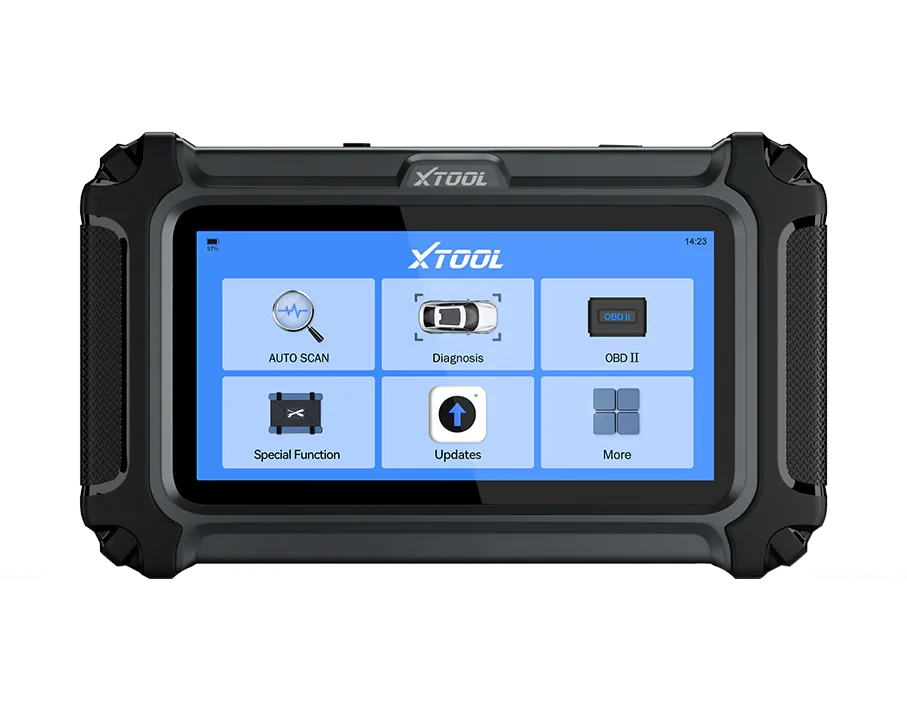 XTool D5S
Ancel FX2000
XTool D5S
Ancel FX2000
 Mucar 682
Final word
The Ancel FX2000 is a simple, beginner-friendly multi-system scanner with an excellent information library and better live-data access than an engine-only reader. But it’s slow and missing every modern feature, no bidirectional, no service resets, no coding, and for the same budget a Thinkscan 662, XTool D5S or Kingbolen S608 offers far more. It’s perfect for a beginner upgrading from a $20 tool who wants to learn and read ABS or airbag codes. For anyone who wants to actually fix cars, spend the money elsewhere.
Most popular OBD2 guides


I'm Juraj Lukacko and I work as an auto electrician. On this site I share what I learn from real work on real cars, to help you pick the right tools for diagnostics, programming and tuning and get the job done.
More about me →