Published: February 11, 2026 · Last updated: July 7, 2026
Before you spend money on a scanner to catch odometer fraud, understand one thing. Modern cars don’t keep mileage only on the dashboard. They copy it into several control modules. Comparing those hidden copies against the dash is how you catch a rollback, and whether you can do it depends far more on the car than on the tool in your hand.
Quick answer
You read the mileage stored in multiple control modules and compare it to the dashboard. If every module sits close to the dash value, the odometer is genuine. If one module reads much higher, someone wound the dash back. The honest catch: this only works if the car saved mileage in more than one place. Many post-2015 cars do. Plenty of others keep it only in the cluster, and then no scanner will ever show you a second number.
It is the car, not the scanner. A $60 full-system reader finds every stored mileage value that a $3000 Autel would. If the car never saved mileage outside the dashboard, no amount of money fixes that.
Why the scanner barely matters
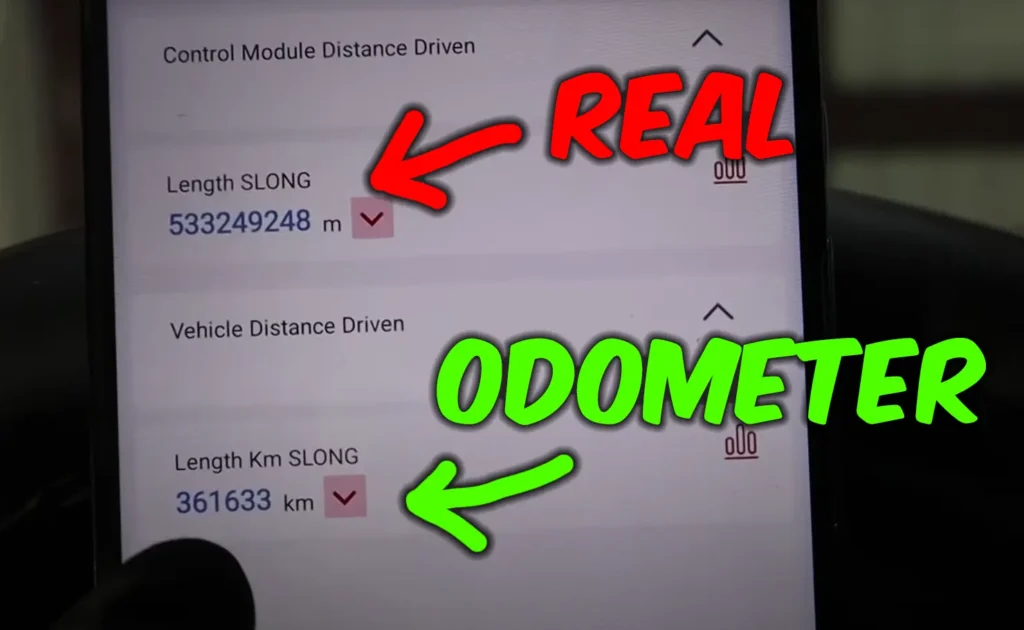
This is the part people get wrong. Almost every affordable full-system scanner reads the same stored data. They pull the mileage values the car already wrote into its modules. None of them can invent a record that was never saved.
So if a cheap tool finds only the dash reading on your car, an expensive one finds only the dash reading too. The tool isn’t failing. The car simply didn’t store mileage anywhere else.
Don’t upgrade to a pricier scanner hoping it sees more mileage. I get this email constantly. A reader recently bought a Launch code reader, found only the dash value on his 2020 Toyota Hilux, and assumed he needed a better tool that reads hidden odometer data. The truth: that Hilux stores mileage only in the cluster. A €3000 tool would show him the exact same single number.
Which scanner to use
Any full-system scanner with live data access does this job. A basic engine-only reader can’t open the other modules, so it can’t do this at all, but beyond that the brand and price barely matter here. Spend on coverage and the features you actually need, not on some special mileage function.
For the tools I have tested across budgets, see my roundup of the best OBD2 scanners for a mileage check.
How to actually do the check
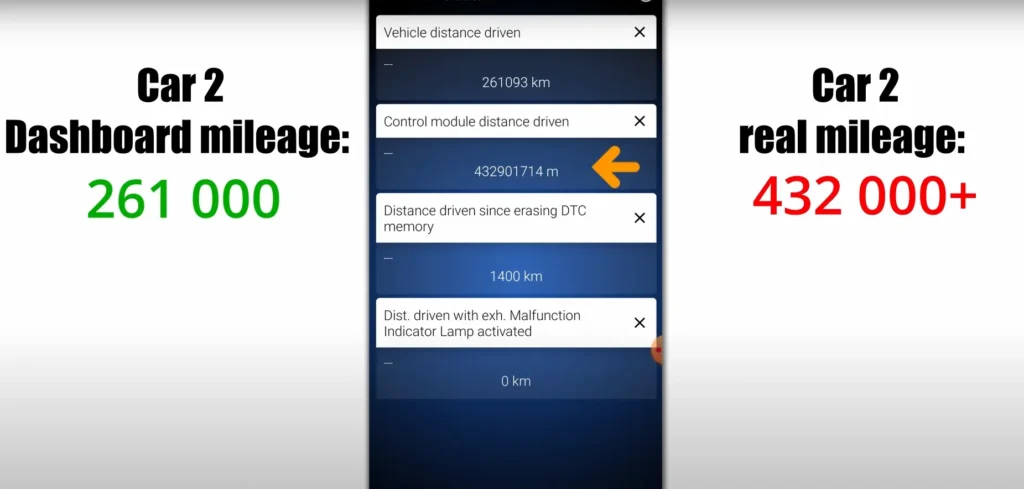
- Connect a full-system scanner. A basic engine-only reader can’t open the other modules, so it can’t do this at all.
- Read each module’s stored mileage or distance: engine ECU, ABS, body control, steering, infotainment, transmission. Some scanners have an odometer service function that pulls them all at once.
- Compare every value to the dashboard. All close together means genuine. One sitting far higher means the dash was rolled back.
If the car stores mileage in only one place, fall back on engine operating hours. Many modules log total engine run time. Divide mileage by hours to get a rough average speed.
Example: 215,000 km ÷ 3036 h is about 71 km/h. That is normal for a diesel in mixed driving. A car showing low km but huge engine hours, meaning an unrealistically low average speed, is worth a hard look.
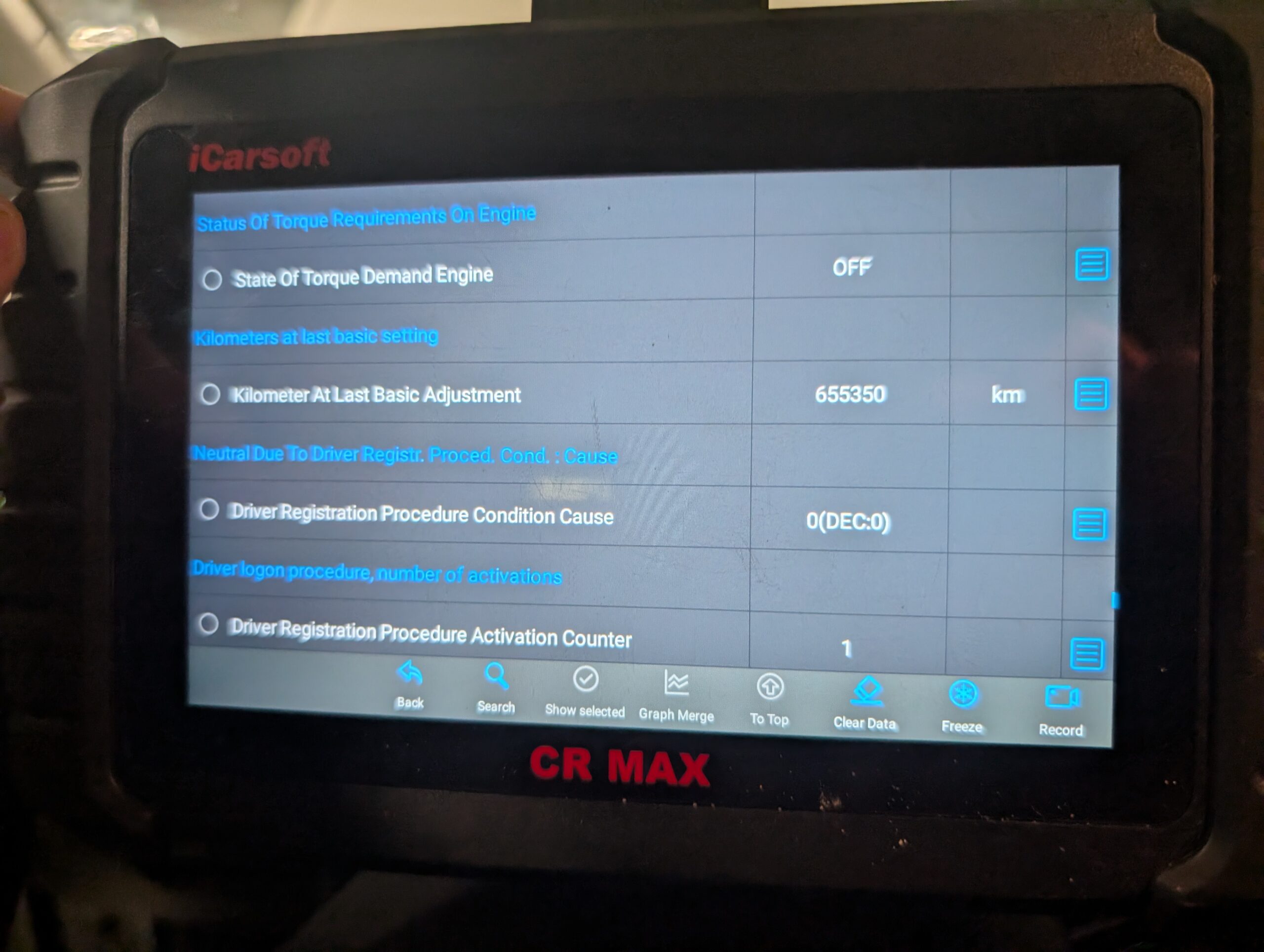
Don’t panic at one insane number. VAG transmission modules in particular love to throw garbage: a value like 655,350 km, a negative reading, or 2,147,483,647. Those are corrupted or overflow counters, not real distance. Judge the pattern across all modules, never a single weird cell.
Where an OBD2 scanner can’t help
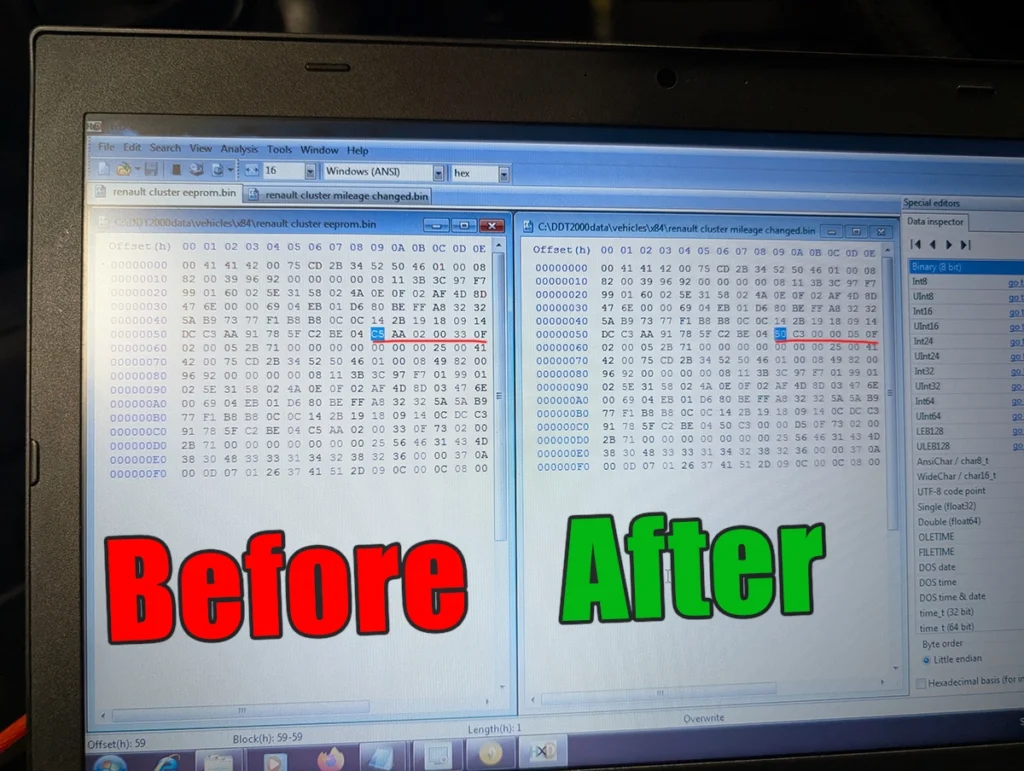
Beyond OBD there are deeper routes, like reading the cluster EEPROM or the ECU bin on the bench. Realistically nobody is desoldering a memory chip in a car park to check a used car before buying it. For a normal buyer inspection, comparing module mileage over OBD is as far as you go, and it is usually enough.
Real procedures where I checked real mileage
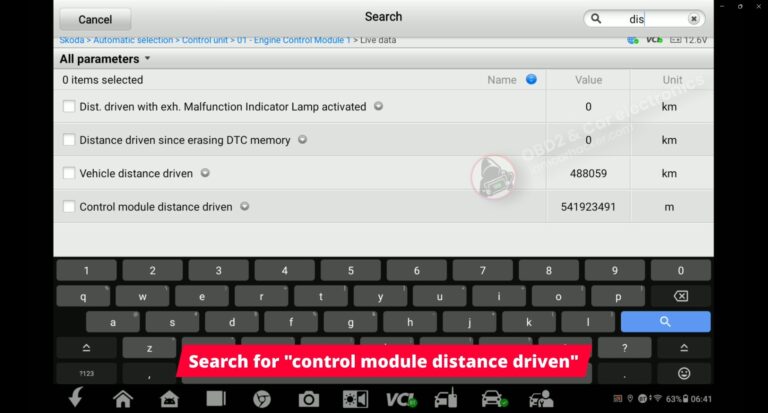
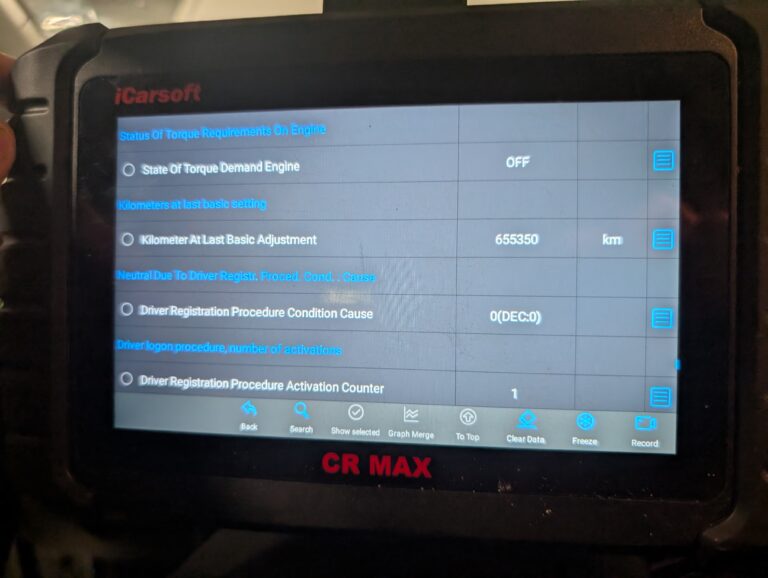
How do engine operating hours help spot a rollback?
When a car stores few mileage records, engine run time is a useful sanity check. Divide the mileage by the hours to estimate average speed. Around 60 to 80 km/h is normal for mixed driving. If a car shows low kilometres but very high engine hours, meaning an unrealistically low average speed, the displayed mileage is suspicious even without a second odometer record.
What if the scanner only shows mileage on the dashboard?
Then that car stores mileage in one place only, and there is nothing more to find over OBD. This is common on older cars and on some specific models regardless of age. A pricier scanner won't change it. At that point your best cross-check is engine operating hours, or a service-history and physical-condition check away from the scanner.
Where is mileage stored in a car?
On the dashboard cluster always, and on many newer cars also in modules like the engine ECU, ABS, body control, steering, infotainment and transmission. Manufacturers copy it around partly to make tampering harder. How many places it lives depends on the make, model and year, which is why some cars are easy to verify and others show only the single dash value.
Does a more expensive scanner find more hidden mileage?
No, and this is the most common misunderstanding. Affordable full-system scanners read the same stored data as expensive ones. They can only show mileage the car already saved into its modules. If a $60 tool finds nothing beyond the dash on a given car, a $3000 tool finds nothing beyond the dash either. Pay for coverage and features, not for an imagined mileage advantage.
Can an OBD2 scanner show the real mileage of a car?
Sometimes. Many modern cars store mileage in several control modules, not just the dashboard, and a full-system scanner can read those copies and compare them. If they all match, the odometer is genuine. If one is much higher, the dash was likely rolled back. But if the car only stored mileage in the cluster, no scanner can reveal a second value.
Most popular OBD2 guides


Hi, I am Juraj Lukacko. I got frustrated by unhelpful and scammy mechanics, so I decided to learn everything about car diagnostics myself. I test dozens of new car diagnostic tools every month along with learning new strategies to fix and customize cars.