Published: February 19, 2026 · Last updated: August 17, 2026
The KESS V2 clone is an OBD boot-mode ECU tuning tool built for reading and writing ECU maps through the OBD port, the kind of hardware people reach for in chip tuning. I bought it to find out if a cheap AliExpress copy actually works or if it’s a toy. It genuinely reads and writes ECUs. It’s just not plug-and-play, not a beginner tool, and not something I’d trust on a customer’s car.
I earn from qualifying purchases and sometimes get tools for free (full disclosure). It never affects my scoring.
Kess V2 clone overview
Kess V2 clone
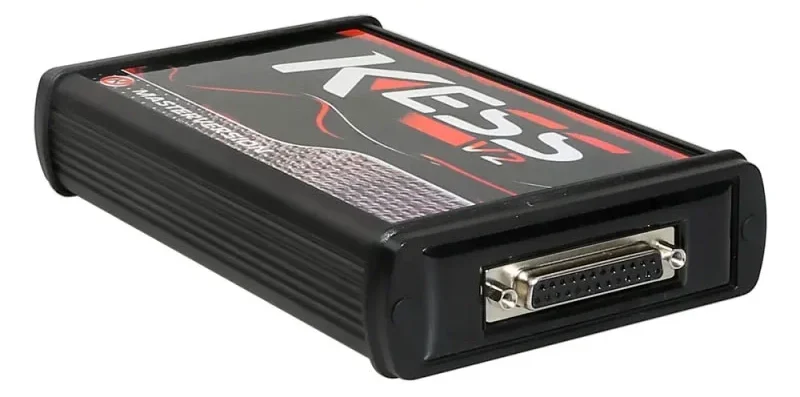
The Kess V2 clone is oBD boot-mode ECU tuning tool for reading and writing ECU maps on supported vehicles via the OBD port, used in chip tuning.

- Good coverage for the price
- Straightforward to use
- Clone tool so reliability can vary
- Need the correct version
- Don't blindly trust the checksum since it's a clone
- Illegal for road use in some countries
Scores
Specs
| Tool type | Standalone device |
| User level | Professional |
| Vehicle focus | All makes |
| System focus | engine |
| Free updates | Not included |
| Subscription | Not required |
Real-world procedures tested with this tool
What it’s actually good at
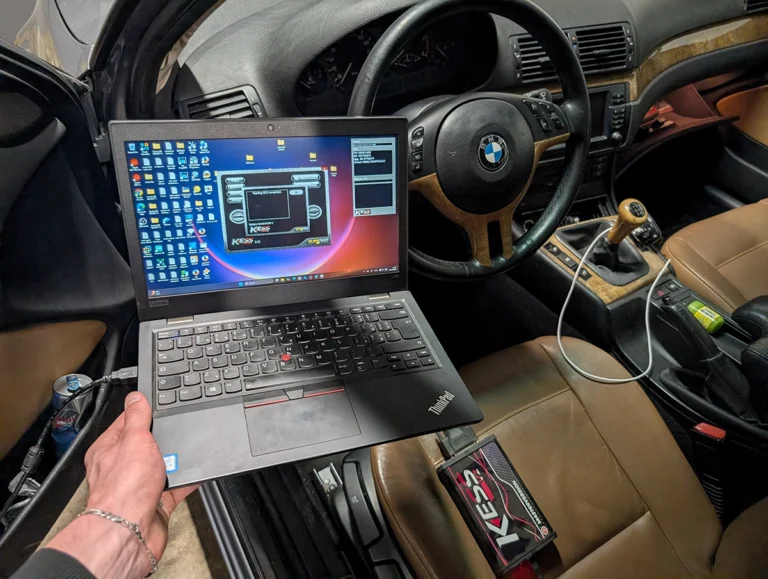
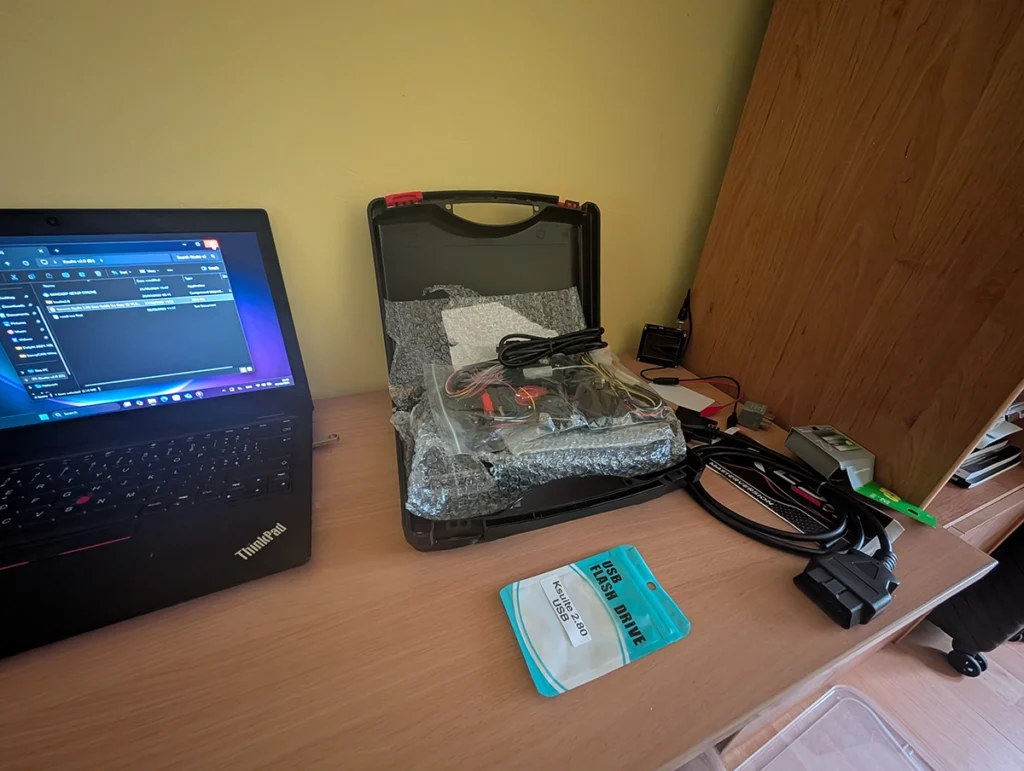
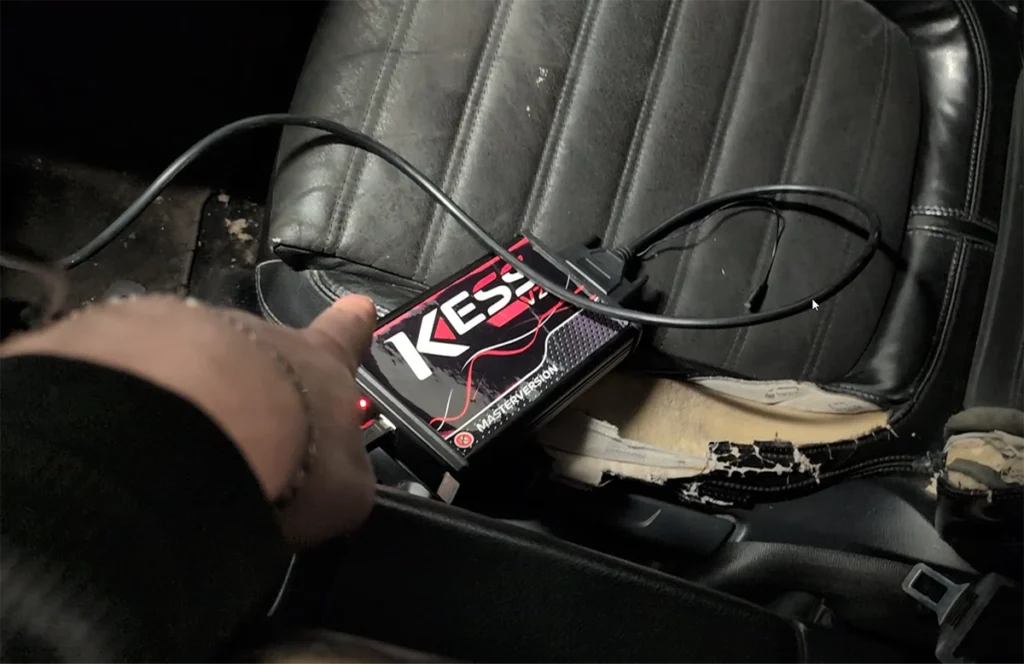
For the money, this clone genuinely reads and writes ECU maps, and that’s not nothing. I read the ECU off a VW Passat TDI (BKP engine code) straight through the OBD port. Once I had the right protocol selected, the read itself took about five minutes for the full 2MB bin file.
Where it actually makes sense is the hobby bench. Learning to read and write ECUs, making backups before you experiment, cloning an ECU for your own car, getting comfortable with boot mode over OBD. For that kind of own-garage learning, the coverage on older ECUs is wide and the value is real. You get the full KESS interface, cables, adapters and software for a fraction of the price of the official kit, and once it’s installed it runs fine.
Where it falls short
The risk is in the writing, and I felt it on my own read. You want at least 13 volts, ideally 14, during the operation. My charger wasn’t strong enough and I had to run the read on low voltage anyway.
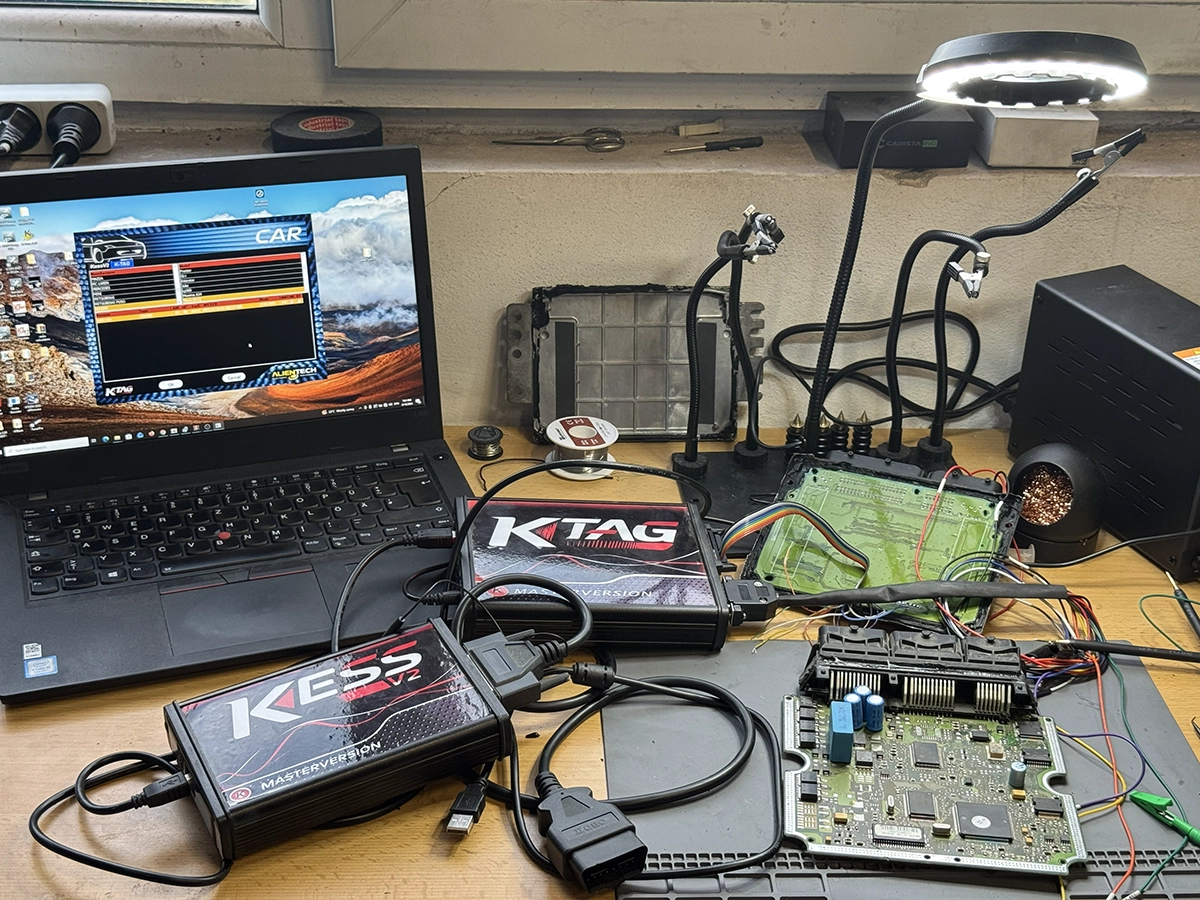
If you want to get more vehicle coverage, you need the KTAG as well.
⚠️ Low voltage is the real danger here. It worked for me, but that’s exactly the situation that bricks an ECU mid-write. If a write fails partway through, recovery can mean opening the ECU and boot-flashing it directly.
Setup is the other reality. This is old, modified software that has to stay offline, connect it to official servers or let it update and it can block itself. You’ll likely need a Windows laptop, manually installed drivers, and antivirus switched off. It’s messy before it’s working, and there’s no support behind any of it if something goes wrong. Hardware quality also varies seller to seller.
Who should buy this
Yes, buy it if:
- You want to learn ECU reading, writing and OBD-mode flashing on your own cars without spending pro-tool money
- You want a cheap way to make ECU backups before experimenting, and you understand the recovery risks
- You’re a hobbyist treating this as a learning tool, not a money-maker
No, look elsewhere if:
- You’re tuning customer cars or running a tuning business, the reliability isn’t there and a failed write is your problem to fix
- You want plug-and-play, this needs a proper offline setup and real knowledge to use safely
- You need official support and guaranteed safe writing, buy the genuine tool instead
Final word
The KESS V2 clone is a usable ECU tool if you respect its limits. It reads and writes maps, coverage on older ECUs is wide, and the price is a fraction of the genuine hardware. It’s not beginner-friendly, not safe for professional work, and a low-voltage or interrupted write can brick an ECU. For garage experiments, backups and learning to flash your own cars, it earns its place. For professional reliability, buy the official tools.
Most popular OBD2 guides



I'm Juraj Lukacko and I work as an auto electrician. On this site I share what I learn from real work on real cars, to help you pick the right tools for diagnostics, programming and tuning and get the job done.
More about me →