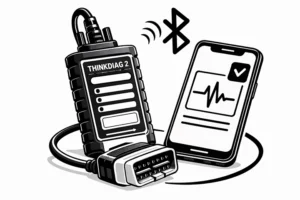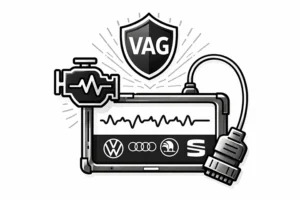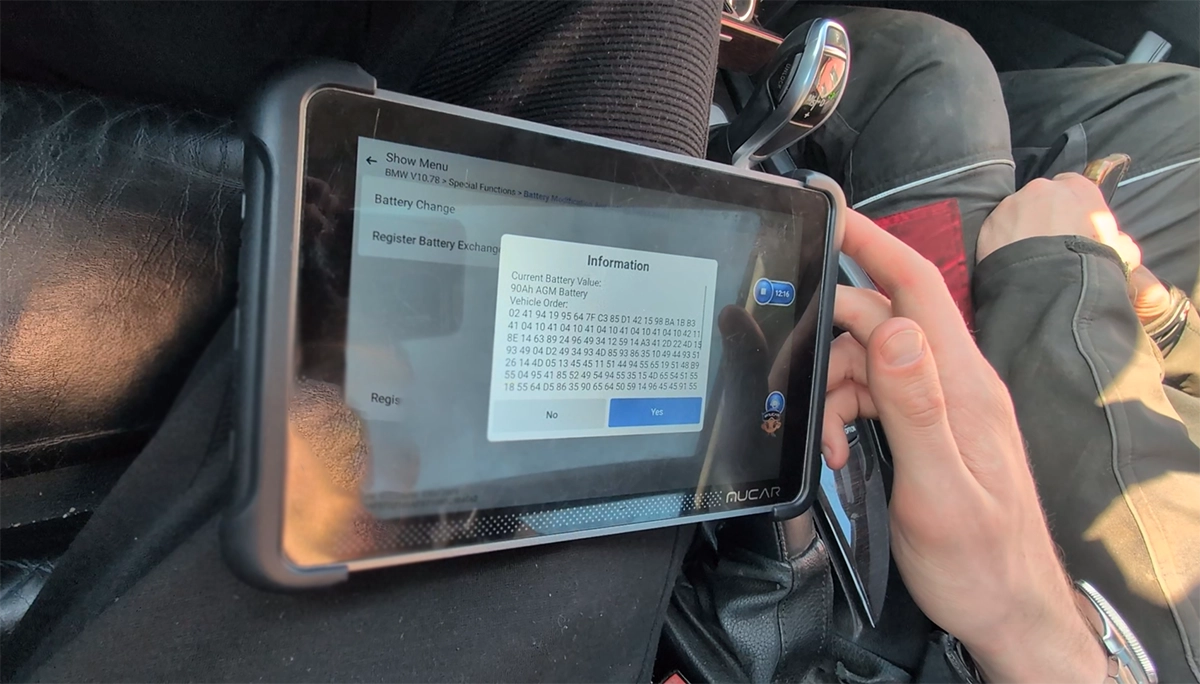
This guide explains how battery adaptation, battery registration or BMS reset works in modern cars, why it is needed, which vehicles require it, and how to perform it using a diagnostic tool.
What is battery adaptation (BMS reset)?
Battery adaptation (also called battery registration or BMS reset) is a diagnostic procedure that tells the vehicle a new 12 V battery has been installed.
Modern vehicles monitor battery condition using a Battery Management System (BMS) or IBS sensor. The system learns battery aging and adjusts charging strategy over time.
When a new battery is installed, the system must be reset or updated so it stops using the old charging profile.
Without adaptation, the vehicle may:
- charge the new battery too aggressively
- undercharge the battery
- disable start-stop
- store charging system faults
- shorten battery lifespan significantly
This is why many modern cars require battery coding or registration after replacement.
When battery adaptation is required
Battery adaptation is usually required when:
- replacing a battery on vehicles with start-stop
- the car has an IBS or battery monitoring sensor
- the battery is in the trunk or under the seat
- changing battery chemistry (AGM / EFB / flooded)
- changing battery capacity (Ah rating)
✔ Cars that usually require adaptation
Examples:
- BMW (most models after ~2002)
- VW / Audi / Skoda / Seat (most models after ~2007)
- Mercedes with energy management
- Ford start-stop models
- Volvo, Jaguar, Land Rover modern platforms
- many modern hybrids
❌ Cars that usually do NOT require it
Examples:
- older vehicles without start-stop
- cars without battery monitoring sensor
- simple alternator-regulated charging systems
Typical examples:
- pre-2000 vehicles
- older small hatchbacks
- older Japanese cars without IBS
Real procedures (BMS registration examples)
Below you’ll find real step-by-step procedures for battery registration and BMS reset on specific vehicles. These guides show exact menu paths, supported tools, and real diagnostic workflows.
 How to Register and Code a New Battery on BMW E60/E61 (Fix Battery Drain & Charging Issues)
 How to adapt a new battery in VW / Audi / Skoda / Seat (VAG battery coding guide)
Registration vs Coding (important difference)
There are two different operations:
✔ Battery registration / reset
Used when installing same battery type and capacity.
This resets:
- battery age data
- charging history
- learned resistance values
No coding change required.
✔ Battery coding / adaptation
Needed when battery specification changes:
- different capacity (Ah)
- different chemistry (AGM/EFB/Flooded)
- different manufacturer code
The vehicle must be told the new battery specification so it uses correct charging maps.
After coding, registration/reset is usually performed automatically.
Tools required
Basic OBD readers cannot perform battery adaptation.
You need a scanner that supports:
- service functions
- special functions
- battery reset / battery registration / BMS reset
✔ Tools that can do it
- mid-range scan tools with service functions
- brand-specific software
- bi-directional diagnostic scanners
- some advanced mobile diagnostic apps
❌ Tools that cannot do it
- basic code readers
- ELM327 with generic apps
- simple Bluetooth OBD adapters
Generic scanner procedure (works for most brands)
Step 1 — Preparation
- Install battery correctly
- Clean terminals and tighten properly
- Ensure battery sensor connector is installed
- Turn ignition ON (engine OFF)
Step 2 — Open battery service menu
Using scanner:
Service / Maintenance / Special Functions
Find:
Battery reset
Battery registration
BMS reset
Battery adaptation
Names differ by tool.
Step 3 — Enter battery information
Some vehicles require entering:
- battery type (AGM / EFB / Flooded)
- battery capacity (Ah)
- battery manufacturer code
- battery serial number
Follow scanner prompts.
Step 4 — Execute reset or coding
- Confirm operation
- Wait until tool shows completed
- Do not switch ignition off during process
Step 5 — Final check
- Turn ignition OFF for ~30 seconds
- Start engine
- Check that no battery or charging warnings appear
- Scan vehicle for fault codes
The system will now relearn battery condition automatically.
✅ What happens if you skip battery adaptation?
Possible results:
- battery life reduced by 30–50%
- start-stop disabled
- incorrect charging voltage
- electrical glitches or warnings
- charging faults stored in ECU
In some cars, the battery may fail prematurely even though it is new.
Most popular OBD2 guides