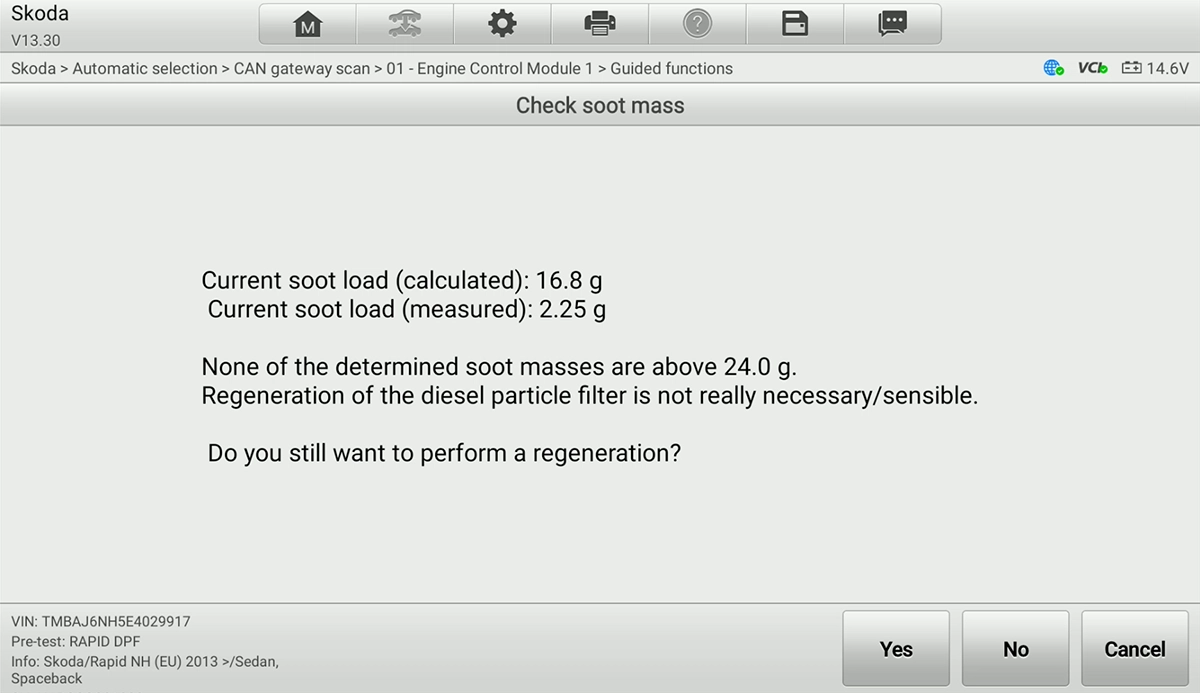
Diesel particulate filter (DPF) systems are designed to capture and burn soot particles from exhaust gases. To diagnose and service a DPF correctly, it’s essential to understand the key data values, when regeneration is needed and when a reset or adaptation must be performed.
Key DPF data to monitor
When checking a DPF with an OBD2 scanner, focus on these values:
- Soot mass (calculated / measured)
- Ash mass (stored)
- Exhaust temperatures
- Differential pressure (DPF pressure sensor)
Soot vs Ash (critical difference)
Soot (temporary load)
- Comes from incomplete combustion
- Can be burned off during regeneration
- Value changes frequently
👉 High soot = DPF needs regeneration
Ash (permanent load)
- Comes from oil additives and combustion residues
- Cannot be burned off
- Slowly accumulates over time
👉 High ash = DPF is worn / clogged → may require replacement
When to perform DPF regeneration
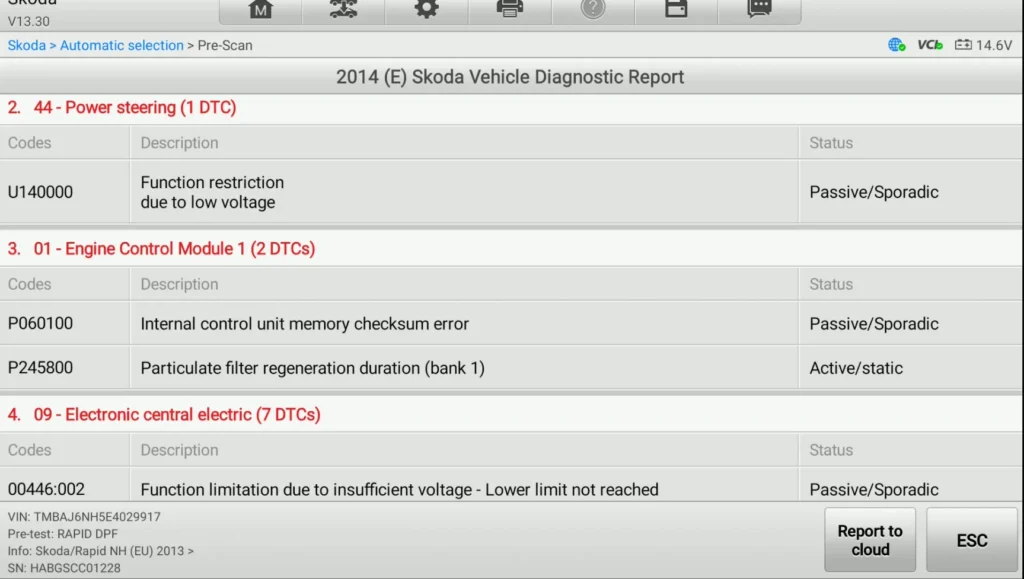
Regeneration is needed when:
- soot levels are too high
- regeneration has failed multiple times
- DPF warning light is on
Types of regeneration
Passive regeneration
- Happens automatically during driving
- Requires higher exhaust temperatures
Active / service regeneration
- Triggered by ECU or diagnostic tool
- Can run:
- while driving (most common)
- at idle (some vehicles, controlled conditions)
👉 depends on manufacturer and engine type
When regeneration is NOT the solution
Regeneration may fail or not help if:
- fault codes are present
- soot values are low but warning is active
- ECU has incorrect learned values
👉 in these cases, deeper diagnostics is required
DPF reset / adaptation (after replacement)
After replacing the DPF, you must perform:
👉 DPF adaptation / reset function in ECU
What this does
- resets ash mass to 0
- resets learned DPF values
- informs ECU that a new filter is installed
Why this is necessary
If you don’t reset it:
- ECU still thinks old (clogged) DPF is installed
- regeneration strategy will be incorrect
- warning lights may remain active
- regeneration may trigger too often or fail
👉 Result: incorrect behavior even with new DPF
Summary
- Soot = burnable → solved by regeneration
- Ash = permanent → solved by replacement + reset
- Regeneration can run at idle or during driving depending on vehicle
- After DPF replacement, adaptation/reset is mandatory for proper operation
Related procedures
Most popular OBD2 guides



Hi, I am Juraj Lukacko. I got frustrated by unhelpful and scammy mechanics, so I decided to learn everything about car diagnostics myself. I test dozens of new car diagnostic tools every month along with learning new strategies to fix and customize cars.