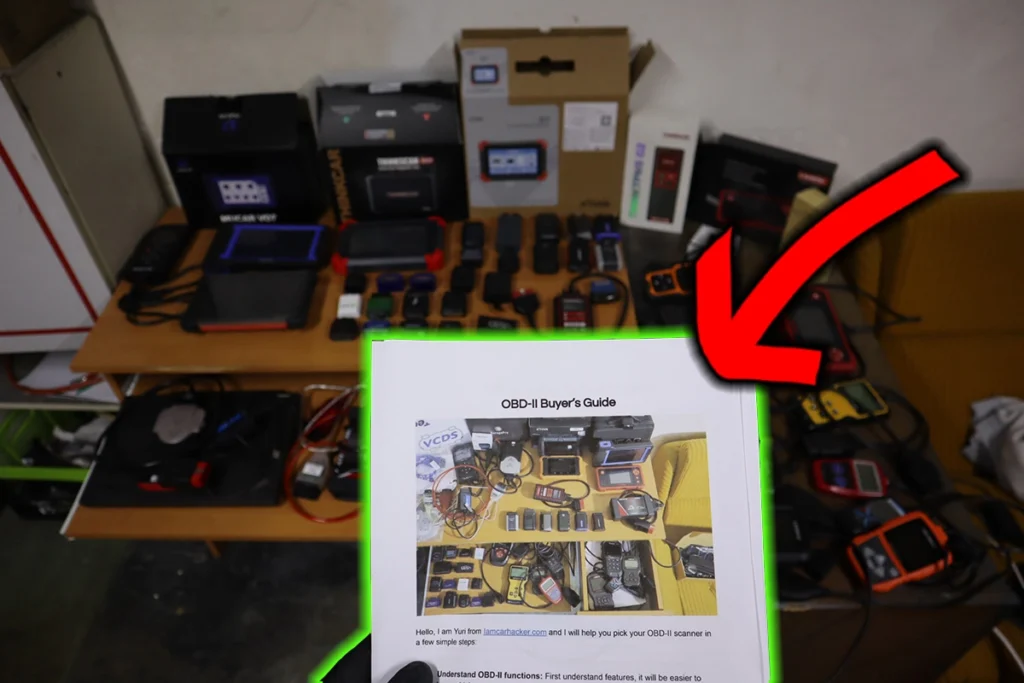

Engine live data is one of the most powerful features of any OBD2 scanner — yet most people don’t know how to actually use it.
Instead of guessing and replacing parts, live data allows you to see what is really happening inside your engine in real time.
In this guide, you’ll learn how to understand the most important parameters and how to use them for basic diagnostics even as a beginner.
This content is for members only.
Bank 1 vs Bank 2
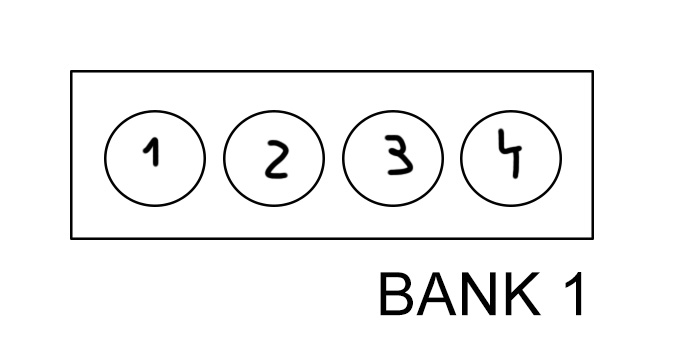
The inline engine has only Bank 1, so only 1 set of cylinders.
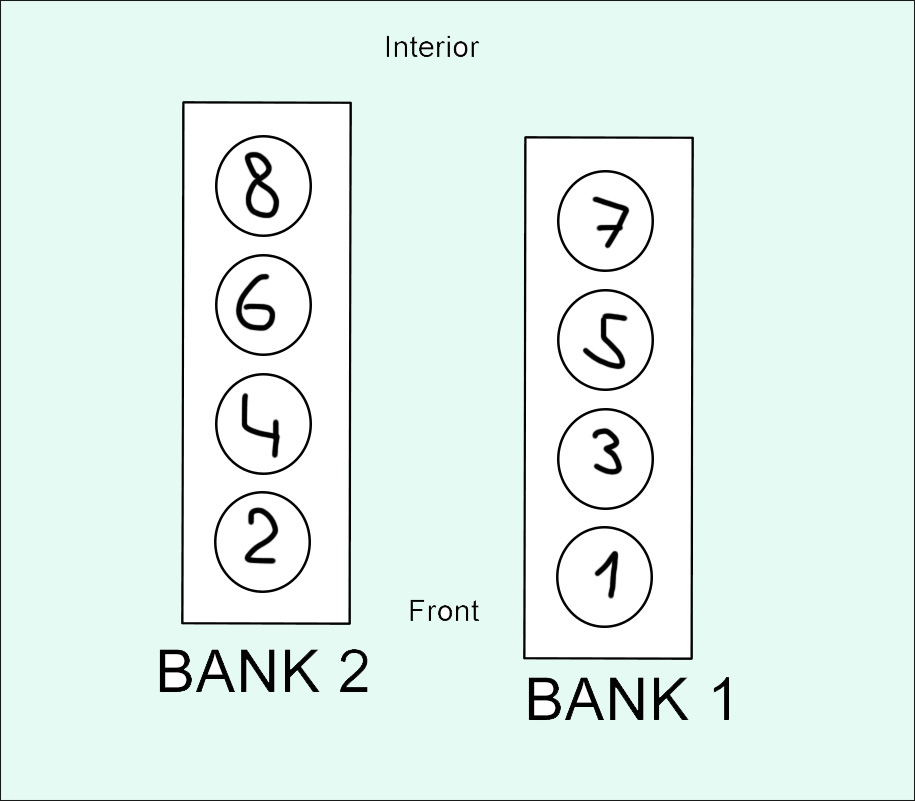
The V-shaped engine has 2 sets of cylinders, Bank 1 and Bank 2 so most of the data we go over, you can see twice. Once for Bank 1, second time for Bank 2.
What It Is:
Modern engines often have multiple cylinders arranged in separate groups called banks. Bank 1 refers to the side of the engine with cylinder #1, while Bank 2 is the opposite side. Monitoring data for each bank helps identify issues specific to one side of the engine.
Fuel System Status
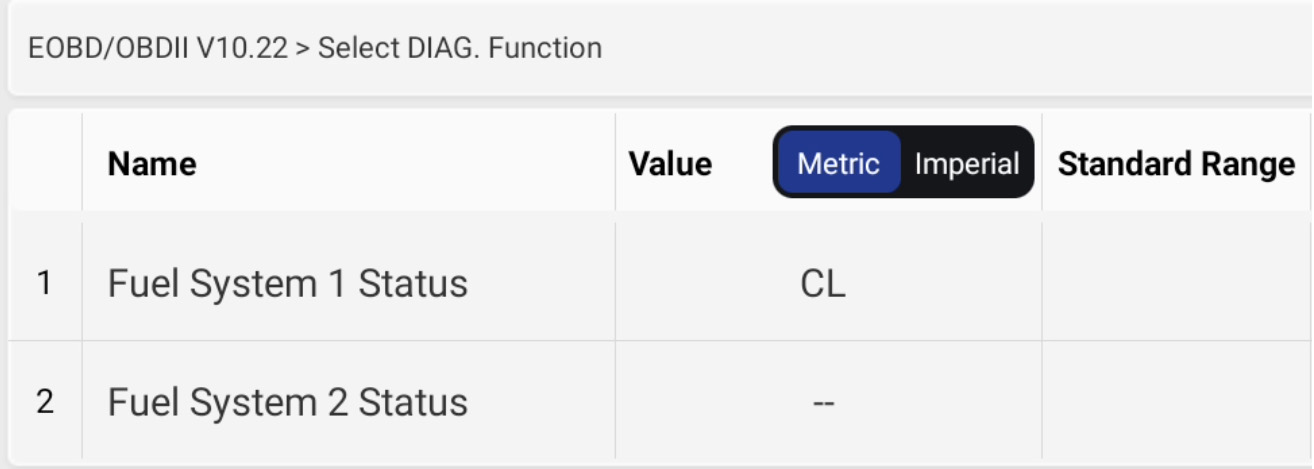
What It Is:
This parameter indicates the current status of the fuel system, such as open loop or closed loop operation. Open loop means the engine is not using feedback from the oxygen sensors, while closed loop means it is.
Expected Range:
- Open Loop: Engine warming up or high demand conditions.
- Closed Loop: Normal operating conditions where the ECU adjusts fuel delivery based on sensor data.
Calculated Load Value
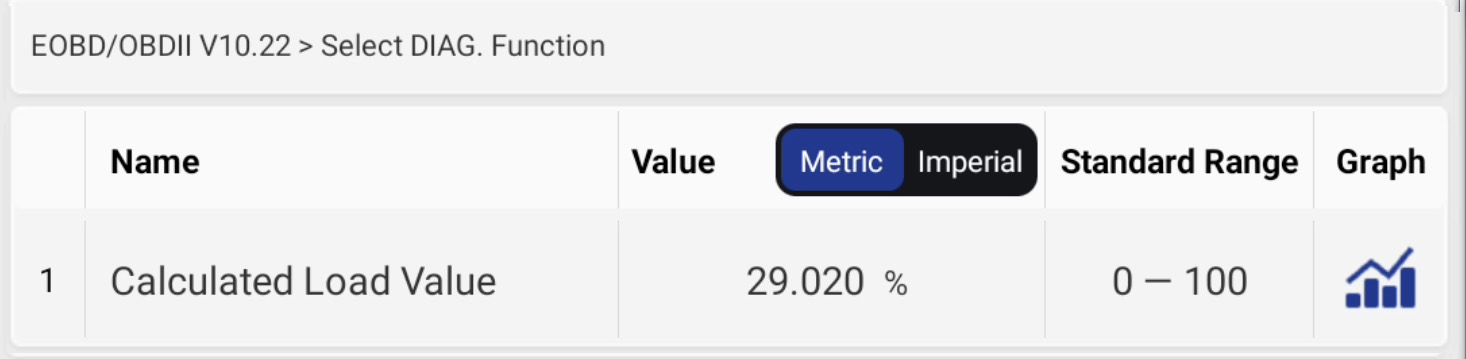
What It Is:
Represents the engine’s current load as a percentage, showing how much power the engine is using relative to its maximum capacity.
Expected Range:
Around 18% (idle) to 100% (full load). Typically, values range between 0-100%, with higher percentages indicating higher engine demand.
Engine Coolant Temperature
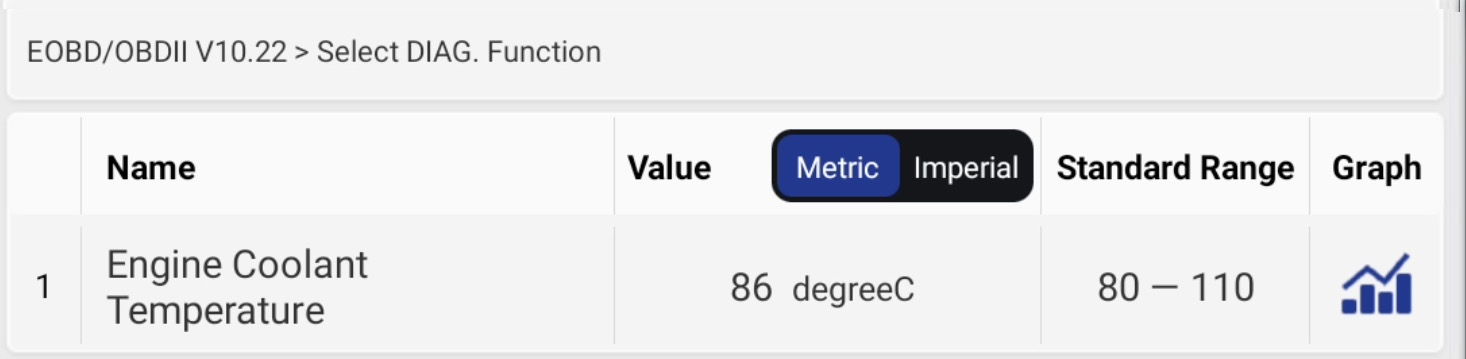
What It Is:
Measures the temperature of the engine’s coolant, which is crucial for maintaining optimal engine performance and preventing overheating.
Expected Range:
- Normal Operating Temperature: 160°F to 220°F (71°C to 104°C)
- Warning Threshold: Above 220°F (104°C)
Short Term Fuel Trim

What It Is:
Adjustments made by the ECU to the fuel injection in the short term based on immediate sensor feedback to maintain the optimal air-fuel ratio.
Expected Range:
- Normal: -10% to +10%
- Values outside this range may indicate issues like vacuum leaks or faulty sensors.
Long Term Fuel Trim

What It Is:
Long-term adjustments to the fuel injection system based on extended sensor data trends, helping to compensate for gradual changes in engine performance.
Expected Range:
- Normal: -20% to +20%
- Significant deviations can suggest persistent issues such as injector problems or exhaust leaks.
Check out full engine fuel trim guide
Intake Manifold Absolute Pressure (MAP)
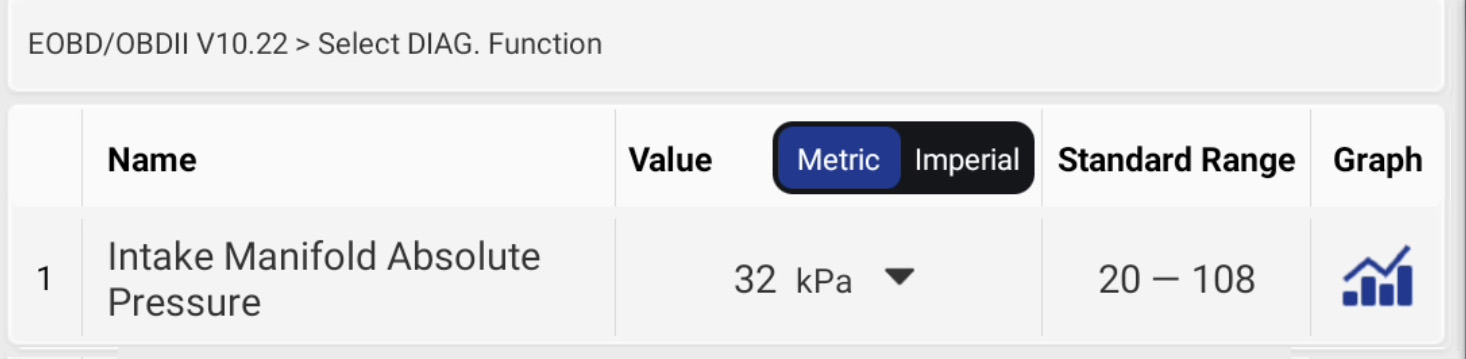
What It Is:
Measures the pressure inside the intake manifold, which helps the ECU determine the engine load and adjust fuel delivery accordingly.
Expected Range:
- At sea level: 75 kPa (kilopascals) to 105 kPa
- Under boost: Higher values depending on the turbocharger or supercharger
Engine Speed (RPM)
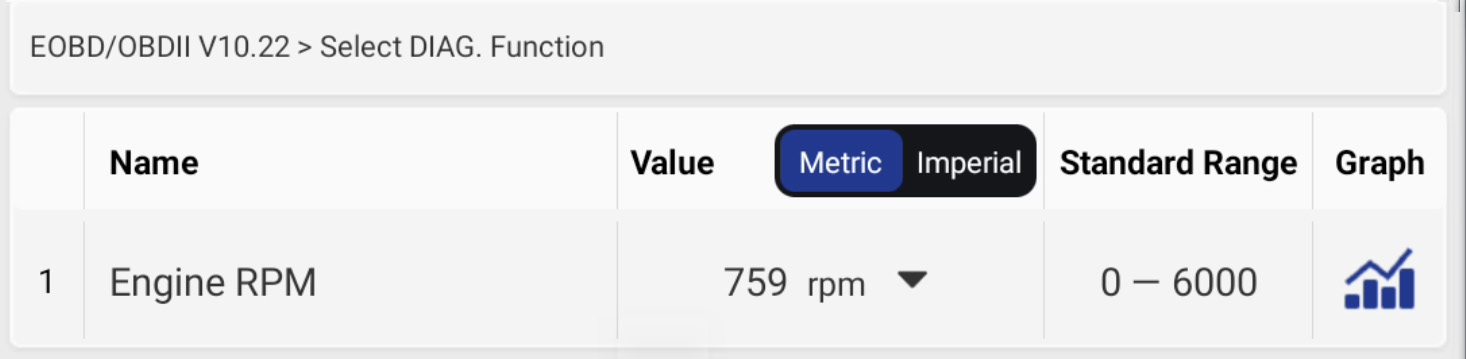
What It Is:
Tracks the number of revolutions the engine makes per minute, indicating how hard the engine is working.
Expected Range:
- Idle: 600 to 1000 RPM
- Normal Driving: 1000 to 4000 RPM
- Redline: Varies by vehicle, typically between 6000 to 8000 RPM
Vehicle Speed

What It Is:
Displays the current speed of the vehicle as detected by the vehicle speed sensor.
Expected Range:
0 to the vehicle’s maximum speed capability. Should correspond accurately with the speedometer.
Ignition Timing Advance
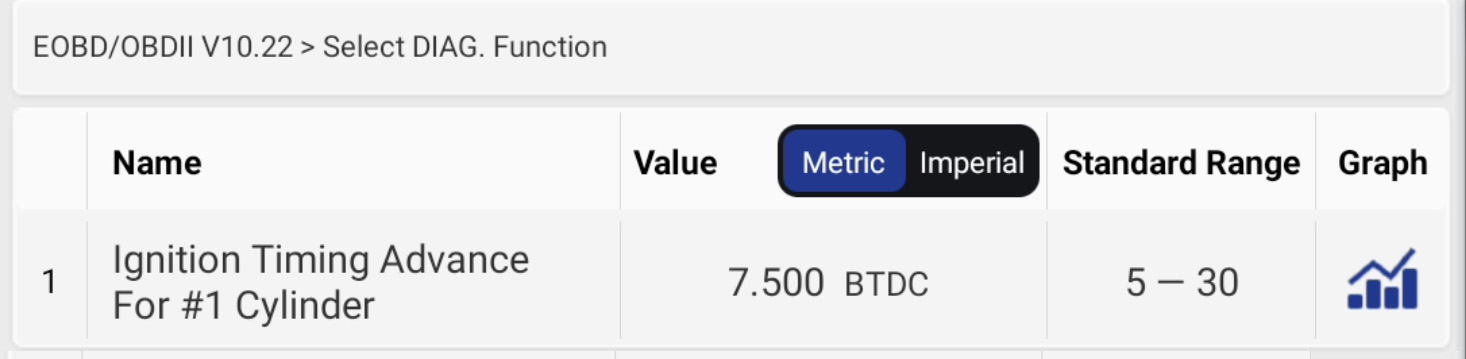
What It Is:
Shows the degree to which the ignition timing is advanced before the piston reaches the top of its compression stroke, optimizing engine performance and efficiency.
Expected Range:
- Typically: 10° to 40° before Top Dead Center (BTDC)
- Varies based on engine load and RPM
Absolute Throttle Position
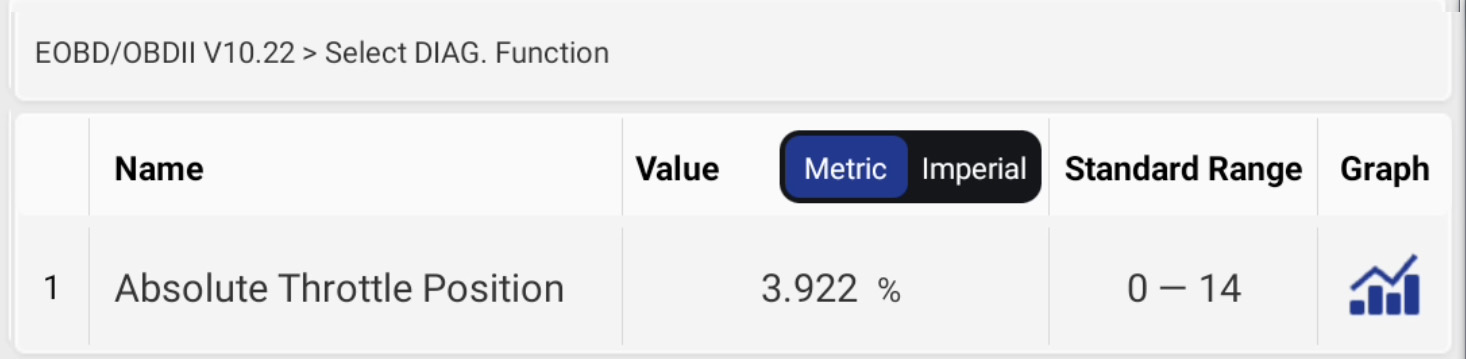
What It Is:
Indicates the position of the throttle valve, which controls the amount of air entering the engine.
Expected Range:
0% (closed) to 100% (fully open). Smooth and responsive changes correlate with proper throttle function.
Oxygen Sensor 1

What It Is:
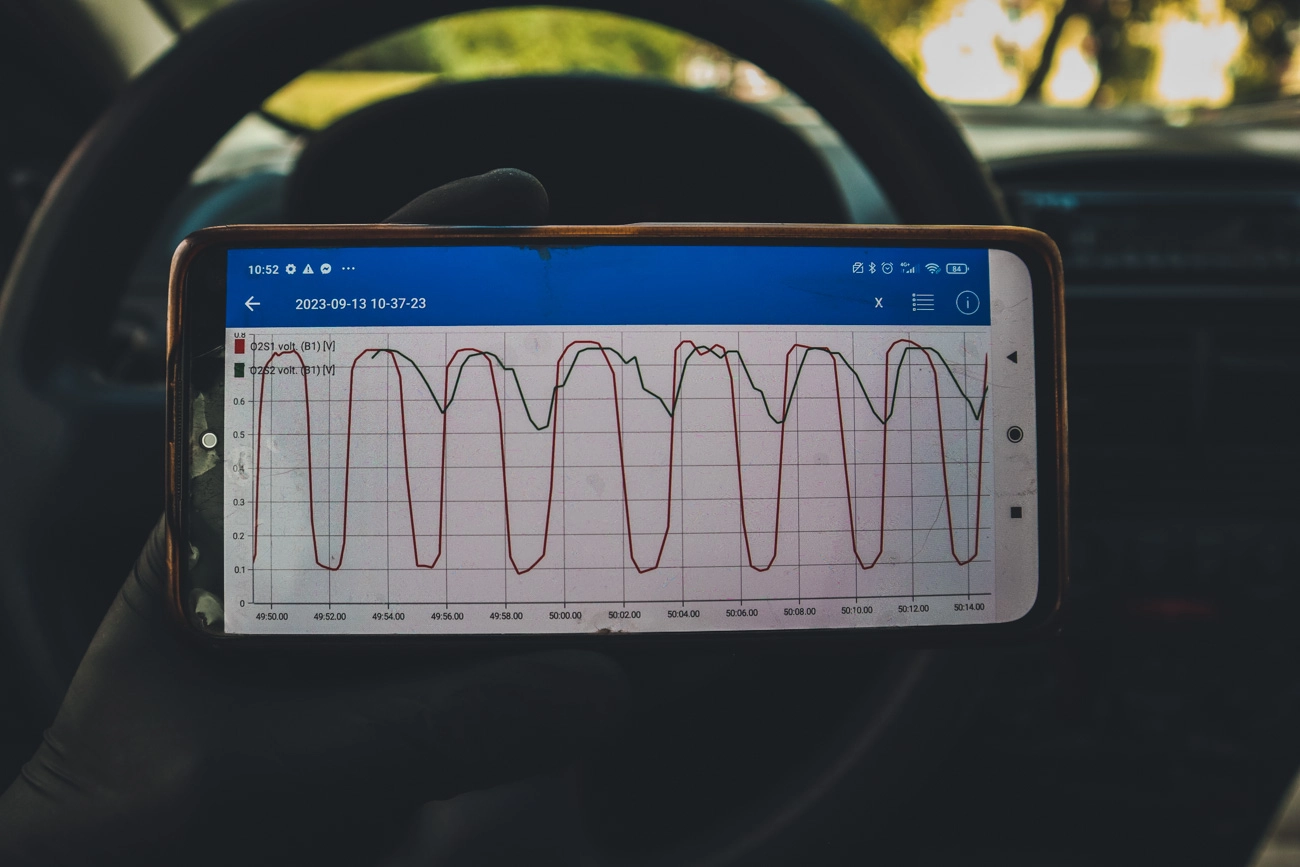
The first oxygen sensor, usually located before the catalytic converter, measures the oxygen level in the exhaust gases to help regulate the air-fuel mixture.
Expected Range:
- Voltage: 0.1V (lean) to 0.9V (rich)
- Switching between low and high voltage indicates proper sensor function
Oxygen Sensor 2

What It Is:
The second oxygen sensor, typically located after the catalytic converter, monitors the efficiency of the catalytic converter by comparing pre- and post-converter oxygen levels.
Expected Range:
- Voltage: 0.1V to 0.9V
- Should show less fluctuation compared to Oxygen Sensor 1 if the catalytic converter is working correctly
Equivalence Ratio
What It Is:
A ratio that indicates the air-fuel mixture’s richness or leanness relative to the stoichiometric ideal.
Expected Range:
- Stoichiometric Ratio: 1.0
- Below 1.0: Lean mixture
- Above 1.0: Rich mixture
Time Since Engine Start
What It Is:
Tracks the time elapsed since the engine was last started, useful for diagnosing intermittent issues and understanding system warm-up cycles.
Expected Range:
Starts at 0 when the engine is started and increases continuously until the next engine shutdown.
OBD Requirements
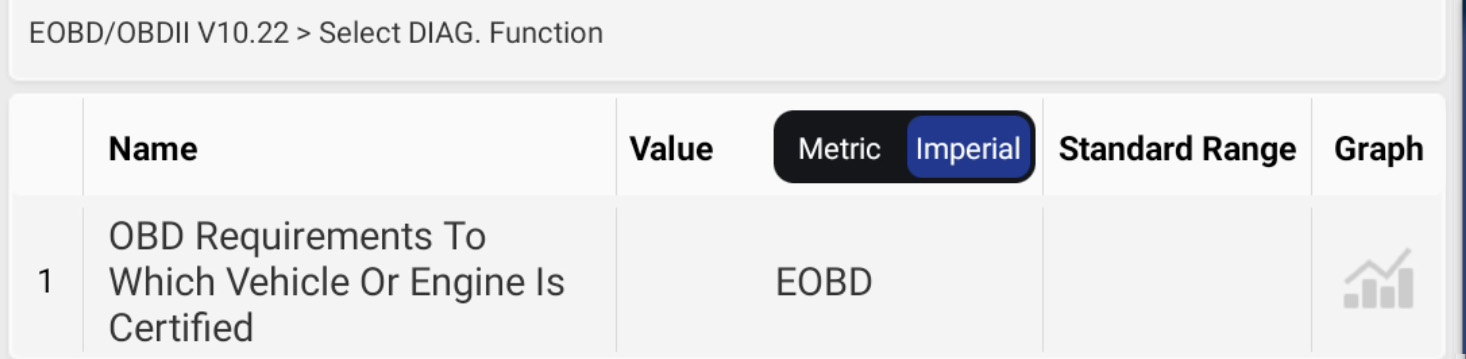
What It Is:
Ensures that the vehicle’s onboard diagnostics system meets the necessary standards for emissions and performance monitoring.
Expected Range:
Compliant vehicles should show all required systems as “Complete” or “Ready.” Non-compliance may indicate pending or unresolved issues.
Intake Air Temperature (IAT)
What It Is:
Measures the temperature of the air entering the engine, which affects air density and engine performance.
Expected Range:
- Normal: -40°C to 125°C (-40°F to 257°F)
- Optimal operating range varies based on engine design
Mass Airflow Rate (MAF)
What It Is:
Quantifies the amount of air entering the engine, allowing the ECU to calculate the correct amount of fuel to inject.
Expected Range:
Depends on engine size and speed, typically ranging from 0 to 100 grams per second (g/s).
Distance Traveled Since DTC Cleared
What It Is:
Shows how far the vehicle has driven since the last Diagnostic Trouble Code (DTC) was cleared, helping track if issues reoccur.
Expected Range:
Starts at 0 after clearing and increases continuously. There’s no upper limit, but frequent resets may indicate recurring problems.
Barometric Pressure
What It Is:
Measures the atmospheric pressure, which can influence engine performance and fuel delivery.
Expected Range:
- Sea Level: ~101 kPa (kilopascals)
- Varies with altitude and weather conditions
Catalyst Temperature Sensor 1
What It Is:
Monitors the temperature of the catalytic converter to ensure it’s operating within safe and efficient parameters.
Expected Range:
- Normal Operating Temperature: 400°C to 800°C (752°F to 1472°F)
- Varies based on engine load and speed
Catalyst Temperature Sensor 2
What It Is:
Provides additional temperature data from another point on the catalytic converter, helping to assess overall converter performance.
Expected Range:
Similar to Catalyst Temperature Sensor 1, typically 400°C to 800°C (752°F to 1472°F).
Control Module Voltage
What It Is:
Indicates the voltage level supplied to the vehicle’s control modules, ensuring they receive adequate power to function correctly.
Expected Range:
- Normal: 12.0V to 14.0V (when the engine is running)
- Low Voltage: Below 12.0V may indicate electrical issues
Outside Air Temperature
What It Is:
Measures the temperature of the air outside the vehicle, which can influence engine performance and fuel efficiency.
Expected Range:
- Typically: -40°C to 215°C (-40°F to 419°F)
- Depends on the vehicle’s location and environmental conditions
Engine Run Time Since DTC Cleared
What It Is:
Tracks how long the engine has been running since the last Diagnostic Trouble Code (DTC) was cleared, useful for monitoring system stability.
Expected Range:
Starts at 0 when DTCs are cleared and increases continuously. No upper limit, but short run times may indicate recent code clearing.
Type of Fuel Currently
What It Is:
Displays the type of fuel the vehicle is using, such as gasoline, diesel, or ethanol blends, which can affect engine tuning and performance.
Expected Range:
- Common Types: Gasoline, Diesel, E85, Flex Fuel
- Depends on the vehicle’s fuel system and configuration
Engine Exhaust Flow Rate
What It Is:
Measures the rate at which exhaust gases are expelled from the engine, indicating the efficiency of the combustion process and exhaust system.
Expected Range:
Varies based on engine size and speed, typically measured in grams per second (g/s). Optimal ranges depend on the specific engine design.
Good job getting so far. Now, of course,e you will probably not remember all of these, but you can always go back to this email when you need to refresh your memory.
Most popular OBD2 guides



Hi, I am Juraj Lukacko. I got frustrated by unhelpful and scammy mechanics, so I decided to learn everything about car diagnostics myself. I test dozens of new car diagnostic tools every month along with learning new strategies to fix and customize cars.