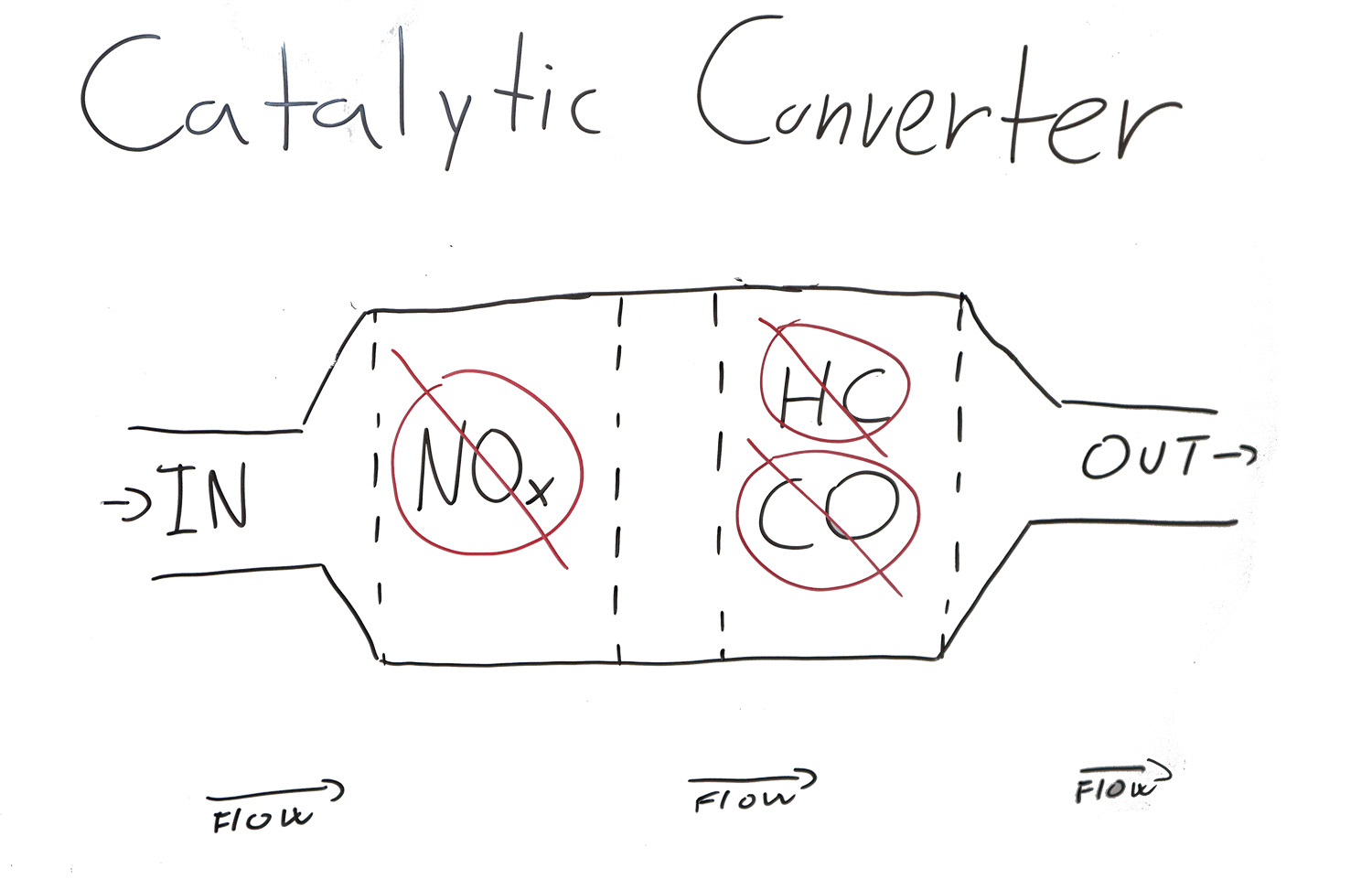
Testing a catalytic converter doesn’t require expensive tools.
With a basic OBD2 scanner and live data, you can quickly determine if your catalytic converter is working properly.
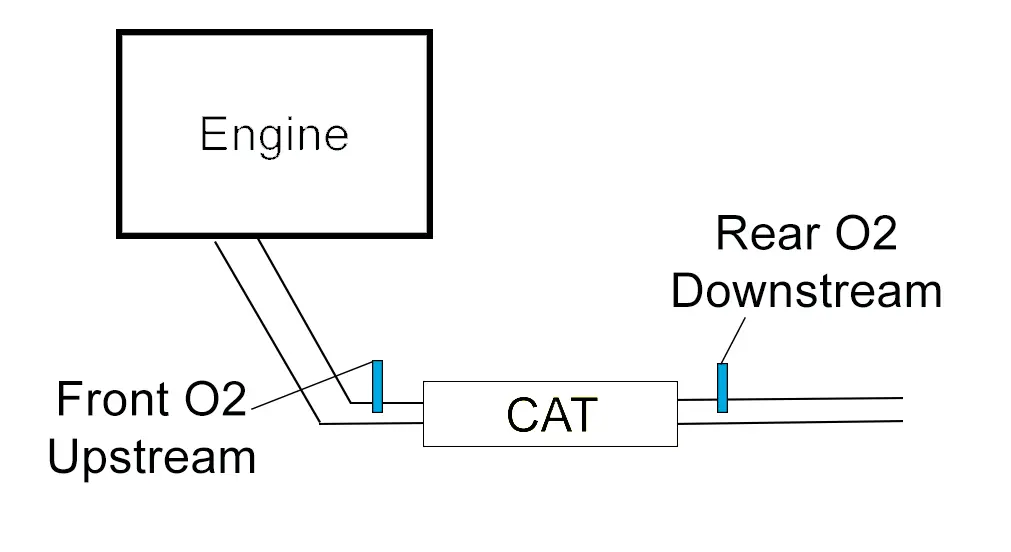
The key is to compare oxygen sensor data before and after the catalytic converter.
👉 In this guide, I’ll show you a simple method I use in real diagnostics.
VIDEO: How to test catalytic convertor by looking at live data
This content is for members only.
Quick Explanation (short section)
Gasoline cars use oxygen sensors to monitor exhaust gases.
- O2 Sensor 1 (upstream) → before catalytic converter
- O2 Sensor 2 (downstream) → after catalytic converter
👉 If the catalytic converter works:
- upstream sensor = fluctuates (rich/lean)
- downstream sensor = stable
👉 If it’s bad:
- both sensors behave the same
Step-by-step test
1. Warm up the engine
→ engine must be at operating temperature
2. Check downstream O2 sensor
(If downstream O2 is bad, you cannot trust this test. That’s why we are testing it first)
- drive steady (~1500–2000 RPM)
- full throttle for 2 seconds
- release and let engine brake
👉 should go:
- ~0.9V (acceleration)
- ~0V (deceleration)
3. Load test catalytic converter
- monitor O2 Sensor 1 + O2 Sensor 2
- hold ~50% throttle for 10–15 seconds
👉 results:
- good → sensor 1 fluctuates, sensor 2 stable (~0.7–0.9V)
- bad → both sensors behave the same
4. Confirm under higher load
- repeat with 60–70% throttle
👉 if sensor 2 starts copying sensor 1 → catalytic converter is failing
What bad catalytic converter looks like
- no difference between sensors
- similar values even at idle
👉 often means:
- catalytic converter is empty
- or completely worn out
Most popular OBD2 guides

Hi, I am Juraj Lukacko. I got frustrated by unhelpful and scammy mechanics, so I decided to learn everything about car diagnostics myself. I test dozens of new car diagnostic tools every month along with learning new strategies to fix and customize cars.