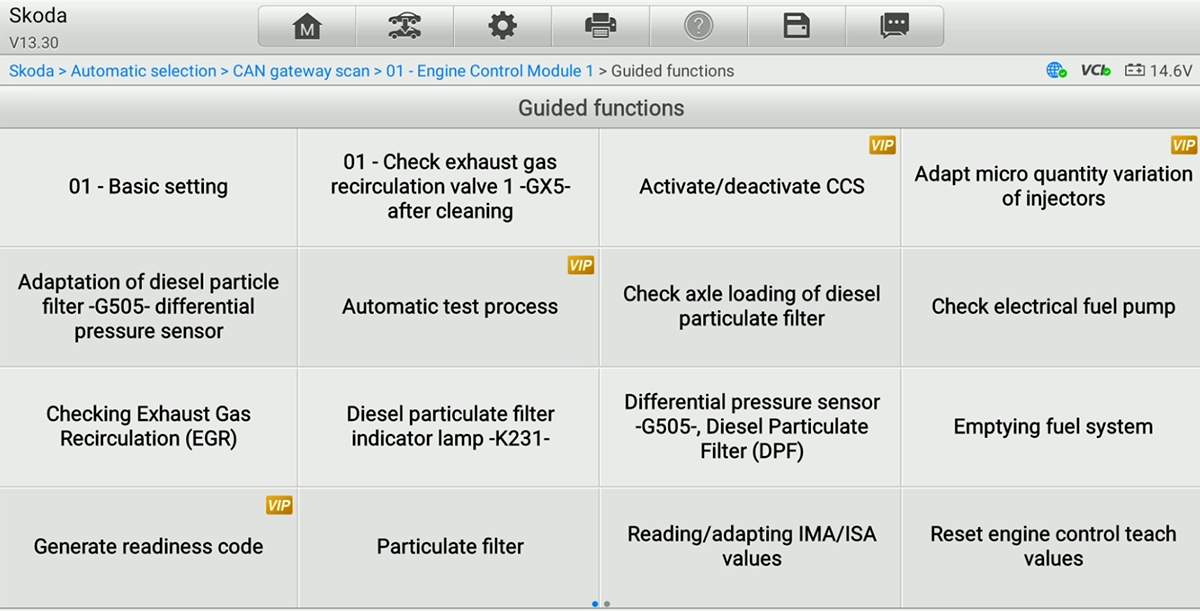
VAG guided functions are built-in diagnostic procedures available in advanced OBD2 scanners for Volkswagen, Audi, Skoda and Seat vehicles. They provide step-by-step instructions for performing various service, diagnostic and adaptation tasks directly through the control modules.
These functions simplify complex operations and ensure the correct procedure is followed without needing to manually navigate individual parameters or coding channels.
What are guided functions in VAG diagnostics?
Guided functions are predefined workflows stored in the diagnostic system or scanner software. They are designed to execute specific tasks in the correct sequence while monitoring vehicle conditions in real time.
Instead of manually selecting measuring blocks or adaptation channels, the tool guides you through the entire process.
👉 In practice, they:
- control the sequence of steps
- verify conditions before execution
- provide instructions during the procedure
- monitor results in real time
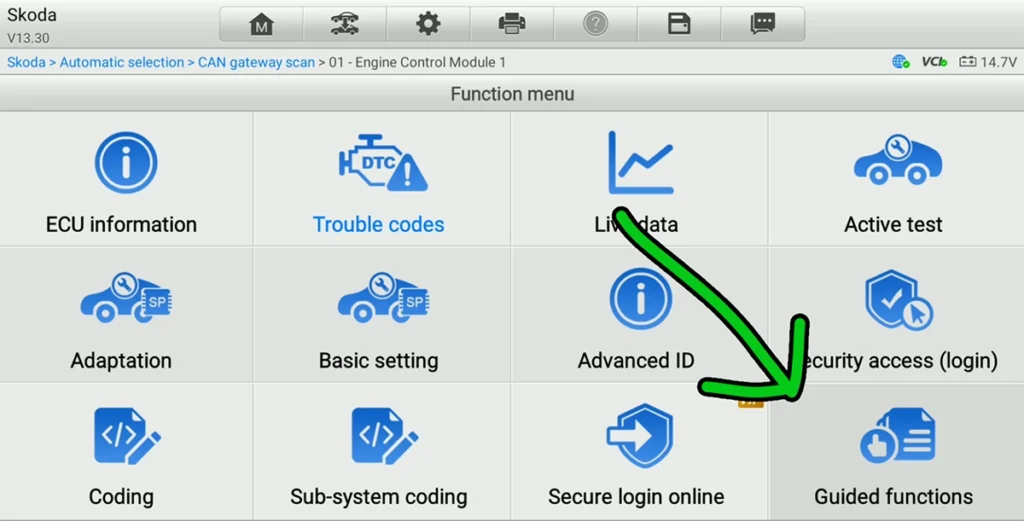
Where to find guided functions
In most diagnostic tools:
Vehicle → Control Unit → Guided Functions
Depending on the tool, they may also appear as:
- Guided Functions
- Special Functions
- Service Functions (basic scanners)
What can you do with guided functions?
Guided functions cover a wide range of vehicle systems. Check out some examples of guides functions.
Engine (01 module)
- Adaptations (throttle, EGR, sensors)
- Injector coding
- System tests
- Various ECU resets
ABS / Brakes (03 module)
- Brake bleeding procedures
- Pump activation
- Steering angle calibration
Body / comfort systems
- Window and door module calibration
- Lighting adjustments
- Central locking functions
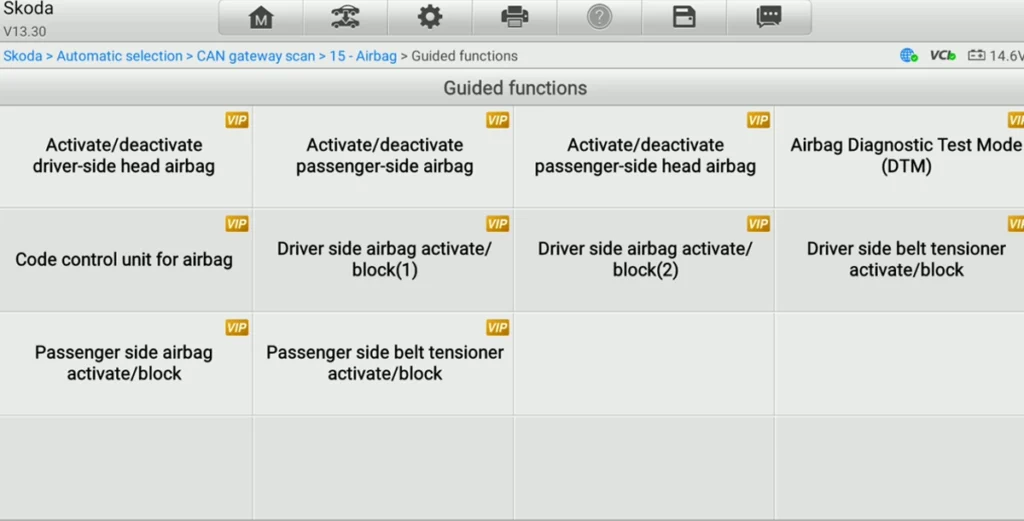
- Airbag activation
Service & maintenance
- Service interval resets
- Electronic parking brake service mode
- Battery adaptation after replacement
Guided functions vs manual diagnostics
| Guided functions | Manual diagnostics |
|---|---|
| Step-by-step workflow | Requires full knowledge of procedure |
| Built-in safety checks | No automatic validation |
| Lower risk of mistakes | Higher risk if done incorrectly |
| Slower but controlled | Faster but advanced |
👉 Key takeaway:
- Guided functions = structured and safe
- Manual diagnostics = flexible but requires experience
How guided functions work (in background)
When you start a guided function, the diagnostic tool communicates with the ECU and:
- Checks current vehicle state (fault codes, temperatures, voltage, etc.)
- Validates if conditions are suitable
- Executes commands in the correct order
- Monitors feedback from sensors and modules
- Confirms completion or reports failure
👉 This is why some procedures:
- refuse to start
- stop midway
- or show warnings
Most popular OBD2 guides

Hi, I am Juraj Lukacko. I got frustrated by unhelpful and scammy mechanics, so I decided to learn everything about car diagnostics myself. I test dozens of new car diagnostic tools every month along with learning new strategies to fix and customize cars.