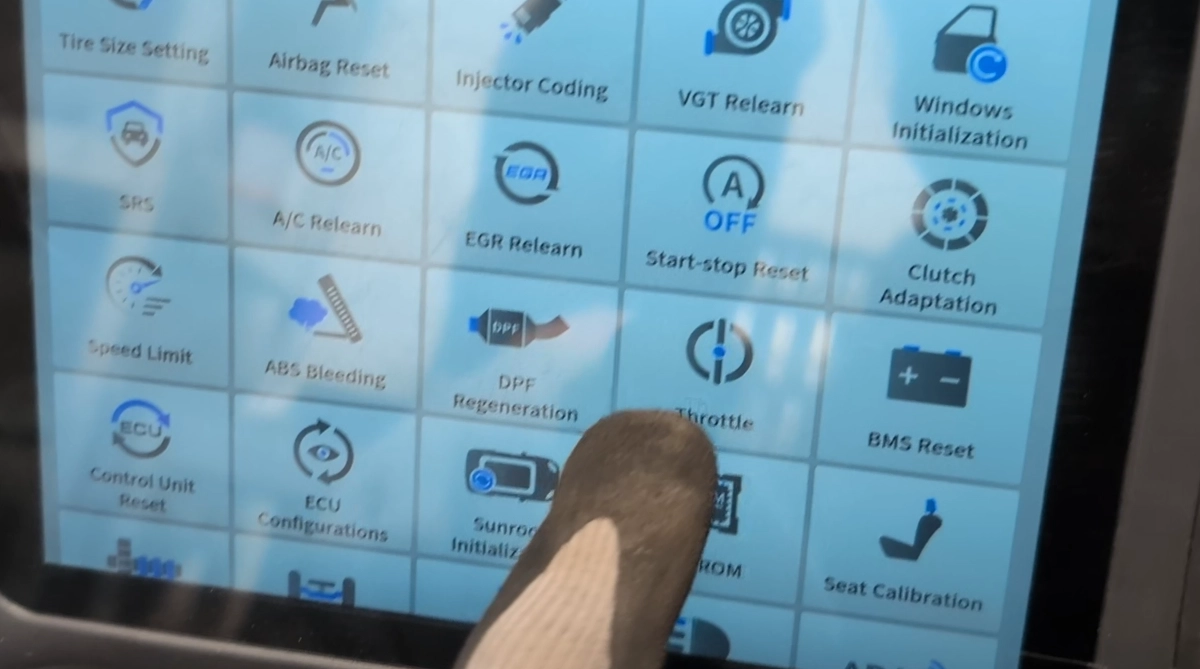
Throttle matching, also known as throttle body adaptation, is a common procedure used to recalibrate the electronic throttle system in modern vehicles.
It is required after cleaning the throttle body, disconnecting the battery, or clearing fault codes.
The throttle body controls airflow into the engine, and the ECU needs to know its exact position.
If the adaptation is not performed correctly, you may experience unstable idle, poor throttle response, or engine warning lights.
In many vehicles, this process can be done using a diagnostic tool through special functions.
Some older systems use different adaptation channels (for example VAG vehicles), while newer cars perform this automatically.
Below you will find real step-by-step procedures for different vehicles and systems.
When throttle matching is required
- After throttle body cleaning
- After battery disconnect
- After replacing throttle body
- After clearing engine fault codes
- When idle is unstable
Important notes
- Always perform adaptation with ignition ON and engine OFF
- Do not press the accelerator pedal during the procedure
- Ensure battery voltage is stable
- Some vehicles do not show confirmation message
Hi, I am Juraj Lukacko. I got frustrated by unhelpful and scammy mechanics, so I decided to learn everything about car diagnostics myself. I test dozens of new car diagnostic tools every month along with learning new strategies to fix and customize cars.