If you replace wheels, rotate tires, install new sensors or inflate tires and the TPMS light stays on, the problem is usually not the tire.
In most cases the TPMS system just needs recalibration, relearn or sensor registration.
In this guide you’ll learn:
- how TPMS systems actually work
- the difference between reset, relearn and ID registration
- the 3 relearn methods used by manufacturers
- how to quickly decide which procedure your car needs
Then you can follow the vehicle-specific TPMS procedure linked from this page.
What is TPMS and how it works
TPMS (Tire Pressure Monitoring System) monitors tire pressure and warns the driver when it drops below safe limits.
There are two completely different systems used in cars.
Direct TPMS (sensor inside wheel)
Each wheel contains a pressure sensor that sends:
- tire pressure
- temperature
- battery status
- unique sensor ID
to the TPMS control unit via radio signal.
Typical frequency:
- 433 MHz (Europe)
- 315 MHz (US market)
High-line systems show pressure per wheel.
Low-line systems only show a warning light.
Direct TPMS:
- needs relearn after sensor replacement
- sensors fail when battery dies (usually 5–10 years)
- requires correct frequency and protocol
Indirect TPMS (ABS-based system)
This system has no sensors in wheels.
It detects pressure loss by comparing:
- wheel speed
- rolling resistance
- vibration
Indirect TPMS:
- must be initialized after pressure change
- must be reset after rotation or wheel swap
- cannot detect when all tires lose pressure equally
The 3 TPMS procedures people mix up
This is where most confusion comes from.
1. TPMS Reset / Initialization
This does NOT register sensors.
It only sets a new baseline pressure.
Used for:
- indirect TPMS
- after inflating tires
- after rotation on some cars
Usually done through:
- dashboard menu
- TPMS button
- scanner reset function
2. TPMS Relearn (sensor position learning)
This tells the ECU:
- which sensor is installed
- which wheel location it belongs to
Needed when:
- tires are rotated
- wheels swapped
- system lost mapping
3. TPMS ID Registration (sensor programming)
This tells the ECU:
- which sensor IDs to listen for
Required when:
- new sensors installed
- new wheel set installed
- TPMS module replaced
This is the most common procedure after sensor replacement.
The 3 relearn methods used by manufacturers
Every car uses one of these.
Auto relearn (drive learning)
Used mostly by European brands.
Process:
- Reset TPMS in menu or scanner
- Drive steadily
- ECU learns sensors automatically
Typical time:
- 5–20 minutes
- above ~20 km/h
Pros:
- simple
- no special tools needed
Cons:
- fails with wrong sensor protocol
- slower than other methods
Stationary relearn (manual learn mode)
Very common on Ford and GM.
Process:
- Put car into learn mode
- Trigger sensors in order
- ECU confirms each with horn/beep
Typical order:
- LF → RF → RR → LR (varies by car)
Pros:
- fast
- reliable
- ideal after rotation
Cons:
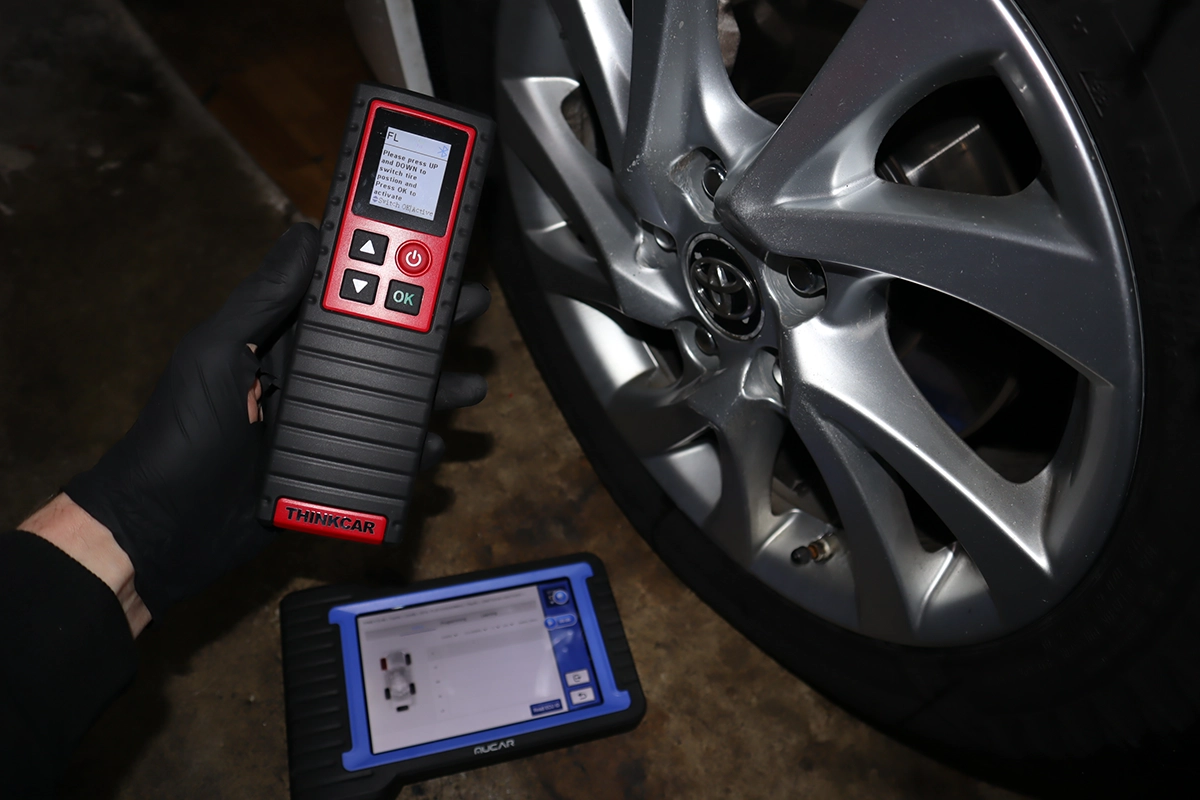
- requires TPMS trigger tool
- wrong order causes failure
OBD relearn (ID writing via scanner)
Common on Toyota, Lexus and many Asian vehicles.
Process:
- Read sensor IDs
- Connect scanner to OBD
- Write IDs to ECU
- Cycle ignition and verify
Pros:
- most reliable for new sensors
- required on many Asian platforms
Cons:
- needs compatible scanner
When you actually need TPMS relearn
Use this quick decision logic.
TPMS light on after inflating tires
Most likely:
- indirect TPMS not initialized
- one tire still below threshold
Fix:
➡ perform TPMS reset or calibration
TPMS light flashing
This indicates a system fault.
Common causes:
- dead sensor battery
- wrong sensor frequency
- sensor ID not registered
- communication problem
Fix:
➡ scan TPMS module and register sensors
Tires rotated
Direct TPMS:
➡ relearn usually needed
Indirect TPMS:
➡ reset only
New sensors installed
Always:
➡ register IDs first
➡ then perform relearn if required
Professional sensor replacement workflow
This minimizes comebacks.
Step 1 — Scan sensors before removing wheels
Record:
- IDs
- pressure
- battery status
This prevents guessing later.
Step 2 — Choose strategy
Option A — Clone old ID
- fastest method
- usually no relearn needed
- best for seasonal wheels
Option B — Program new ID
Required if:
- old sensor dead
- universal sensor used
- new wheel set installed
Step 3 — Replace sensor mechanically
- replace service kit
- torque to spec
- mount and balance wheel
Step 4 — Register sensors
Use the correct method:
- Auto
- Stationary
- OBD
Step 5 — Verify system
Check:
- TPMS light OFF
- live pressures correct
- no TPMS DTCs stored
Common TPMS problems and quick fixes
Relearn keeps failing
- wrong sensor protocol
- weak battery
- wrong relearn method
- spare not included
- RF interference nearby
Sensors read but ECU rejects them
- wrong region programming
- wrong frequency (315 vs 433 MHz)
Pressure shows on wrong wheel
- rotation done without relearn
TPMS returns after few days
- sensor battery weak or dying
Pro tips most beginners don’t know
- Always set pressure before relearn
- Keep trigger tool right at valve stem
- Avoid RF interference near wheels
- Save sensor IDs in service record
- Cloning saves huge time on seasonal sets