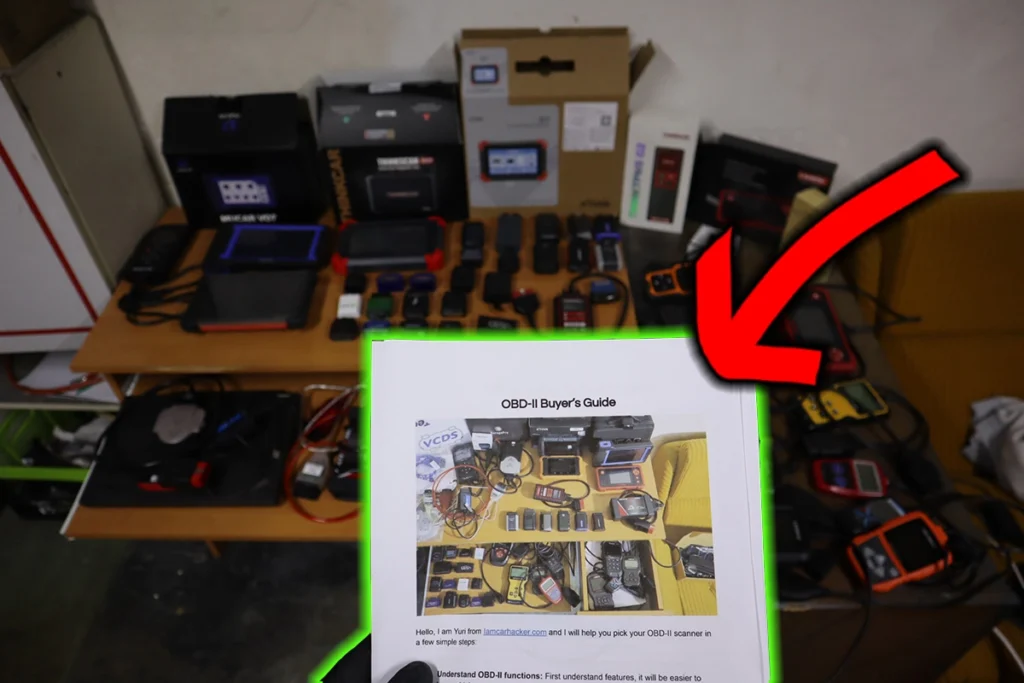
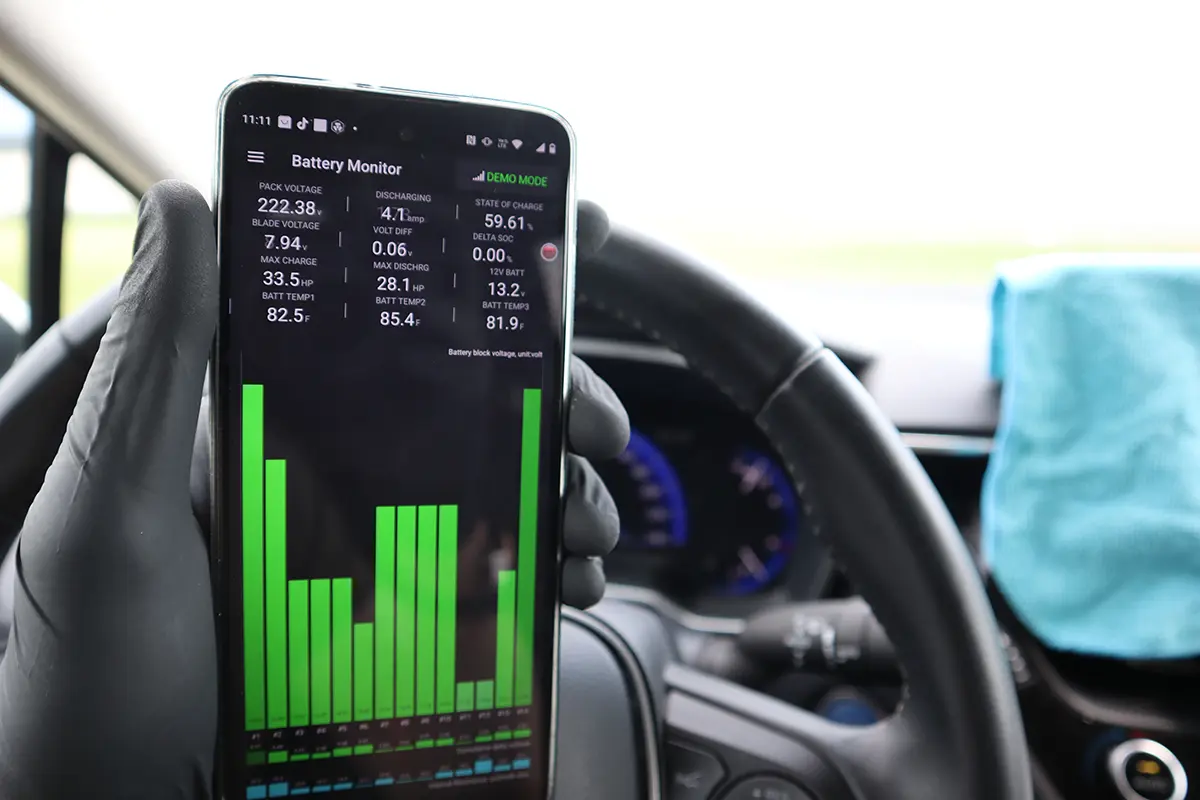
Here’s the straight talk: EVs still have the same OBD2 hole in the dash, but the juicy data you actually need lives behind brand-specific doors. So yeah—your $20 dongle will connect… and then tell you almost nothing useful.
TL;DR (the quick street version)
- ➜ OBD2 on EVs = gateway, not the treasure chest. Most propulsion data is proprietary.
- ✅ ELM327 + model-specific apps (Leaf Spy, Scan My Tesla) = great for monitoring on supported cars.
- ✅ Pro tablets read chassis/body modules and do some bi-directional stuff.
- ❌ Deep HV magic (BMS programming, inverter calibrations) = OEM or dedicated EV tools.
EV vs ICE: what the OBD2 port actually gives you
| Feature | ICE (what I see) | EV (what I actually need) |
|---|---|---|
| Primary focus | Emissions, fuel, ignition, trans. | BMS, CCU/charger, inverter/motor, thermal mgmt. |
| Standard PIDs | Lots (coolant temp, O2, trims). | Very few for propulsion (maybe SoC); the rest is proprietary. |
| Critical data access | Generic tools usually fine. | Needs manufacturer PIDs or specialized apps. |
| Bi-directional | Idle relearn, throttle reset. | Thermal bleeding, contactor control, BMS resets—not in generic tools. |
Think of OBD2 like a hallway. On ICE cars, most doors are unlocked. On EVs, the hallway is there—but the good rooms are locked by the OEM.
DIY tools (code readers, ELM327, phone apps)
Basic code readers
- What they do: read/clear generic P0xxx and some B/C/U codes.
- Reality on EVs: ❌ Low value for propulsion faults. You won’t see cell voltages, SoH, pack temps.
ELM327 + smartphone
- Stock apps: still stuck on generic OBD2 ➜ meh.
- The bridge (where it gets good): pair the dongle with EV-specific apps:
- Leaf Spy (Nissan Leaf)
- Scan My Tesla (Tesla)
- Others exist for Hyundai/Kia, VW MEB, etc.
- Why it works: these apps use reverse-engineered OEM PIDs.
- ✅ You can see:
- SoH (Battery health)
- Cell voltage delta (weak module finder)
- Pack/inverter temps
- Verdict: ✅ High—but only for supported models with the right app/profile. Otherwise near zero.
Pro shop tablets (Autel, Launch, Snap-on, etc.)
- ✅ Good at: scanning many modules (BCM, ABS, SRS, Gateway), reading C/B/U codes, and doing bi-directional basics.
- ⚠️ Where they stumble on EVs:
- Full BMS deep-dive (all sub-modules at once)
- Software updates / HV module programming
- Factory schematics + HV de-energization workflows
When you need OEM / dedicated EV gear
- Safety interlocks & step-by-step HV de-energize checklists
- Weird connectors / breakout boxes (hello Tesla/Porsche)
- Module programming after pack/inverter replacements
- Conclusion: For general service, a high-end multi-brand tablet is fine. For battery/inverter surgery, bring OEM or a dedicated EV tool.
Common EV service procedures (and the tool level you actually need)
| Procedure | Why we do it | Tool level |
|---|---|---|
| BMS relearn / reset | Fix SoC drift after pack or 12V change. | High-end tablet / EV-dedicated |
| HV coolant bleed | Purge air from pack/inverter loops to prevent overheating. | High-end tablet / EV-dedicated |
| Brake depressurization | Safe pad/caliper service on brake-by-wire. | Mid → High |
| Charge port lock calibration | After bodywork/port replacement. | Mid → High |
| Motor resolver calibration | After motor/gearbox work to align torque. | OEM / Dedicated EV |
| TPMS relearn | Same as ICE—after rotation/sensor swap. | Basic → Mid |
What to actually buy (simple roadmap)
- I’m a DIY owner with a Leaf/Tesla/etc.:
✅ ELM327 (reliable one) + the specific app for your model. That gets you SoH, cell delta, temps—gold for used-EV health checks. - I’m a general repair shop:
✅ High-end tablet (Autel/Launch/Snap-on) for chassis/body + some EV bi-directionals.
➜ Add OEM subscriptions or dedicated EV tools for HV jobs you plan to take on. - I’m doing battery/inverter replacements:
✅ OEM tool access (or licensed equivalent), wiring/schematics, insulation testers, HV PPE, lock-out/tag-out kit, non-contact voltage tester. No shortcuts here.
Real-world gotchas (learned the hard way)
- ❌ Don’t try HV coolant bleeds with a basic scanner. Many EVs need ECU-driven pump/valve routines or you’ll cook the pack.
- ❌ Random app + random PID file = garbage data. Use known profiles for your exact model/year.
- ✅ If you only need SoH/temps/logging, phone + dongle + right app is perfect.
- ✅ Before any HV work, follow OEM de-energize steps and check no-voltage at the right points. Gloves aren’t optional.
Quick decision tree
- Just want health info (SoH, temps)? ➜ ELM327 + model app ✅
- ABS/Airbag/Body faults? ➜ Pro tablet ✅
- HV service (pack, inverter, contactors, bleeding)? ➜ OEM/dedicated EV tools only ✅
- Programming/updates? ➜ Usually OEM portal ✅
Final word from under the dash
EVs didn’t kill OBD2—they just moved the good stuff behind proprietary doors. If you bring the right keys (apps, PIDs, or OEM tools), you’ll get everything you need. If you don’t, you’ll stare at a perfect SoC gauge while the real problem hides in a BMS submodule. Pick your tools based on the job, and you’ll be fine. ✅
Hi, I am Juraj Lukacko. I got frustrated by unhelpful and scammy mechanics, so I decided to learn everything about car diagnostics myself. I test dozens of new car diagnostic tools every month along with learning new strategies to fix and customize cars.