Published: March 9, 2026 · Last updated: March 9, 2026
What is gearbox adaptation?
Gearbox adaptation, also known as transmission relearn, is a process where the transmission control module (TCM) recalibrates how the gearbox shifts between gears.
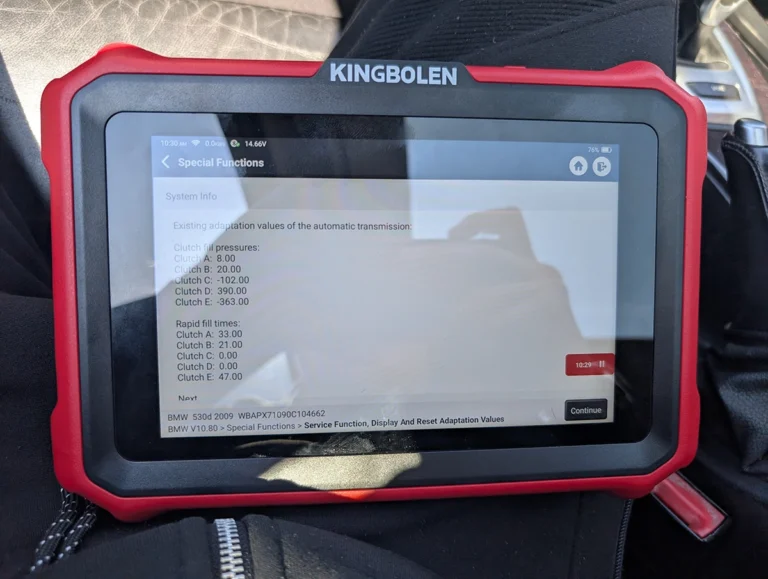
Modern automatic and automated manual transmissions continuously adjust their behavior based on driving style, clutch wear, hydraulic pressure and engine torque.
Over time these adaptive values can become inaccurate, especially after repairs or component replacement. When this happens, the transmission may require a gearbox adaptation procedure.
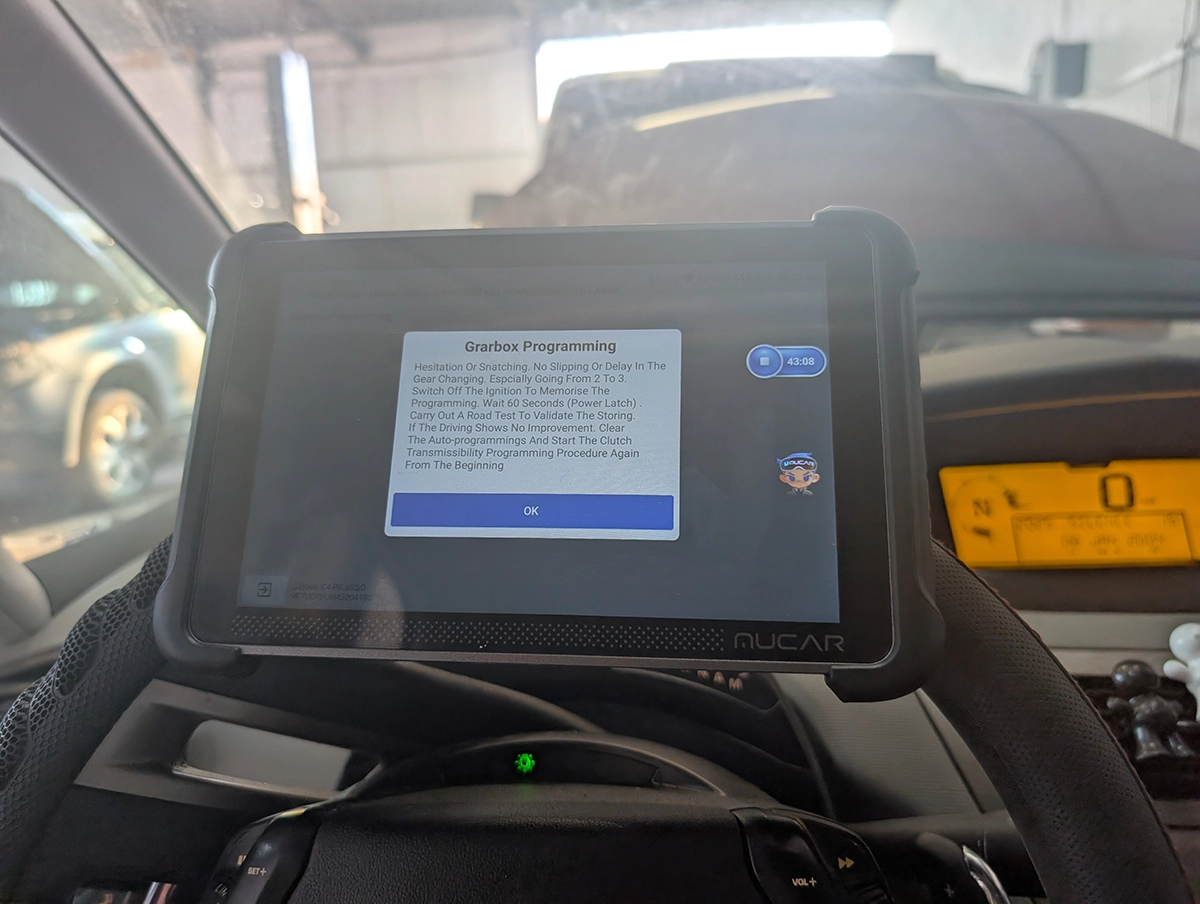
This procedure can usually be performed using a diagnostic scanner with service functions.
What does gearbox adaptation do?
During the adaptation process the transmission control module relearns several important parameters:
- clutch engagement points
- hydraulic pressure values
- shift timing between gears
- torque converter behavior
- gear change smoothness
By recalibrating these values the transmission can return to normal operation.
Symptoms of incorrect gearbox adaptation
When transmission adaptation values are incorrect, vehicles may show symptoms such as:
- harsh or delayed gear changes
- slipping gears
- poor shifting between specific gears (commonly 1st to 2nd)
- unstable idle when engaging gears
- hesitation when accelerating
In many cases the engine ECU will not show fault codes, but the transmission control module may store adaptation related faults.
When gearbox adaptation is required
Gearbox adaptation is often required after major repairs or system changes.
Common situations include:
- engine replacement
- ECU replacement
- transmission control module replacement
- clutch replacement (automated manual transmissions)
- transmission software updates
- transmission repair
Some vehicles automatically request adaptation after these operations.
How gearbox adaptation is performed
The exact procedure depends on the vehicle manufacturer and transmission type.
Most adaptation procedures include several phases:
Initialization
The diagnostic scanner starts the adaptation procedure and prepares the transmission control module for learning.
Idle learning
The engine may need to idle for a certain period so baseline parameters can be recorded.
Driving learning cycle
The vehicle is driven through specific gear changes so the transmission can learn clutch engagement and shift timing.
Saving new values
After the learning cycle the control module stores the new adaptation values.
Diagnostic tools required
Gearbox adaptation requires a full system diagnostic scanner capable of accessing transmission service procedures.
Examples of scanners that can perform gearbox adaptation include:
- bi-directional OBD2 scanners
- professional tablet diagnostic tools
- advanced Bluetooth diagnostic scanners
Basic OBD2 code readers typically cannot perform gearbox adaptation.
When gearbox adaptation will not fix the problem
Adaptation will not resolve problems caused by mechanical transmission failures.
Examples include:
- worn clutch packs
- hydraulic actuator failures
- internal gearbox damage
- severe transmission fluid contamination
In these cases mechanical repair is required.
Vehicle-specific gearbox adaptation procedures
Below you can find step-by-step guides for performing gearbox adaptation on specific vehicles.
Hi, I am Juraj Lukacko. I got frustrated by unhelpful and scammy mechanics, so I decided to learn everything about car diagnostics myself. I test dozens of new car diagnostic tools every month along with learning new strategies to fix and customize cars.