Published: February 17, 2026 · Last updated: February 17, 2026
After changing oil, the service reminder usually stays on.
That doesn’t mean something is wrong with the car.
It simply means the service interval in the ECU or dashboard still needs to be reset.
This guide explains:
- what an oil reset actually does
- why generic OBD readers usually can’t do it
- how scanners perform resets
- when you need scanner vs manual reset
- what to do if the reset fails
From here you can follow vehicle-specific oil reset procedures.
What an oil service reset actually is (and isn’t)
Oil resets are not standardized by OBD-II.
That means:
- every manufacturer stores service intervals differently
- generic code readers usually cannot reset them
- scanners must implement brand-specific service routines
An oil reset does NOT:
- check if oil was changed
- measure oil quality
- confirm service was done
It simply resets the service counter or condition-based interval.
How scanners actually reset oil service
Modern tools use two methods.
Active reset (scanner writes to ECU)
The scanner directly resets the service interval in the module.
Typical workflow:
- Connect tool
- Ignition ON
- Service → Oil Reset
- Confirm reset
- Tool writes new value
This is the fastest and most reliable method.
Guided/manual reset (scanner shows steps)
Some tools do not send a command.
Instead, they display the exact steps you perform in the cluster.
Example:
- “Press brake + accelerator”
- “Enter service menu”
- “Hold OK button”
Budget tools and apps often use this method.
Typical oil reset workflow (works on most cars)
The process is almost always:
- Connect scanner
- Ignition ON, engine OFF
- Select correct vehicle
- Open Service / Maintenance / Oil Reset
- Execute reset or follow instructions
- Cycle ignition
- Verify service indicator cleared
Some cars also ask for:
- next service mileage
- oil grade
- service type confirmation
Brand patterns you will see in real life
Manufacturers follow predictable logic.
GM / Chevrolet
Older models often use pedal routine:
- ignition ON
- press accelerator fully 3× within ~5–10 sec
- oil life resets to 100%
Newer cars use cluster menus.
Scanners either:
- perform reset automatically
- or show the pedal routine
Ford / Lincoln
Depending on model:
- pedal sequence
- cluster menu
- or scanner reset
Many tools simply show the required routine on screen.
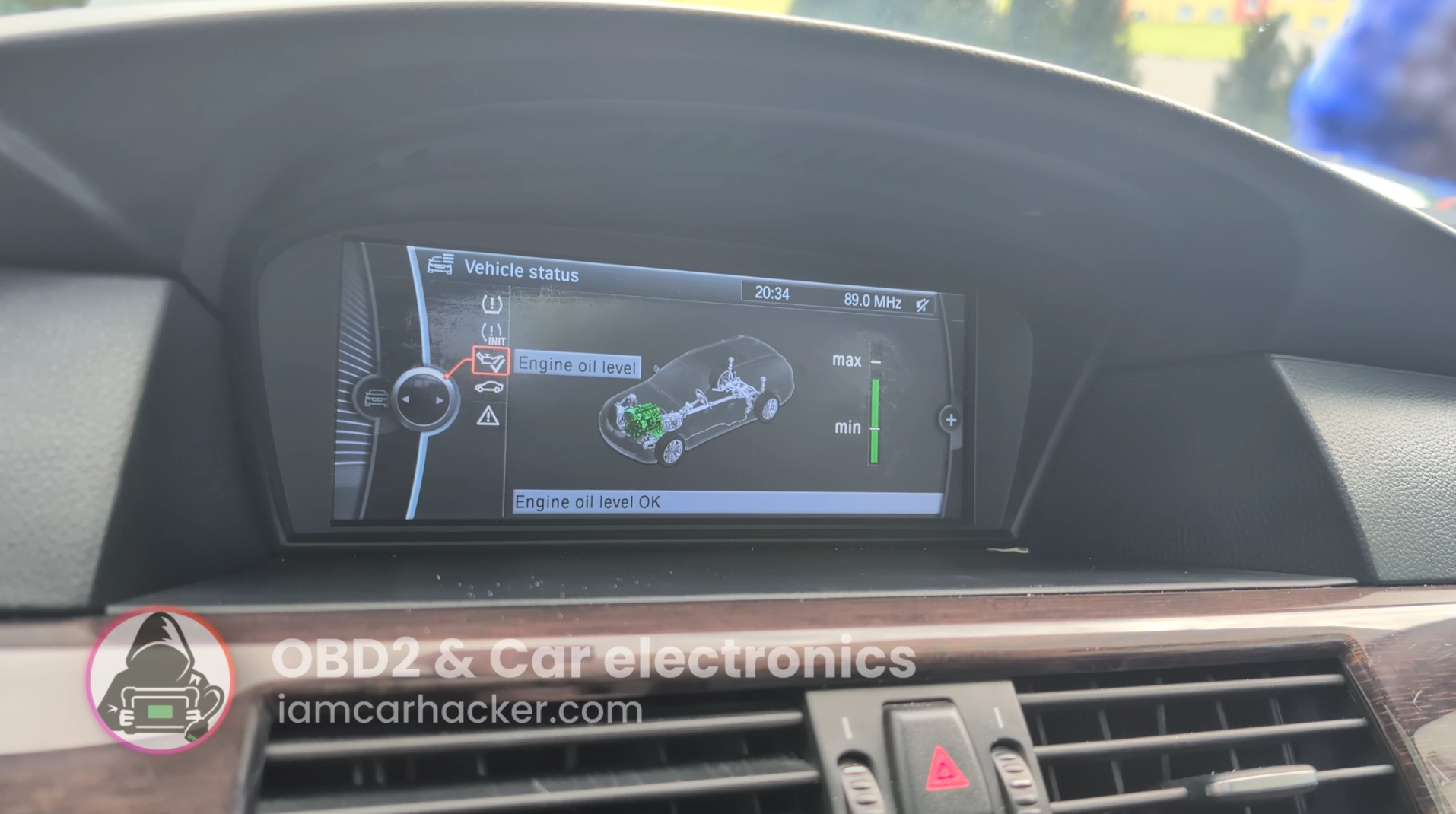
BMW / Mini (CBS system)
BMW uses Condition Based Service instead of fixed intervals.
Manual cluster reset exists but:
- slow
- unreliable
- doesn’t always log service properly
Scanner reset is preferred because it:
- writes CBS data correctly
- updates service history
- allows interval adjustment
Mercedes (ASSYST / ASSYST Plus)
Manual reset is long and menu-heavy.
Typical path:
- steering wheel buttons
- service menu
- confirm oil type
- confirm service
Scanners speed this up massively by writing the reset directly.
Porsche
Many models require a diagnostic tool.
Manual reset is often not available.
Professional scanners (Autel/Launch) can reset:
- oil service
- inspection service
- maintenance interval
VAG (VW / Audi / Skoda / Seat)
Often split into:
- Oil change reset (may be cluster-based)
- Inspection reset (often needs scanner)
Most diagnostic tools support both.
When you actually need an oil reset
You need it after:
- engine oil change
- oil filter replacement
- scheduled maintenance
You usually do NOT need it for:
- topping up oil
- short-term repairs
- diagnostics only
If the reset is skipped:
- service light stays on
- maintenance tracking becomes inaccurate
Professional oil service workflow
This minimizes mistakes and comebacks.
Step 1 — Perform the actual oil service
- replace oil and filter
- check oil level
- inspect leaks
Step 2 — Reset service interval
Use scanner or manual method.
Step 3 — Verify reset
Check:
- service light off
- cluster shows new interval
- no service warning messages
Step 4 — Document service
Good practice:
- photo of service screen
- mileage recorded
- service date logged
Common oil reset problems and fixes
Reset didn’t work
- wrong ignition state
- low battery voltage
- wrong vehicle selected in scanner
Reset works but warning returns
- multiple service counters exist
- inspection reset also required
- module fault stored
Manual reset option missing
- some cars require scanner only
- CBS/ASSYST systems often block manual reset
Scanner shows reset but cluster doesn’t update
- cycle ignition
- wait 10–20 seconds
- re-enter service menu
Scanner tiers and what they can do
Budget apps/dongles:
- usually show instructions only
- good for beginners
Mid-range handheld scanners:
- can reset many vehicles directly
- enough for most DIY work
Pro tablets:
- fastest workflow
- best support for BMW, Mercedes, Porsche
- allow setting intervals and service data
Heavy-duty trucks:
- require HD-compatible scanner
- passenger-car tools usually won’t work
Hi, I am Juraj Lukacko. I got frustrated by unhelpful and scammy mechanics, so I decided to learn everything about car diagnostics myself. I test dozens of new car diagnostic tools every month along with learning new strategies to fix and customize cars.